
اخبار الكويت- وطن نيوز
اخر اخبار الكويت اليوم – اخبار الكويت العاجلة
W6nnews.com ==== وطن === تاريخ النشر – 2026-06-10 00:12:00
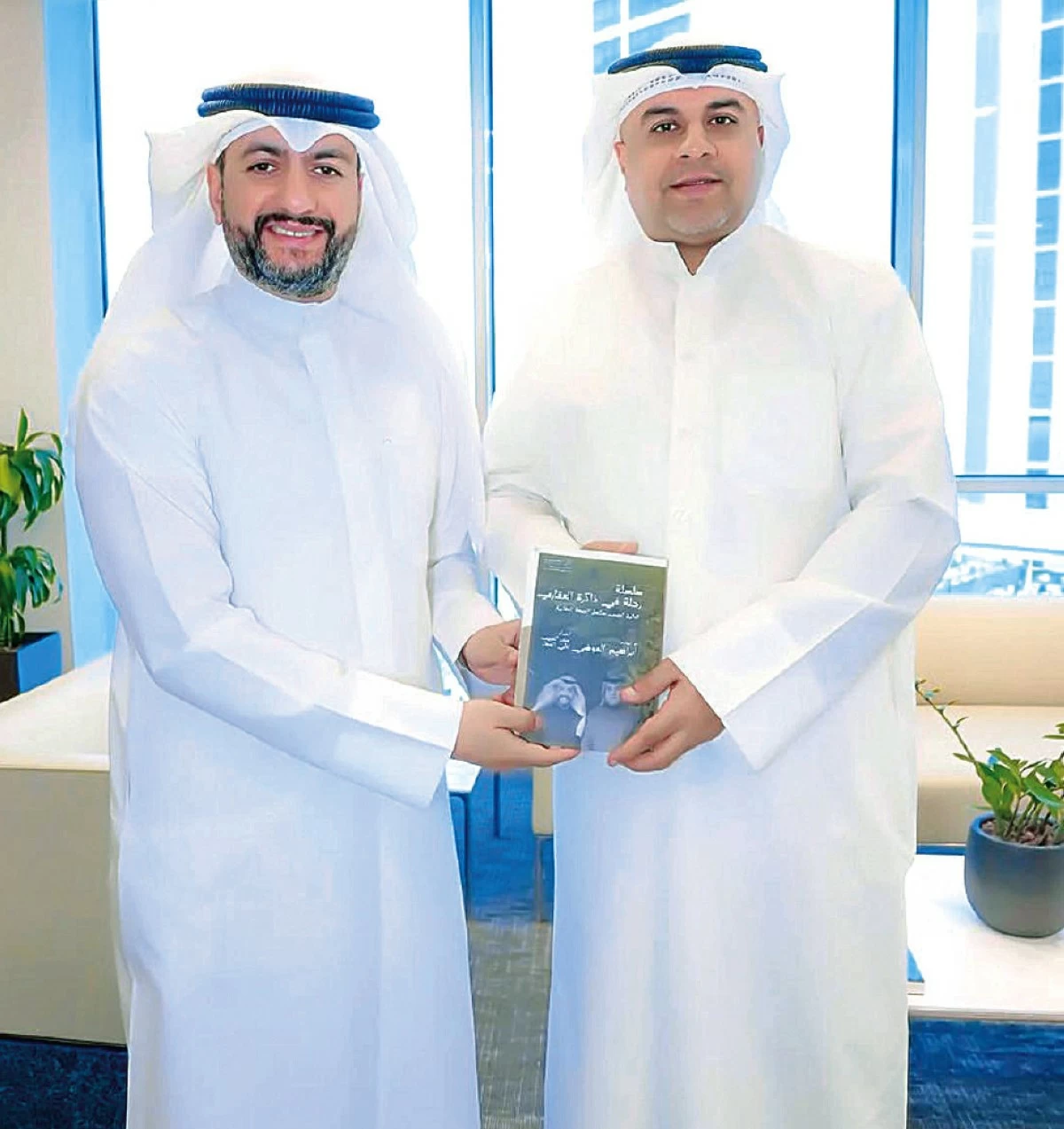
In his dialogue, Al-Saffar monitors the transformations of the sector locally. In a move to document the experiences of pioneers who lived through the stages of development of the real estate market and contributed to shaping its features, the “Journey in Real Estate Memory” series came within the “Al-Jumaa Real Estate” program presented by historical real estate researcher Ali Al-Saffar, to provide a documentary reading of the career of the President of the Kuwaiti Real Estate Union and CEO of Aayan Real Estate Company, Ibrahim Al-Awadhi, as one of the most prominent real estate names in Kuwait. The importance of “A Journey in My Real Estate Memory” is not limited to reviewing the biography of a prominent real estate figure, but rather goes beyond that to documenting important stages in the history of the Kuwaiti real estate sector, through a practical experience that spanned nearly three decades, during which Al-Awadhi rose from an engineering student passionate about numbers and construction to CEO of one of the listed real estate companies, president of the Kuwaiti Real Estate Union, and an active participant in many regulatory initiatives and legislation related to the real estate market. Through the dialogue tool – a question and answer – the series reflected Al-Awadhi’s vision of many real estate files, such as real estate development, housing financing, ownership apartments, real estate exhibitions, and legislation regulating the market, in addition to the impact of economic crises on the real estate sector. “Civil Engineering… the gateway to real estate.” The series reveals that Al-Awadhi’s inclinations towards engineering and real estate began at an early age, as his interest was linked to numbers, calculations, and scientific subjects since high school. He chose the scientific path and then specialized in mathematics because he was convinced that it was closest to His abilities and interests. The series indicates that the university stage constituted a real turning point in Al-Awadhi’s personality, not only from an academic standpoint, but also at the level of building a leadership personality and refining social and administrative skills. After being a quiet student with relatively limited relationships in the secondary stage, he found himself in a broader university environment that allowed him to interact with various intellectual currents and student activities. The series explains through Al-Awadhi how engineering turned into a natural gateway to the world of real estate and real estate investment, where he chose to specialize in structural engineering within civil engineering, due to the calculations it entails. And designs related to buildings, concrete, iron and facilities, which is the field in which he found his true passion. The 2008 crisis… reshaped investment and real estate thinking in the region. Al-Awadhi devoted an important part of the book to talking about the global financial crisis of 2008, which he describes as one of the most influential stations in his professional career and in the history of the modern Kuwaiti real estate sector. He stressed that the crisis was not just a passing economic decline, but rather revealed mistakes that had accumulated during the years before the crisis, most notably the ill-considered expansion. In investments, excessive reliance on borrowing and financing, and entering into high-risk projects without sufficient study or clear governance controls, and many financial institutions around the world were granting financing based on stocks or expected cash flows without sufficient real guarantees, which led to an exacerbation of the size of the crisis when the markets collapsed. With the outbreak of the crisis, Al-Awadhi pointed out that real estate and investment companies faced major challenges as a result of the scarcity of liquidity and the decline in financing, while banks became more conservative in granting credit, which led to the cessation or postponement of many real estate projects, and a decline in the ability of companies to expand or acquire new assets, which was reflected in the financing channels that became almost closed at that stage as a result of the pressures to which the banking sector was exposed. He pointed out that the impact of the crisis in Kuwait was broader than previous crises such as the climate crisis, because it is a global crisis whose effects extended to banks, stocks, real estate, and various economic sectors, and was not limited to a local market or a specific sector. Despite the harshness of the stage, Al-Awadhi believes that it contributed to rearranging the priorities of investors and companies, and produced new trends within the real estate market, the most prominent of which is the increased interest in residential real estate as a more stable haven compared to some other investments, and the emergence of what was later known as the “housing dealers” category after part of the liquidity was directed towards the residential sector following the crisis. The developer and the mortgage… two pillars of the future of the residential market. During the series, Al-Awadhi stopped at two of the most important files related to the future of the Kuwaiti real estate sector, which are “the real estate developer” and “the mortgage”, as they are among the main tools capable of making a qualitative shift in the residential market if they are organized according to clear legislative frameworks. Al-Awadhi believes that the concept of the real estate developer is not limited to building residential or commercial units only, but rather extends to studying the needs of the market, determining the size of future demand, and managing the project from idea to delivery and operation, stressing that the success of any A real estate project is related to answering a set of fundamental questions, the most prominent of which are: Is there a real need for the project? What is the expected demand for it? What added value will it provide to society? What are the expected economic and social returns from it? What is the extent of the risks associated with it? He pointed out that the absence of a culture of institutional real estate development in some stages led to the emergence of projects that are not based on accurate market studies, which was reflected in the efficiency of some real estate investments. Here, the importance of the presence of a professional real estate developer who possesses an integrated vision and the ability to manage risks and transform lands into development projects that achieve added value to the economy and society is highlighted. Regarding real estate mortgages, Al-Awadhi said that this file represents one of the most important keys to addressing imbalances in the residential sector and expanding ownership opportunities for citizens, especially in light of the high prices of land and residential units, referring to the controversy that accompanied the laws and restrictions imposed on banks and financing companies’ dealings in mortgages, and the resulting challenges faced by those wishing to obtain housing financing. He stressed that providing an integrated and organized real estate mortgage system does not only mean facilitating financing, but also reflects the revitalization of the real estate market, stimulating residential development, and increasing the supply of housing units. In addition, the presence of advanced financing tools contributes to achieving a greater balance between supply and demand, and gives a broader segment of citizens the ability to own suitable housing within thoughtful and safe financing mechanisms. Al-Awadhi pointed out that the future of the residential sector in Kuwait is largely linked to the development of an integrated legislative and regulatory environment that brings together the professional real estate developer and the modern mortgage system, in a way that achieves urban development goals, enhances citizens’ opportunities to obtain housing, and gives the real estate market more stability and sustainability in the long term. On this vital activity and on the real estate sector in general. Al-Awadhi pointed out that real estate exhibitions played an important role in introducing investors to the available opportunities and linking real estate companies with clients. They also contributed to providing a direct platform for displaying projects and introducing their advantages, especially in light of the expansion of Kuwaiti real estate investments in the Gulf, Arab and international markets. He explained that the scene changed radically with the spread of the Corona pandemic, which imposed widespread closures and halted economic and commercial activities in various parts of the world. Naturally, the real estate sector was not immune to these repercussions, as commercial real estate was more affected as a result of the cessation of economic activities and the closure of many facilities and shops, while the effects extended to varying degrees to investment and industrial real estate. He discussed the role played by the Kuwaiti Real Estate Union during that stage by communicating with government agencies, conveying the challenges facing real estate companies, and seeking to find solutions to mitigate the effects of the crisis on the sector, as the pandemic constituted a real test of the ability of real estate companies to adapt to sudden changes, manage crises, and maintain the continuity of their business. Despite the severity of the Corona crisis, Al-Awadhi believes that it has pushed the real estate sector to accelerate digital transformation and rely more on electronic means and digital marketing, which contributed to the development of real estate business tools and opened new horizons for communication with customers and investors. “Aayan Real Estate”… a pivotal station and a model for institutional transformation. Aayan Real Estate Company represents one of the most prominent professional stations in the career of Engineer Ibrahim Al-Awadhi in the book “A Journey in My Real Estate Memory,” as he assumed the position of CEO of the company since 2013, during which he led a phase of rebuilding and expansion after years of Challenges posed by the global financial crisis. Al-Awadhi reviews the beginnings of his joining the Aayan Group in 2012, when the group was going through a phase of reorganizing its situation following the repercussions of the 2008 crisis, noting that the Aayan Leasing and Investment Company included under its umbrella a number of subsidiaries and associates, including Aayan Real Estate, which allowed him to view various models of business and real estate and financial investments. He pointed out that the company was established with a capital of about two million dinars only, before it succeeded over the years in strengthening its assets, expanding its investments, and increasing its capital to reach more than 41 million dinars, in a clear reflection of the process of growth and development that the company witnessed. He pointed out that the post-2008 crisis forced real estate companies to reconsider their strategies, as reliance on rapid expansion and new projects decreased, in exchange for focusing on developing existing assets, enhancing operational revenues, and maintaining economically viable investments, and Aayan Real Estate was one of the companies that It adopted this approach during that stage, benefiting from the accumulated experiences and lessons that emerged from the crisis. Al-Awadhi highlighted the company’s role as one of the real estate companies listed on the Kuwait Stock Exchange, as it worked to diversify its investments and deal with the economic and legislative changes that the real estate market has witnessed in recent years, including the repercussions of the Corona pandemic and the changes that occurred in the investment and financing environment. He stressed that the success of any real estate company is not measured only by the size of its assets or projects, but rather by its ability to continue and adapt to changes, manage risks, and achieve added value for shareholders and customers. Therefore, the Aayan Real Estate experience represents a model of institutional transformation that moved from the stage of confronting the repercussions of crises to the stage of growth, stability, and deliberate expansion. A documentary reading of the career of the President of the Real Estate Union. The series documents Al-Awadhi’s professional career and the economic transformations of the Kuwaiti real estate market through 11 main parts, each of which bore a different title dealing with a stage or real estate issue. And economic: 1- Real estate development. 2- Before the 2008 crisis. 3- The 2008 crisis. 4- After the crisis. 5- Aayan Real Estate Company. 6- Kuwaiti stocks. 7- Real estate exhibitions and the Corona crisis. 8- The developer, mortgage, and land monopoly. 9- Populism in the housing file. 10- Lack of information and rental problems. 11- Union of Owners and Real Estate Companies.