
اخبار الكويت- وطن نيوز
اخر اخبار الكويت اليوم – اخبار الكويت العاجلة
W6nnews.com ==== وطن === تاريخ النشر – 2026-03-23 22:30:00
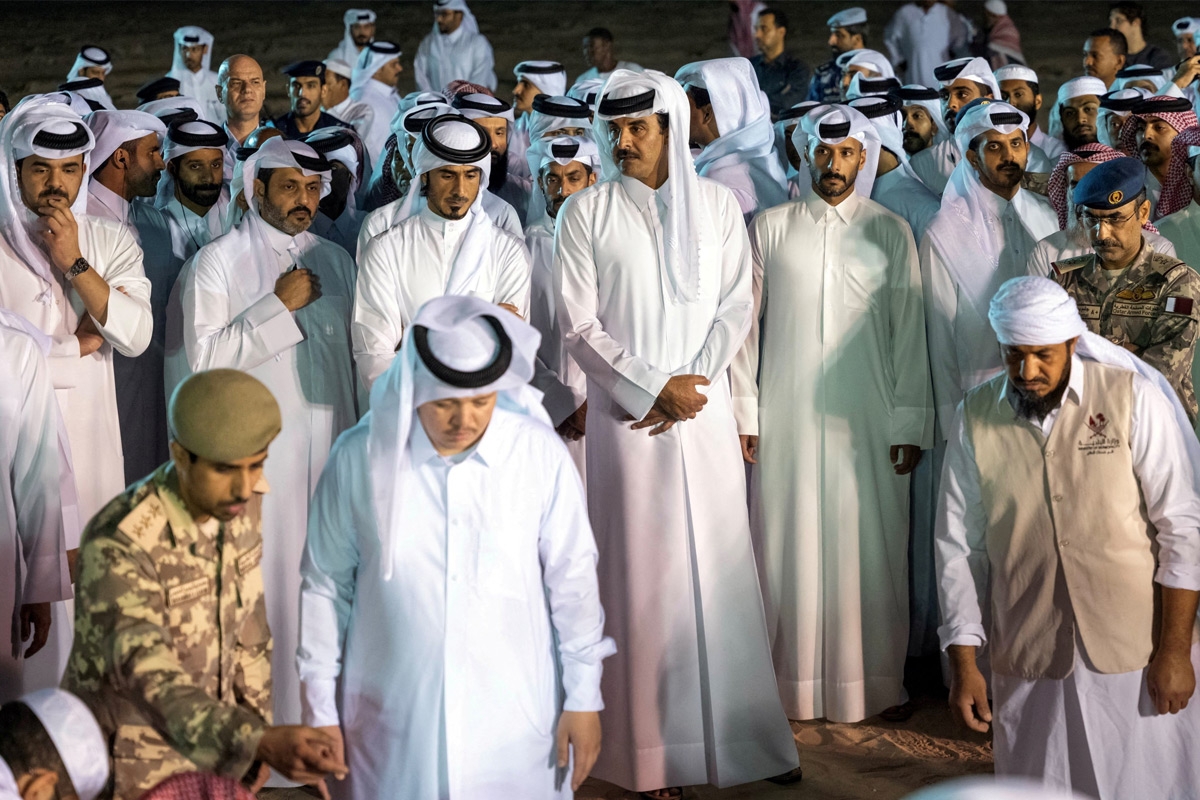
Yesterday, the Iranian Defense Council threatened to plant sea mines across “the entire Gulf region” if Iran was subjected to a ground invasion. The Council said, in a statement, that “any attempt by the enemy to target Iran’s coasts or islands will, of course, and in accordance with established military practice, lead to the planting of mines on all access routes in the Persian (Arabian) Gulf and along the coasts.” The Council warned, in a statement, that any attack on the Iranian islands or coasts will be met with mines planting sea lanes and navigation lines in the Gulf, including floating mines. It indicated that this may lead to the disruption of navigation not only in the Strait of Hormuz, but in the entire The Gulf, holding the attacking party responsible for any possible escalation. The statement cited historical precedents, pointing out the difficulty of removing sea mines. He stressed that the armed forces and the Iranian people will stand united to carry out what he described as a “response until the end.” Despite Iran’s representative to the International Maritime Organization confirming that the strait is open to all ships except those linked to “enemies,” safe passage has only been allowed for a small number of ships, including ships flying the Indian flag and a Pakistani oil tanker. With the continuation of its war with the United States and its simultaneous aggression against its neighbors, Iran yesterday displayed maps of electricity production facilities that It vowed to target it throughout the region if US President Donald Trump carries out his threat to “wipe out” all Iranian electrical power stations if it does not fully open the Strait of Hormuz to oil and gas supplies. Iranian official media, including the “Mizan Online” website affiliated with the judiciary and the Mehr Agency, published diagrams of potential targets in Saudi Arabia, Qatar, Kuwait and the Emirates, including the “Barakah” nuclear power plant in the Al Dhafra region in the Emirate of Abu Dhabi. It also published a list of sites in Israel, including Orot Rabin and Rotenberg, the two largest power stations in the Hebrew state, accompanied by a graphic titled “Say Goodbye to Electricity!” The post stated, “In the event of the slightest attack on the electrical infrastructure of the Islamic Republic, the entire region will be plunged into darkness.” Doha finds the body of the seventh and final missing person in the helicopter crash. In retracting its previous threats to target desalination plants essential for providing drinking water in the Gulf states, the Revolutionary Guard yesterday threatened to attack power plants. Israeli and the stations that supply American bases in the Gulf with electricity, if Trump carries out his threat to “wipe out” the Iranian electricity network. The Guard said: “The false American president claimed that the Revolutionary Guard intends to attack water desalination plants and inflict suffering on the people of the countries of the region, and we are determined to respond to any threat with the same level of deterrence that he creates.” If you target electricity, we will target electricity.” The Revolutionary Guard also stressed that any attack on Iran’s power stations will lead to the continued closure of the Strait of Hormuz completely, and will not be reopened until the destroyed power stations are rebuilt. The head of the International Energy Agency, Fatih Birol, warned yesterday that no country will be immune from the repercussions of the Iran war if it continues in the same direction, explaining that 40 energy facilities in 9 countries across the region “were subjected to severe or extremely severe damage.” Unlikely consequences With Trump extending his deadline for Iran from 48 hours to 5 A few days ago, Oman’s Foreign Minister Badr al-Busaidi revealed yesterday intensive efforts to ensure safe passage through the Strait of Hormuz. Al-Busaidi wrote, on the X platform, “No matter what you think of Iran, this war is not of its making. It is already causing widespread economic problems, and I fear that the situation will worsen significantly if the war continues. Oman is working hard to make arrangements for safe passage in the Strait of Hormuz. In turn, British Prime Minister Keir Starmer and US President Donald Trump stressed the importance of reopening the Strait of Hormuz to ensure the stability of global energy markets. Later, Starmer stressed that “any attempt to reopen the Strait of Hormuz requires careful study and a workable plan, and that his top priority is to protect British interests and reduce escalation.” In response to the possibility of Iran targeting Britain after… By launching two ballistic missiles at the British Diego Garcia military base in the Indian Ocean, Starmer said: “We are constantly conducting assessments to ensure our security, and there is no assessment that indicates that we have been targeted in this way.” On the twenty-fourth day of Iran’s aggression against the Gulf states, Jordan and Iraq, Saudi air defenses yesterday dealt with two ballistic missiles in the Riyadh region, and 7 drones in the northern and eastern border regions, the day after they were destroyed on the 23rd. An aircraft was launched towards the oil-rich eastern region, and 3 ballistic missiles were launched towards Riyadh. Yesterday, the Khatam al-Anbiya Central Headquarters claimed that it had targeted the headquarters of the American forces at the Saudi Prince Sultan Air Base in Al-Kharj Governorate, using strike marches. The International Energy Agency: 40 facilities in 9 countries were severely damaged. In the Emirates, the air defenses yesterday dealt with 4 ballistic missiles and 25 drones coming from Iran, raising the total number. Since February 28, 352 missiles and 1,789 drones have been subjected to brutal attacks. An Indian was injured as a result of falling shrapnel after intercepting a ballistic missile over an industrial area near Al Dhafra Air Base. The authorities explained that the interception operation took place over the Al Shawamekh area in Abu Dhabi. In Bahrain, the Defense Force leadership announced that its air systems intercepted yesterday two missiles and 36 drones launched by Iran, indicating that it continues to confront successive waves of sinful Iranian terrorist attacks, intercepting and destroying 147 missiles and 282 drones that targeted the Kingdom. And in Qatar, yesterday, the authorities found the seventh and final missing person in the accident of the helicopter falling into the waters. The General Secretariat of the Qatari Council of Ministers announced the return of work as of today to normal from workplaces in accordance with the regulations in force in all ministries, other government agencies, public bodies and institutions. Politically, Saudi Crown Prince Mohammed bin Salman discussed with French President Emmanuel Macron the developments of the current situation in the region and their repercussions at various levels. Macron affirmed France’s solidarity and standing by the Kingdom and its condemnation and denunciation of the repeated Iranian attacks. He also renewed his solidarity and support for the measures the Kingdom is taking to preserve its sovereignty, maintain its security, and protect its lands and airspace. Macron wrote on the “X” platform, “I spoke with the Prince.” Muhammad, I found France’s solidarity and our commitment to contribute to strengthening Saudi air defenses, at a time when the Kingdom is being subjected to repeated and unacceptable attacks by Iranian missiles and drones. He said: “Facing the danger of an out-of-control escalation, it has become more necessary than ever for all warring parties to agree on a temporary cessation of attacks on energy facilities and civilian infrastructure, and for Iran to restore freedom of navigation in the Strait of Hormuz.” He added, “The stage requires responsibility and restraint, in order to create conditions for the resumption of Only dialogue can guarantee peace and security for all.” He stressed, “At this critical moment, the G7 and the Gulf Cooperation Council should strengthen their coordination. France and Saudi Arabia are working together in this direction.” Anwar Gargash: The Gulf states have the right to ask: Where are the institutions for joint Arab and Islamic action? Where are the major Arab and regional countries? The Emirati President Sheikh Mohammed bin Zayed also discussed, during a call with the President of Indonesia, Prabowo Subianto, “the ongoing Iranian terrorist attacks against countries in the region that target civilians, civilian facilities and infrastructure, as they represent a violation of the sovereignty of these countries and international laws and norms.” The Indonesian President renewed his condemnation of these terrorist attacks, stressing his solidarity with the UAE and its full support for all measures it takes to defend its security and stability and ensure the safety of its lands, citizens and residents. Praising the UAE’s management of the crisis and the efficiency of its measures in order to preserve the security and safety of its citizens, residents and visitors. The two sides stressed the necessity of immediately stopping the military escalation and giving priority to serious dialogue and diplomatic solutions in addressing the region’s outstanding issues in a way that preserves its security and stability and avoids further crises. For his part, Anwar Gargash, advisor to the UAE president, said: “We in the Arab Gulf countries have the right to ask: Where are the institutions of Arab and Islamic action? What is common, especially the Arab League and the Organization of Islamic Cooperation, and our countries and peoples are exposed to this brutal Iranian aggression? Where are the major Arab and regional countries? He added: “In this absence and inability, it is not permissible later to talk about the decline of the Arab and Islamic role or criticize the American and Western presence.” He concluded: “The Arab Gulf states have been a support and partner for everyone in times of prosperity… So where are you today in times of distress?” In addition, the Prime Minister and Minister of Foreign Affairs of Qatar, Sheikh Mohammed bin Abdul Rahman, discussed in separate communications with the Foreign Ministers of Kuwait, Sheikh Jarrah Al-Jaber, Saudi Arabia, Prince Faisal bin Farhan, the UAE, Sheikh Abdullah bin Zayed, Egypt, Badr Abdul Ati, and Turkey, Hakan Fidan, developments in the region. The Qatari Foreign Ministry said in two separate statements that Bin During the communications, Abdul Rahman received the condolences of the countries of the Cooperation Council and Egypt for the martyrs of members of the Qatari Armed Forces following a helicopter crash in territorial waters due to a technical malfunction while performing a routine duty. During the communications, developments in the military escalation in the region and its dangerous repercussions on security and stability regionally and internationally and ways to resolve all disputes by peaceful means were also stressed. During the communications, the need to strengthen coordination and intensify joint efforts in order to immediately stop any escalatory actions and return to the dialogue table was emphasized. And giving priority to the language of reason and wisdom to contain the crisis in a way that guarantees global energy security, freedom of navigation, environmental safety, and preserves the stability of the region. In contact with the European Union Foreign Affairs Representative, Kaya Kallas, the Qatari Foreign Minister stressed the need to spare the region from the consequences of unprovoked attacks and work to reduce the escalation to restore security and stability at the regional and international levels. Bin Abdul Rahman reviewed with Kaya the developments of the military escalation in the region and its dangerous repercussions on security and stability regionally and internationally, and ways to resolve all disputes by peaceful means, condemning the Iranian attacks on Qatari territory and that they cannot be accepted under any justification or pretext, indicating this. The context indicated that Qatar has always been keen to distance itself from regional conflicts, and sought to facilitate dialogue between the Iranian side and the international community. He stressed that the Iranian targeting of energy facilities is a blatant violation of the principles of international law, and a serious threat to global energy security, the environment and freedom of navigation. For her part, Kaya called for reducing escalation, arbitrating the voice of reason, and returning to negotiations and diplomatic means to avoid further chaos. China warns of a “vicious circle” and Moscow opposes closing Hormuz warned China of the situation getting out of control and the Middle East entering a vicious circle of chaos due to the Iranian war. Chinese Foreign Ministry spokesman Lin Jian said in a press conference in Beijing yesterday that the conflict “dealt a blow to global energy security and trade.” Jian called on the countries involved in the conflict to “immediately stop military operations and prevent regional turmoil from causing a greater impact on global economic growth,” adding that China is in contact with the parties to de-escalate the situation. He explained that the raging war in the Middle East is expanding and expanding, indicating that if the scope of the fighting continues to expand and the situation escalates further, the entire region will sink into an irreparable situation. In a parallel development, the Chinese special envoy to the Middle East, Zhai Jun, warned of the consequences. It is unlikely that the Strait of Hormuz will be closed following a recent visit to the region and holding talks with Arab countries. He said that China obtains approximately half of its energy supplies from the region. Zhai said, in a press conference, that “China, as a major responsible country and a loyal friend of the countries of the region, will maintain close communication and coordination with the parties concerned, will help alleviate tensions, will work to pave the way for a ceasefire and build bridges to resume dialogue, and will make continuous efforts to achieve peace and stability in the Middle East.” He pointed out that the basis of China’s policy towards the Middle East is to promote reconciliation and peace, and as the flames of war continue to rage there, the world’s economy and trade are suffering from great pressures, adding: “Once Pandora’s box is opened, this will cause serious damage.” More fighting will not lead to victory for anyone, but will bring enormous suffering to the peoples of the region.” For his part, Kremlin spokesman Dmitry Peskov called for a “political and diplomatic” settlement of the war in the Middle East. He said: “We believe that this is the only thing that can contribute to defusing the disastrously tense situation that the region has reached.” The Russian Foreign Ministry said that Moscow opposes closing the Strait of Hormuz, stressing the importance of looking at this issue in the context of general developments surrounding the crisis, in reference to escalating regional tensions. It confirmed that it is continuing its contacts with Iran as part of its efforts to follow developments in the crisis.