
اخبار البحرين – وطن نيوز
W6nnews.com ==== وطن === تاريخ النشر – 2026-01-26 23:03:00
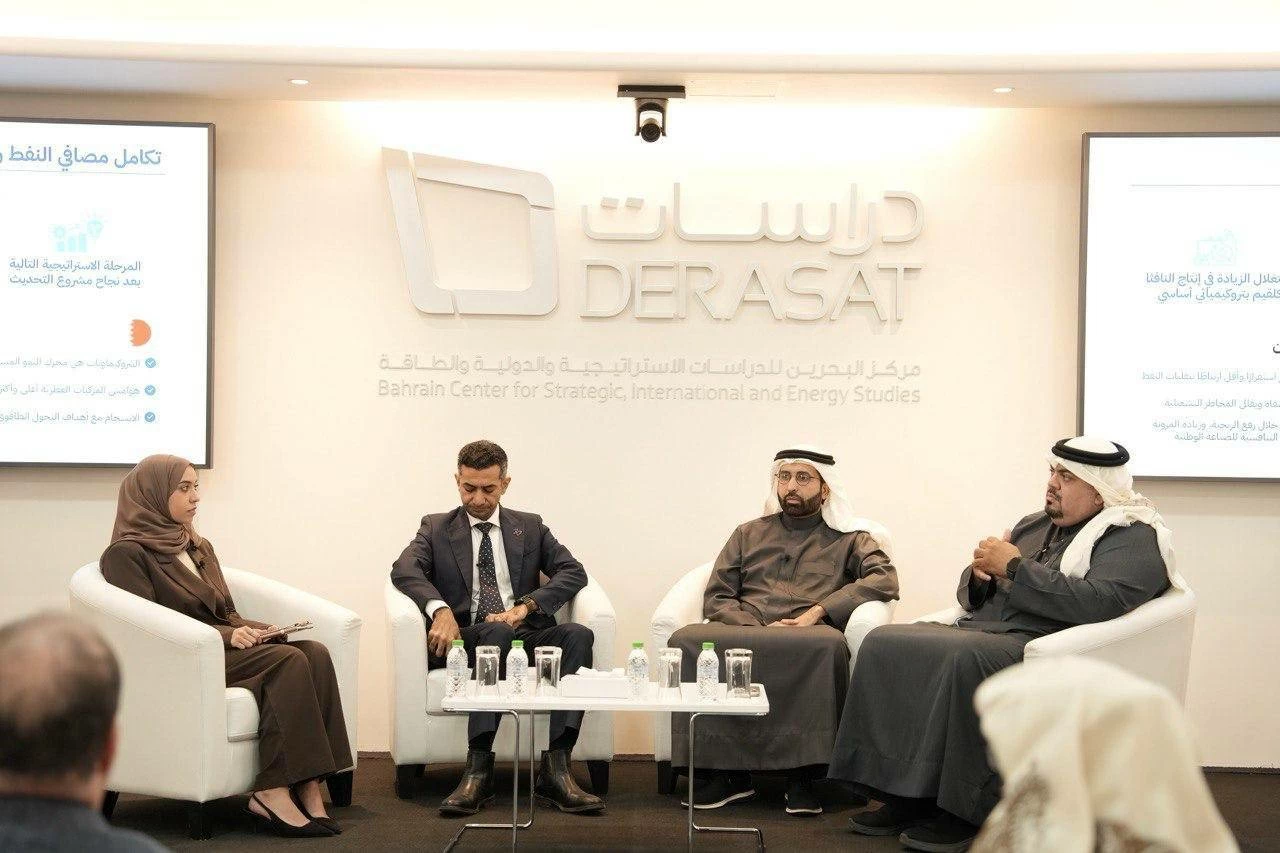
Samaher Saif Al Yazal The project improved energy efficiency by 28% and reduced sulfur oxide emissions by 50%. The project contributed to reducing the use of seawater per barrel by 50%. The Bahrain Center for Strategic, International and Energy Studies “Derasat” confirmed that the Bapco refinery modernization project is one of the largest industrial expansion projects in the history of Bahrain, and represents a qualitative transformation in the energy sector in terms of raising refining capacity from 267 thousand barrels per day to about 405 thousand barrels per day, by An increase of 52%, expected to direct about 85% of the refinery’s production for export. This came during an expanded intellectual dialogue entitled “Analytical Insights on the Bapco Refinery Modernization Project” organized by “Derasat”, based on the analytical study it recently issued, which documented the profound structural transformation that the project brought about in the refining and energy sector in Bahrain, and its economic, industrial and environmental repercussions at the national and regional levels. He participated in the dialogue, Executive Vice President of Technical Services and Engineering Affairs and Acting Head of the Refinery Modernization Project at Bapco Refining Company, Sayed Mahmoud Al-Maatouq, alongside an elite group of specialists, researchers, and the authors of the study, who are Director of the Energy and Environmental Studies Program at Derasat, Dr. Abdullah Al-Abbasi, Assistant Analyst Sabika Ismail, and Head of the Chemical Engineering Department at the University of Bahrain, Associate Professor Dr. Mohammed bin Shams, in the presence of a number of national figures concerned with the issue of energy and sustainable development, within a discussion that focused on reading the results of the study and analyzing its strategic implications. The dialogue deliberations focused on the study’s conclusions that the Bapco refinery modernization project was not a traditional technical expansion, but rather a qualitative shift that redefined Bahrain’s role in the regional energy scene, through building an advanced refining system that complies with the highest international standards in operating efficiency, product quality, and environmental commitment, which placed the company in an advanced position among modern refineries in The organization of this dialogue comes within the framework of Derasat’s keenness to open in-depth discussions about its research outputs, and transform them into interactive platforms that contribute to highlighting successful national experiences and enhancing understanding of their strategic dimensions, in a way that supports the development of realistic energy policies based on achievement, and consolidates the position of the Kingdom of Bahrain as an effective player in the regional energy scene. Qualitative economic and environmental outcomes. During the dialogue, the analytical visions addressed in the study were reviewed, as Derasat confirmed that the refinery modernization project Bapco is considered one of the largest industrial expansion projects in the history of Bahrain, and represents a transformation in the energy sector in terms of raising refining capacity to about 405 thousand barrels per day, maximizing economic value, and enhancing environmental sustainability, in line with the objectives of Bahrain Economic Vision 2030. The presentation explained that the project included replacing the oldest operational units with modern and more efficient technologies, in addition to reconfiguring the refinery units to produce higher value products, which contributed to raising the refining capacity from 267 thousand barrels per day to about 405 thousand barrels per day, an increase of 52%, in addition to the development of tank facilities, the Sitra jetty, and conveyor pipelines. It was indicated that the project contributed to improving energy efficiency by 28%, increasing operational flexibility, and enhancing the refinery’s ability to adapt to fluctuations in global markets, as well as improving operational performance and supply chains, which reflected positively on profitability rates and the logistical advantage of the Kingdom. On the environmental aspect, the presentation indicated the project’s commitment to more stringent environmental standards, as it contributed to reducing emissions. Sulfur oxides by 50%, reducing the use of seawater per barrel by 50%, in addition to reducing the discharge of treated wastewater by 9%, which enhances Bahrain’s move towards sustainability and energy transition. “Derasat” expects to direct about 85% of the refinery’s production for export, while recording an expected growth in revenues, supporting the sector’s contribution to the gross domestic product, and increasing the production of high-value products compared to reducing the production of low-value products, which enhances the competitiveness of Bahraini products in global markets. The presentation also addressed the importance of integration between oil refineries. And the petrochemical industries as the next strategic stage after the success of the modernization project, by exploiting the increase in the production of naphtha as a basic petrochemical value, and maximizing the value of each barrel of oil instead of just producing fuel. He explained that this approach is consistent with the strategic motives of Bahrain, as petrochemicals are the engine of future growth in demand for oil, and the margins on aromatic compounds are characterized by being higher and more sustainable, in addition to the stability of petrochemical prices compared to fluctuations in crude oil prices, which It increases the profitability of the refinery and reduces operational risks. The presentation touched on the experiences of the Gulf Cooperation Council countries in this field, pointing to a clear regional trend towards integration between refining and petrochemicals, through major projects such as the integration of the Al-Zour refinery, the modernization of the Ruwais refinery, the integration of the Sohar refinery and the Liwa complex, in addition to the Petro Rabigh, Satorp, and Sadara Chemical projects, which contributed to maximizing the return from each barrel of oil and diversifying the base. Economic, and consolidating the global position of the Gulf countries as competitive centers for petrochemicals. Al-Abbasi: The largest industrial project in the history of Bahrain. Director of the Energy and Environmental Studies Program at Derasat, Dr. Abdullah Al-Abbasi: “The Center organized this symposium to shed light on the modern Bapco refinery project, which was inaugurated by His Majesty King Hamad bin Isa Al Khalifa, the Great King of the country,” stressing that it is the largest industrial project in the history of Bahrain in terms of investment volume and economic impact. He explained that the symposium reviewed the analytical study issued by the Center, which shed light on this great national achievement, and the remarkable successes achieved despite the exceptional circumstances that accompanied the implementation of The project, foremost among which is the Corona virus pandemic, stressing that the project is a purely Bahraini model that embodies the competence of national cadres and their ability to implement major strategic projects in accordance with the highest international standards. The symposium touched on the future of the project, as Al-Abbasi stressed that the modern Bapco refinery does not represent the end, but rather constitutes a strategic platform for the future, through the advanced infrastructure it has provided that contributes to supporting other industrial sectors, most notably the petrochemical sector, which is considered one of the promising sectors with high added value to the national economy. The study highlighted the importance of integrating entrepreneurship with the industrial infrastructure provided by the project, which contributes to creating new opportunities for Bahraini youth, promoting innovation, and expanding the base of the national economy, stressing the necessity of integrating national efforts among the various stakeholders, and working to develop a comprehensive strategic vision in which the economic sectors are managed in a balanced and integrated manner. Al-Abbasi pointed out that the size of the advanced technology used in the refinery calls for greater attention to the educational and qualification aspect, and investment in developing national competencies, ensuring the sustainability of the project and maximizing its returns in the long term. The project also contributed In employing large numbers of national cadres, which enhances social sustainability, provides quality job opportunities, and supports Bahrain’s presence in the economic and energy scene regionally and internationally. He explained that highlighting this project comes within its role in supporting national efforts, enhancing awareness of the importance of strategic projects, and advancing comprehensive development. He indicated that, in parallel with documenting the project implementation experience, work was done with the teams participating in the completion to extract lessons learned, which contributes to developing work methodologies in future strategic projects, with a focus on anticipating opportunities. For her part, Sabika Ismail, research analyst at Derasat, said that “the refinery modernization project is a pivotal stage in the national energy sector, because it represents a qualitative shift that contributes to increasing profits and maximizing the benefit of the national economy, in addition to enhancing the concepts of sustainability and advancing the concepts of climate justice and energy justice within Bahraini society.” She explained that the preparation of this study came out of the national and research role that The center undertakes the task of highlighting the most prominent strategic projects in Bahrain and analyzing their economic and development impacts, especially the refinery modernization project that was implemented in exceptionally difficult circumstances during the Corona pandemic period. Ismail added that the center was keen, through the study, to document the achievements achieved and extract lessons learned, in addition to providing forward-looking visions about the future of the project, and how to build on it to develop future aspirations, in a way that enhances integration between the research, academic, industrial and governmental sectors. She indicated. Studies related to major national projects take an average of between 9 to 7 months, due to the accuracy, objectivity, and extensive coordination they require with various stakeholders, stressing that the center is keen to base its research outputs on reliable information in coordination with government agencies, the industrial sector, and academic institutions. Al-Maatouq: A long-term investment project. In the same context, the Vice President of Technical and Engineering Services at Bapco, Sayed Mahmoud Al-Matouq, stressed that the dialogue symposium comes due to its importance in presenting a comprehensive picture of the project, and highlighting The achievements that have been achieved, and its pivotal role in supporting the renaissance of the Kingdom of Bahrain and enhancing the path of economic development. He explained that the project is directly consistent with Bahrain’s Economic Vision 2030, especially in the aspect of enhancing economic integration, indicating that the expansion project represents the foundation that was established within the refinery to move towards future industrial and transformational projects. He added that the production capacity of the refinery has increased, making it a large refinery with a high competitive ability on the global level, and capable of supporting the trend towards transformational industries. He pointed out that sustainability was a fundamental focus of the project, as the use of modern technologies contributed to reducing emissions and the carbon footprint by approximately 50%, in addition to paying attention to the human and social dimension through employment, training and qualification. Bin Shams: Engineering education is a major partner. For his part, the head of the Chemical Engineering Department at the University of Bahrain, Dr. Muhammad bin Shams: “His participation in the dialogue focused on the role of engineering education and scientific research in supporting major national projects, especially in the refining industry.” He explained that the discussion addressed the importance of linking scientific research to the national strategy, and the role of national universities in supporting these projects, pointing out that today’s engineer needs skills that go beyond engineering basics, to include data analysis, an understanding of industry economics, and concepts of sustainability, so that he can effectively contribute to major projects in accordance with the highest professional standards.