
اخبار السودان – وطن نيوز
اخر اخبار السودان اليوم – اخبار السودان العاجلة
W6nnews.com ==== وطن === تاريخ النشر – 2026-01-30 11:15:00
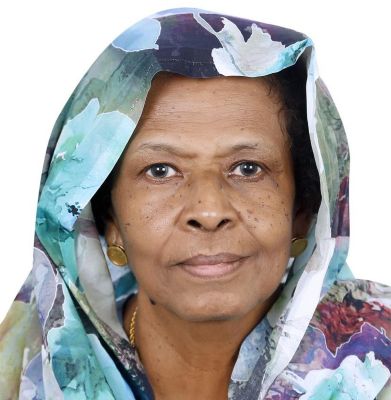
10 hours ago Fadwa Abdel Rahman Ali Taha 382 tourism visits in the book: Souad Hassan Ali Karar, Sudanese Memories A Nineties Journey in Wartime, first edition Dar Al-Adham for Publishing and Distribution, Cairo 2025 Professor / Fadwa Abdel Rahman Ali Taha University of Khartoum My daughter, “Azza Jamal,” the granddaughter of the author of the book (her mother, Soraya Muhammad Mudawi), gave us a copy of her grandmother’s author. I intended to write about him at the time, as he attracted me and drawn me to him, but there were special circumstances, beyond my control, that made me delay in writing this presentation. The book is 187 pages of medium size, and was given by Mrs. Souad to the souls of her parents, Hassan Ali Karrar and Nafisa Kamel. The book was prepared by Professor Amna Al-Sadiq Badri and presented to it by Dr. Samira Amin. The author began the first part by talking about her brother, the martyr Abdel Moneim Hassan Ali Karrar, 1951 – In 1990 AD, he was a boy who came after ten daughters. He told about his experience as an officer in the armed forces and his role in the National Redemption Movement. Abdel Moneim, along with a number of officers, organized a corrective movement against the coup of June 30, 1989, and they moved on April 23, 1990, corresponding to Ramadan 28, 1410 AH. The movement was not successful, and Abdel Moneim and his companions were executed on October 23, the same day of the movement With a picture in the book of all the martyrs. And of course, Souad talked about the deep, renewed sadness and pain left behind by the execution of Abdel Moneim. Along with Abdel Moneim, she had two brothers, Abdel Azim and Abdel Majeed. Souad spoke about her father, Professor Hassan Ali Karrar, a graduate of Gordon College, who graduated as a teacher and graduated in the teaching profession until he became Deputy Undersecretary of the Ministry of Education, and under whom he taught a number of professionals. She described her as the first Sudanese pioneer in the field of voluntary and charitable work and journalism. Souad has her own biography, and Souad provides important information about her mother, which she communicates through correspondence with the Dean of Arabic Literature, Professor Taha Hussein, who sent her lists of publications that mixed ancient and modern Arabic, Islamic, and European heritage. He also advised her to self-educate. Souad did not neglect to mention her mother’s achievements regarding women, their rights, and their gains, which she recorded in her book entitled Sudanese Women Between the Past and the Present. Souad devoted part of the book to talking about her sisters and some of them. He graduated from the Teachers College and worked as a teacher, and some of them joined universities. She tells of her sister, “Nadia,” that she organized and led the first anti-colonial demonstration in the city of El Obeid in 1952 AD to demand the opening of middle school schools, given that there was only one middle school for girls in the Kordofan region. Nadia’s leadership of the demonstration resulted in her expulsion from the school by a decision of the director of the Education Office in El Obeid, who is a British national, and her father was prevented from accepting her in any other government school. She tells about her sister, “Laila,” that she continued her education in middle school and interrupted it due to marriage, but later joined as a mature student at Ahfad University and obtained a bachelor’s degree and then a master’s degree from the College of Education at the University of Khartoum. Her sister, “Umaima,” studied aviation sciences, and in 2005 she joined the Popular Movement and the Revolutionary Front, where she held the position of Secretary of External Relations for the Islamic Council of the New Sudan. After talking about her family, Souad moved on to talk about her personality, her beginning in childhood, and her birth on October 22. 1933 AD in the city of Al-Obeid, and her father requested a transfer from Al-Obeid to Omdurman so that his daughters could continue their education. Souad remembers that moving to the capital was a very big change in their lives. She and her sisters were enrolled in the missionary school. The missionary girls’ schools played a foundational role in women’s education in Sudan, especially during the period of dual rule, as they focused on the academic and vocational education of girls and were able to fill the gap in girls’ education, which the colonial government did not pay enough attention to The most prominent Christian missionary schools in the Khartoum and Omdurman regions. Souad returned to Al-Obeid again after she was accepted into the middle school, and this coincided with her father’s promotion and transfer to the city of Al-Obeid. A middle school was opened in Al-Obeid in 1947 AD. Souad was accepted to live in the boarding school due to the distance of the home from the school. Despite her fear of the boarding house, she quickly got used to it and went out to the house every two weeks. In the boarding school, she was assigned the task of managing the boarding house The experience of this housing, which was widespread in all Sudanese middle and secondary schools until the 1980s, was available to male and female students from the villages around the schools. It contributed greatly to accustoming male and female students to self-reliance at an early age. One of Souad’s teachers at Al-Abyad School was Queen Al-Dar Muhammad Abdullah, who later became famous as a Sudanese storyteller and novelist. She was a founding member of the Al-Abyad Women’s Charitable Society, a member of the Women’s Union, and an activist in women’s work institutions and bodies. She contributed greatly to awareness campaigns against bad customs and practices in Sudanese society, such as Pharaonic circumcision, and held seminars in many regions of Sudan. Nafisa Kamel, Souad’s mother, recounts the difficulties she faced in educating her daughters, and the difficulty she found in accomplishing this matter. She also mentions that her creams were for her home time because her husband expressed his unwillingness to let them join work, and her husband, Hassan Ali Karrar, was a friend of Abd al-Rahman Ali Taha and had a close relationship with him Nafisa took advantage of Abdel Rahman’s visit to Al-Abyad when he was Minister of Education, to convince her husband to change his position. Nafisa said: “Abdul-Rahman Ali Taha came to visit Al-Abyad and was our guest at home. One morning, I put on my dress and waited for Mr. Abdul Rahman Ali Taha. I decided to talk to him as he was on his way to the bathroom of the house, which is far from the main part of the house. I said to him: Mr. Abdul Rahman, the girls have completed their education, and as you can see, they are still staying at home. I have a desire for them to join work as teachers in schools, but their father refuses to do so. I asked for his help in this regard if he could. Mr. Abdul Rahman Ali Taha responded positively, and I thanked him for that. Some time after his travel, their names were announced in the introduction to those accepted to study at the Teachers College, and I was very pleased with that achievement. It seems that their father realized that I had informed Mr. Abdul Rahman Ali Taha, because he asked me about that later.” (Nafisa Kamel, Sudanese Women Between Past and Present, Gulf Publishing and Printing Corporation Press, 1997, pp. 92-93) Souad was diligent and ambitious, and she wished herself to enter the University of Khartoum to study medicine, and she heard from her teachers that both Khalida Zahir and Zarwi Sirgsyan had enrolled in the Kitchener Medical School. Because of her outstanding result, she came second in her class and decided to be first in the next exam, but that is all that one hopes to realize. The teacher announced to the students that Souad would not return and that we would miss her because her marriage would be during the vacation. The news affected her severely. As she remembers, she cried so loudly that her sister “Aziza” thought that a member of the family had died. Souad did not go out of the ordinary among the girls of her generation at that time, as the appearance of a suitable husband did not excuse her from continuing her education Decisions are issued by educated men, as is the case with Hassan Ali Karar and others, such as Abd al-Rahman Ali Taha, the first Minister of Education, who had two daughters whose education was interrupted and who were married off at an early age. Souad married at the age of fourteen to the engineer Muhammad Madawi Babiker, a descendant of the ancient and famous Madawi family in Berri. His mother is the sister of Ubaid Haj al-Amin, one of the leaders of the White Flag Association. Souad describes her husband as wise, honest, religious, and organized He excelled in his studies when he graduated from Gordon College as an engineer and won the college’s award, and was a distinguished professional in the Ministry of Irrigation where he worked. Souad moved with her husband in the villages and cities of Sudan and did not neglect to talk about the suffering in the villages of the island, which were completely dark and deserted, and how her life there differed from her living with her family and her inner life with her colleagues and friends. She spent her time reading books and stories and did not stop reading a lot until after the arrival of her first child, Soraya. Seoul Al-Gash also faced them when her husband moved to work in Aroma, Kassala District. One of the stations to which her husband was transferred was the city of Al-Duwaim in the White Nile, and for five years, she enabled her daughters, Soraya, Samia, and Mona, to enter middle school, while her son, “Ahmed,” entered Bakht Al-Rida School. Souad remembers that their life in Al-Duwaim was a big transition, and from there they moved to Kosti Madani, and their house was located in the British neighborhood. I stop here for a while, and the picture of Souad is in front of me, with her smiling face. They were neighbors of my brother, the doctor, Salah al-Din, and his wife, Nemat. They spent three years in Madani, where her husband reached the age of retirement. In Madani, she had the opportunity to meet her father and her sisters, who were in Khartoum Salary every Friday. Souad talks about the beauty of the meeting that continued after the death of her father in 1981 AD and the death of her mother in 2005 AD. The house continued to be open as it was before the death of her parents. The author devoted pages to talking about her daughters, her sons, her granddaughters, and her grandchildren. She did not neglect to talk about her daughters’ husbands, except for “Thuraya,” who graduated from Al-Ahfad University and continued her education later “Khaled” at the University of Gezira. As we mentioned previously, Souad had a wish to enter the Faculty of Medicine at the University of Khartoum, but her wish did not come true. She interrupted her studies due to marriage, but her son, Ahmed, fulfilled her wish and graduated from the Faculty of Medicine in 1980 AD and was awarded the Pediatrics Prize and became an outstanding surgeon in his field. The painful part of this book is what Souad narrated about her being forced to leave Sudan after the outbreak of the miserable and absurd war on April 15, 2023 AD. And the grave risks she was exposed to. However, Souad, with her keen sense of history, decided to talk about World War II (1939-1945), and she was six years old when the war broke out. Souad says that, despite the disadvantages of colonialism, it had advantages, including the railway, the useful organized educational system, Gordon College, the Kitchener Medical School, and the School of Midwives, and that if people and people had not accepted colonialism, “we would have wished for another ten years of British colonial rule,” she said What Sudan lacked after colonialism, such as civil service, education, and infrastructure. Souad’s departure from Sudan after the outbreak of war was fraught with danger. She talked about the journey to Port Sudan, the bleak road, and the scene of the Rapid Support Forces that were repeated. Souad suffered from frustration because of a non-renewed British passport that prevented her from joining her son, the doctor “Ahmed,” residing in Britain, and a travel document that was rejected in Jeddah and another that was rejected at the Arqin crossing, and a long wait to obtain a new passport that she accompanied Souad’s daughter, “Wafa,” helped her on this arduous journey at the stops she made. Souad left Khartoum on April 15, 2023, and arrived in Cairo on October 22, 2023. It was an arduous journey that took six months for a woman who was nearly ninety years old. As she mentioned, she hoped to spend a beautiful time in her home in Buri Al-Mahs. Souad was exposed to the dangers that many Sudanese were exposed to, whether their displacement was inside or outside the country Outside Sudan, the author described some of these horrors and dangers in her memoirs, as she continued to follow the news. At the end of this book, the reader notices the keen memory that Souad possesses, and with this publication she fills a knowledge deficiency, which is writing memoirs, which is missing in Sudan and the contribution to it is very small, and we are generally a nation that lacks a documentary sense. The book also touches on important societal aspects of Sudan’s modern history, such as education and other things And wellness.drfadwa@hotmail.com