
اخبار سلطنة عُمان – وطن نيوز
اخر اخبار سلطنة عُمان اليوم – اخبار سلطنة عُمان العاجلة
W6nnews.com ==== وطن === تاريخ النشر – 2026-07-06 14:01:00
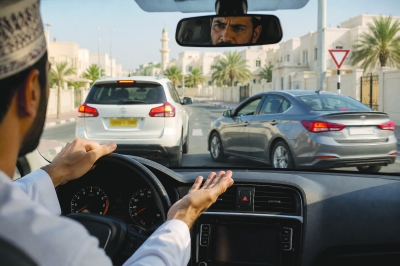
Traffic laws and regulations regulate traffic, and frameworks regulate the safety of road users. However, the lack of public decency and the continuous violation of driving ethics remain the biggest challenge in monitoring violations and the volume of serious accidents, especially among young people (18 to 35) years of age, who top the statistical indicators as a result of some wrong behaviors while driving, such as excessive speed, not leaving a safe distance, sudden transitions between lanes, etc. In this survey, Oman highlights the importance of traffic decency, and reveals the danger of unethical practices while driving and the efforts of public administration. Traffic, and citizens’ views on the importance of consolidating driving ethics. Brigadier General Engineer Ali bin Salim Al Falahi, Director General of Traffic, explained that the behaviors of some drivers lack public taste and some are considered dangerous, such as sticking to the vehicles in front and not setting a safe distance, not using signals while turning, or changing lanes and overtaking dangerously from the right or between vehicles, which are among the violations stipulated in the Traffic Law and its executive regulations according to the Violations Classification Guide, which cause a direct threat to public safety on the road, resulting in traffic risks and accidents that may occur. It leads to injuries or deaths, God forbid, and therefore the General Traffic Department sought to intensify traffic patrols to deal with violators in accordance with what is stipulated in the executive regulations of the Traffic Law. Regarding the age group that most practices incorrect traffic behaviors, the Director General of Traffic explained that traffic statistics, whether related to accidents caused by vehicle drivers or traffic violations, indicate that young drivers, especially those between the ages of (18 and 35 years), record the highest percentage of traffic violations. And serious accidents. He attributed this to the association of this category with some dangerous behaviors, such as excessive speed, drifting, wrong overtaking, and other practices that contribute to the occurrence of serious accidents. He stressed that these indicators call for continuing to enhance traffic awareness and establishing a culture of defensive driving among the various segments of society, indicating that the high rates of violations among this category are due – in part – to it being the most lively and active, and the most used of the roads due to the intensity of their movement. Preventive driving Regarding the role of driving based on tolerance and taste, Brigadier General Engineer Ali Al-Falahi stressed that vehicle drivers’ commitment to the traffic law and its executive regulations is a basic necessity for regulating traffic between vehicles and pedestrians, which contributes to reducing traffic accidents and avoiding road users’ mistakes, pointing out that traffic safety is a shared responsibility that requires the cooperation of all segments of society, and is not limited to the concerned authorities alone. He explained that adherence to traffic regulations must be coupled with driving ethics, by respecting the rights of others, and giving way when needed, Be patient and avoid actions that may provoke road users or expose them to danger, stressing that these practices contribute to creating a safer and smoother traffic environment. He added that driving based on mutual respect and adherence to traffic rules represents one of the basic pillars of preventive driving. It enhances the flow of traffic and reduces the possibility of accidents, in addition to establishing a positive traffic culture based on responsibility and awareness. He stressed that the Royal Oman Police believes that traffic goodwill is not limited to being a social behavior, but rather represents an essential element in enhancing traffic safety and protecting lives and property, stressing that commitment to traffic values reflects the driver’s awareness and sense of responsibility towards himself and others, and contributes to building a safer and more secure traffic environment for all. Campaigns Awareness: The Director General of Traffic stated that the General Traffic Department, represented by the Department of Traffic Safety Institutes, adopts in all governorates an awareness-raising approach that focuses on establishing the values of respect, responsibility, and discipline among road users, in addition to spreading traffic awareness and promoting traffic safety concepts through various means and awareness programs to all segments of society, including different age groups, school students, workers in government and private agencies, and community members, which contributes to achieving a safe traffic environment for all. Opinions of citizens Salem confirms. Bin Sultan Al Habsi said that public taste in driving vehicles is one of the most important values that society needs in its daily life, as it reflects the level of awareness and mutual respect among its members, and indicates that the road is not a private space for one individual without another, but rather a public facility that everyone shares in using, which requires a spirit of cooperation, commitment and responsibility to ensure the safety of all its users. He explained that the driver’s display of good morals and commitment to positive behaviors contribute to enhancing traffic safety and making the roads safer and more reassuring, indicating that Public decency prompts a person to respect the rights of others even in situations that do not require direct legal punishment. He cited this by avoiding using vehicle horns unnecessarily, as this may cause inconvenience to patients, the elderly, children, and residents of residential neighborhoods who need calm and comfort. He added that good conscience and moral values should constitute the first watchdog over the driver’s actions, in addition to adherence to traffic laws and regulations. Al-Habsi believes that adherence to public taste in driving is no less important than adherence to the law. Traffic laws and regulations set frameworks that regulate traffic and maintain the safety of road users, while traffic discipline contributes to promoting a culture of respect and cooperation among drivers. He pointed out a number of negative behaviors that are incompatible with the art of driving, the most prominent of which are: excessive speed, which reduces the driver’s ability to control the vehicle when an emergency occurs, and wrong overtaking in places not designated for that, in addition to suddenly moving between lanes without using traffic lights, which is behavior that confuses other road users and raises the possibility of accidents. He stressed that driving is not just a means of moving from From one place to another, it is an art that requires patience, wisdom, and good behavior in various circumstances, pointing out that the conscious driver realizes that his safety is closely linked to the safety of others, and that his respect for the road reflects his respect for the entire community. Al Habsi stressed that spreading traffic awareness represents a societal necessity that requires the combined efforts of various institutions, pointing out that social media platforms are among the effective means of delivering awareness messages to various segments of society, and Friday sermons play an important role in consolidating moral values and promoting positive behaviors, and he added that schools represent an environment It is an opportunity to build a generation that is aware of its rights and duties in using the road, which requires the continuous implementation of traffic programs and activities to consolidate the concepts of traffic safety among students from an early age. He also stressed the importance of the role of local communities, associations and volunteer teams in implementing purposeful awareness initiatives, pointing out that the family remains the cornerstone in instilling healthy traffic behaviors, as children acquire many values by observing the actions of their fathers and mothers. The more parents adhere to traffic regulations and respect the rights of others on the road, the more this will be reflected positively on the behavior of their children, which highlights the importance of good role models in building more aware and responsible generations. Tightening supervision. Al-Yaqzan Al-Hinai believes that adherence to driving ethics is one of the most important factors that contribute to building a civilized society that respects the system and maintains the safety of everyone. The road is not just a space designated for the passage of vehicles, but rather a place where people of different ages and cultures meet, so good behavior in it reflects the level of awareness. The responsibility lies with the driver. Ethics give driving a human dimension and make the road safer and more comfortable for everyone. In our daily reality, we notice many wrong traffic behaviors whose effects are not limited to inconvenience to road users, but also contribute to the occurrence of traffic accidents. Among the most prominent of these behaviors is failure to adhere to the safety distance, as some drivers intend to get very close to the vehicles in front of them, in a behavior that raises anxiety and increases the possibility of a collision, in addition to suddenly moving between lanes without using turn signals, as well as skipping a turn during congestion without concern or consideration for the rights of others, which leads to exacerbation of traffic congestion and raises resentment among drivers. He explained that these practices do not only affect the flow of traffic, but also reflect on the psychological state of road users, as it may cause Aggressive behavior, excessive speed, and non-compliance with traffic regulations can arouse feelings of anger or tension in others. He stressed that a conscious driver is one who controls his emotions, avoids being drawn into provocation, and maintains his calm in various circumstances, putting his safety and the safety of others at the top of his priorities. Al-Hinai stressed the importance of intensifying oversight of dangerous traffic behaviors, and strictly enforcing laws on violators, in addition to adopting initiatives that encourage positive behavior, by honoring committed drivers and highlighting distinguished traffic models, which contributes to consolidating a culture of respect and commitment, and enhancing levels of road safety. Respect Pedestrian Zahra bint Abdullah Al-Ajmi confirms that adhering to the correct lane and not overtaking during congestion are among the most important behaviors that contribute to the smooth flow of traffic, as it ensures fair use of the road and reduces chaos and congestion. She points out the importance of establishing a culture of patience and tolerance among drivers, stressing that the road should not be an arena for competition or selfishness, but rather a shared space in which mutual respect and commitment to the rights of others prevail. She added that drivers’ adherence to their lanes contributes to reducing congestion. Traffic and improving the flow of vehicles, providing a more comfortable and safer traffic environment for everyone, pointing out that many cases of congestion are exacerbated by skipping turns or randomly moving between lanes, which are behaviors that can be reduced with awareness and commitment before resorting to penalties. She explained that respecting pedestrians and granting them the right to cross is one of the most prominent manifestations of civilized sophistication, reflecting the human sense and the spirit of social responsibility, stressing that protecting the groups most at risk, such as children, the elderly, and people with disabilities, represents a moral responsibility before it is a legal duty, and that showing a measure of patience. Appreciating others enhances mutual trust among all road users. You believe that traffic goodness begins with simple details, such as using signals at the appropriate time, giving way when needed, and adhering to driving etiquette, which are practices that contribute to building a positive traffic culture and reflect the civilized image of society. For his part, Al-Muatasem bin Abdullah Al-Hosani confirms that the Islamic religion encourages good morals and respect for the rights of others in various matters of life, including using the road, indicating that adherence to traffic laws and respect for road users are based on… To the Islamic values that call for stopping harm and removing harm from the road. He added that the road is a shared right for all its users, and that the driver’s commitment to the regulations out of religious motives and good conscience, without waiting for the presence of a supervisor or cameras to catch violations, avoids harm to oneself and others, preserves lives and property, and embodies the sublime meanings of the noble hadith: “A Muslim is one from whose tongue and hand the Muslims are safe.” He pointed out that true commitment appears when the driver is keen to implement the regulations at all times, whether he Under supervision or not; Because respect for the law expresses a firm conviction of its importance in preserving rights and preserving lives, and not just fear of punishment. He also stressed that instilling these principles from a young age within the family, and reinforcing them in school, the mosque, and the media, contributes to raising a generation that realizes that driving is a responsibility and an obligation, and that every action on the road may be a reason for protecting a person’s life or exposing it to danger.