

اخبار سوريا اليوم – وطن نيوز
سوريا اليوم – اخبار سوريا عاجل
W6nnews.com ==== وطن === تاريخ النشر – 2022-04-02 03:08:00
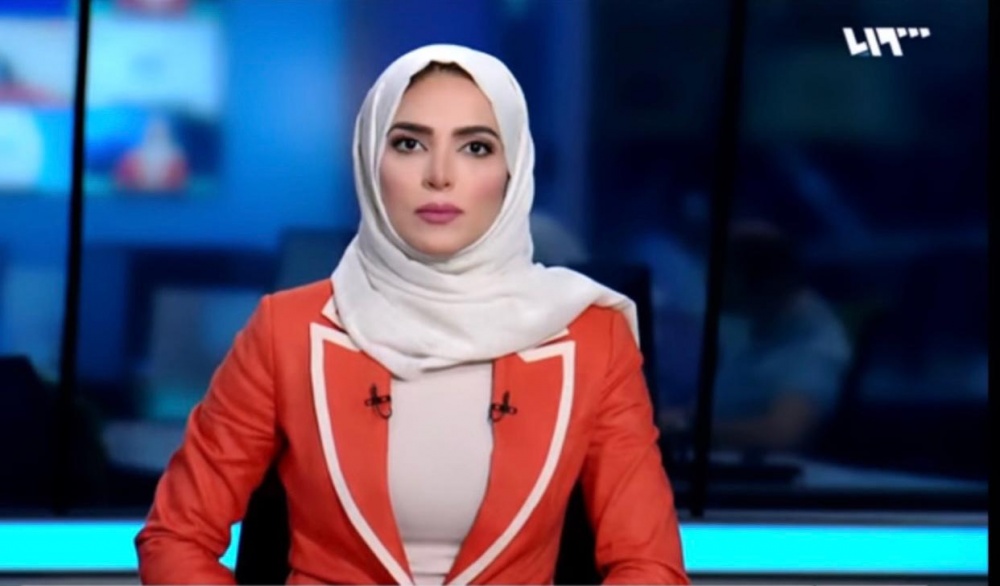
– I devote my effort to motherhood and work… and the competence of the journalist is the decisive factor – Syria TV’s editorial policy reminds me that I am from a generation that contributed to creating the Arab Spring – The features of my identity are determined by the public, and my presentation of news and programs increases familiarity with the recipient. The Arab journalist, “Alaa Hashem,” moved between several Arab television stations, before presenting a weekly program, bulletins, and news summaries on Syria TV, leaving the recipient with the features of the “serious presenter,” which increased the news bulletins and programs. Politics, perhaps, is part of perpetuating these features. “Alaa Hashem” tells the story of her professional career to “Zaman Al Wasl” when she began studying media, six years behind her generation, but the specialty of journalism and media was an aspiration and a dream, not an urgent specialty. She chose it of her own free will, despite the unwillingness of her surroundings, which constituted a challenge for her, to succeed, prove herself, and make a good choice, from the beginning. Perhaps the first parting of her professional life that she remembers, when the professor of the “theories” subject informed “Communication” during her studies, that a young man named “Mohamed Bouazizi” burned himself in Tunisia. “I remember this day perfectly. I remember the hall and the faces of the students, how we received the news then, and how everything changed.” The Arab revolutions then blew, and the winds of change blew with them. We all changed with them. I changed as well. Conversations about revolution, freedom, reform, democracy, and civil society became present in the lecture halls and between cups of coffee in the college cafés. The scene retreated. On Amman All of them, which at that time witnessed an unprecedented Arab cultural movement, were a small, relatively stable city, a spacious café that hosted Arab youth of all nationalities: Palestine, Syria, Yemen, Egypt, Saudi Arabia, Somalia… nationalities across the Arab map and rich experiences that began in the corridors of the university and ended with salons and seminars that we prepared and ran, which introduced us to multiple walks of life and cultures. I am indebted to it today because it shaped me, my awareness, and my relationships with space The year. From the first moments of late study, I realized that I was in the right place, but the scene that seemed rosy was of course interspersed with disappointments. At the university, you feel that you hold the world in your hands, that work is easy, opportunities are available, and the dream is near. After graduation, you collide with reality, the road is long and difficult. She started as a journalist on Orient TV, and progressed to work over a period of three years, considering that this experience had the fundamental role in building her television knowledge. “In it, I learned how to write news and reports, how to hone my voice, and how to face the camera.” Then came the experience of the Iraqi “Fallujah” channel in Istanbul, three years in presenting news and programs. It first prepared me for an openness to the Iraqi file, which is a thorny and complex file as you know, and secondly, it prepared for me a special program, “And What Next,” a political program. I used to prepare it on my own and present it at the same time. The beginning is always difficult, but you alleviate it with patience and the support of family and loved ones. It eventually settled down today, with Syria TV, whose “editorial policy and the message it adopts remind me that I belong to the generation that made the Arab Spring,” and I feel my belonging and connection to its files and tragedies. “My relationship with the Syrian file is similar to my relationship with the Palestinian and Jordanian file. I read about the Nakba, the occupation, asylum, and the camp.” In books, and I heard about it in my grandmother’s stories, but I did not live any of that. I did not see it up close. I saw it completely with the Syrian issue. I feel that part of me is Syrian.” She participates in presenting news and daily programs on her weekly political program, “But my identity on Syria TV as a presenter in the political field has begun to stabilize.” It was clear that the TV management wanted to introduce Arabic calligraphy to the Syrian file, and this is very logical because Syria is part of its surroundings and its surroundings are part of it, and in one way or another “the surroundings” contributed and continue to contribute to the changes occurring in the Syrian issue. The issues intersect in the Syrian file in a strange way. Hence, once again joining Syria TV was an opportunity for me as a broadcaster, working in a file that I love and direct contact. With the Arab and international files through the “Al-Masher” program, today, one year after the launch of the “Al-Masher” program, I believe that the program team and I, colleagues “Muhammad Al-Daghim and Abdel Qader Dweihi,” were able to form a clear identity for the program, and a good follow-up base for Arab and international files. Here is the challenge, since Syria TV is a local channel, and this is of course the result of a collective effort and trust from the administration. Regarding the necessity of the presenter participating in the preparation and editing so that he does not appear strange during the reading and presentation, the Palestinian media personality continued: “I think the referee appointed The viewer, the viewer is smart, believe me. He can distinguish this from the first moments of watching you. He is the one who distinguishes from your voice and your interaction with the news, that you are reading a news item that you understand well, and are aware of its backgrounds and contexts. Let me answer while I am assuming that you are asking me what I think about whether it is important for the broadcaster to be a journalist. This is very important. The newsroom is the kitchen of television, and if we consider that the broadcaster is a set of skills, then the broadcaster coming from the kitchen has an additional point of strength. In Al-Mushar, we work together as an integrated team, we distribute the work among us, and we agree on The interviewer and we suggest to the guests: harmony and team effort are one of the keys to success, which I hope will be our ally. The team is always the one who makes the difference. You alone will not present a distinguished media work, no matter how educated, capable, and present you are, the golden seed in the team. I believe that it is necessary to go through the news stage and stay there for a period that ensures the formation of a political and journalistic awareness that prepares for presenting a special program. But should we leave the news after that? I do not think, nor do I prefer. The program is important after a certain period for the broadcaster. I feel like it is a promotion for the broadcaster, a rung on the ladder that he climbs. But news is a different pleasure. It is like a daily confrontation with the audience, overlooking them in the morning with a cup of coffee, the middle of the day and the family gathered, and the evening and the evening has begun. “For me, I do not think that I can do without this pleasure, no matter what.” I have developed in the profession, and in my work now, I am very keen to have my name included in the rota in the news and briefs, as that, in my opinion, creates familiarity with the viewer.”* Limits of interactive presentation Do you remember the harshest situation you experienced while presenting news of the revolution and violence against the Syrians? Did you get to the point where you cried, for example… Or do you think it is necessary to separate profession and emotion… and limit expression and interaction to the usual broadcaster tools (voice, coloring, and gesture)? I mention a report you were assigned about Khan’s children. Sheikhoun “Chemical Massacre.” Yes, I cried while watching the coming pictures. This is a report that you cannot write while you are empty of feelings. You must write it while crying. Your voice must be read here in a different voice. You must be as great as the pain after the massacre. This is honesty…to be able to write about those pains in an appropriate way to convey the issue. “The media, in my opinion, is influence or your ability to influence and create public opinion.” As for presenting the news, you must interact with the event, whether painful or painful. Happy, and this is another skill that must be mastered. If the news is about casualties, for example, how can it be read impartially? The listener must feel that this is very sad, as if she was experiencing the traumatic event of the Assad regime bombing a civilian residential complex. For example. It’s simply a matter of talking to the audience. When you talk about a painful story, your audience should feel that. From your voice, from your features perhaps. From the movement of your body. “I am in favor of interactive presentation and I am not inclined towards static, classical presentation.”*The lie of media neutrality. The fourth anniversary of the launch of Syria TV passed a few days ago, coinciding with the anniversary of the Syrian revolution. The question: Does Syria TV cover Syrian news, professionally and impartially. Is neutrality required or not neutrality in the media? Hashem saw that Syria TV is objective, taking the news from its various aspects. For example, we address the coalition’s statement and the regime’s statement. We shed light on the suffering of the Syrians in the north, and we do not ignore their suffering in the regime’s areas. We have clear constants from the central issues of Palestine and Syria. We are with the people and against injustice wherever it may be. Syria TV is objective and investigates the truth, and this is what is required in my opinion. As for the expression “neutral,” I do not understand it in The media: “Believe me, this is a lie” invented by others for us. It is suitable for a theoretical lecture, but in reality there is no neutral media, and we should not strive for the media to be neutral. You should not be happy with the existence of a neutral media. There are values, constants and positions that must be adopted. In the opinion of the viewers, it is a comprehensive platform for Syrians wherever they are, and for us to be the source of Syrian news. It is true that today interest in Syrian news has declined, but experience proves that Syria, with its geography and its central location, is an important part of the region and world politics. Take, for example, what is currently happening in Ukraine. Everyone suddenly remembered that Putin bombed Aleppo and is bombing Idlib daily. The Syrian file cannot be ignored. This is a fact. Hence, Syria TV is an important project, and with time this importance will become more evident. In the priorities of the news… We work according to the fact that the news imposes itself. It is true that in normal times, our headlines and news often focus on Syria, but when the whole world turns to a place, you find us there, in the events of the Sheikh Jarrah neighborhood and the recent Israeli aggression on Gaza. We kept up with the event moment by moment. Syria Today, our daily program, became like Palestine Today. This is an event that imposes itself and cannot be ignored. Today, for example, with the Russian aggression against Ukraine, the viewer is looking for news related to Ukraine. We are there as well, and our coverage of the global event continues.* Necessities The stage – “Syria TV Foundation” was distinguished by means of communication and digital media, perhaps such as its interest in the big screen. Is this a necessity in the reality of developments, speed, and mobile phones? How can the big screen be given what it deserves in order to bring the viewer back to it? I do not know if I, as part of the team, can evaluate the work and performance of Syria TV. I know that I am happy to be part of this project, and to touch people’s interaction and aspirations. I hope that the circle of Syria TV’s audience will expand, and that it will always meet the good expectations of the Syrians and the Arab public in general. As for For social media, and publishing via social media, this is a very important matter in a time when these platforms have become a destination for everyone, and I believe that the management in television is attentive to the matter, with constant recommendations and the commendable effort of the social media team, whose hands are always clear in providing content on the platforms. For example, in Al Moasher, the episode is announced on the various platforms “Instagram, Twitter, and Facebook,” and then after it ends, the social media team publishes the most prominent clips of the episode with the guests. In general, there is an awareness of the importance of Transferring content to social media platforms. *The suffering of women in the media: Being a woman and veiled, what is the positive and negative of this, working, in front of the camera, for the spectator? This profession requires perseverance and patience that a woman masters, or almost, in many stages I could have given up, but the female is by nature patient, interested in details, interacts with her surroundings to which she belongs, and this is beautiful and fruitful in our profession. As for the difficulties, there are many, the greatest of which for me is the burden of multiple responsibilities, in my responsibility as a mother, As a housewife, I always try to distribute my efforts appropriately between work and home. I get my energy from love. I simply love my work and this reduces the burden. I do not want to finish answering this question before I address the issue of the hijab, as it is one of the additional difficulties for women in the media. The main concern is that my personal choice “the hijab” does not prevent me from being evaluated fairly and given the opportunity like others, and not being categorized based on my appearance. I look at the matter as part of society, and therefore I have the right to exist. My competence is the decisive factor. It is assumed that there is no concern for Neutralizing veiled women from news presentation. It is true that the matter today is different from what it was ten years ago, for example. Today there are institutions that allow the matter and do not find a problem with it, but the general situation excludes veiled women from the scene. There are even places that impose a veto on veiled women, while the West itself has gone beyond the matter and we now see veiled women on the largest and most important global screens. I hope that we will reach this stage in the Arab situation. The end of the dialogue with the journalist “Alaa Hashem” was about the anniversary of the launch of Syria TV and the increase of broadcasting hours to 13 hours a day, starting with a new morning program, which Hashem described as “important for the television mix” because in her view it is like morning fruit, in addition to a morning bulletin that includes a summary of the most important news, while remaining on the main bulletins and programs Syria Today and what remains, in addition to developing the Damascus Forum program and the Al-Moasher program. Conclusion: “I wish the team, individually, all the best.” “All the best. I hope that one day Syrian TV news and programs will be broadcast from the heart of Damascus.”


