
اخبار سوريا اليوم – وطن نيوز
سوريا اليوم – اخبار سوريا عاجل
W6nnews.com ==== وطن === تاريخ النشر – 2022-11-08 15:09:00
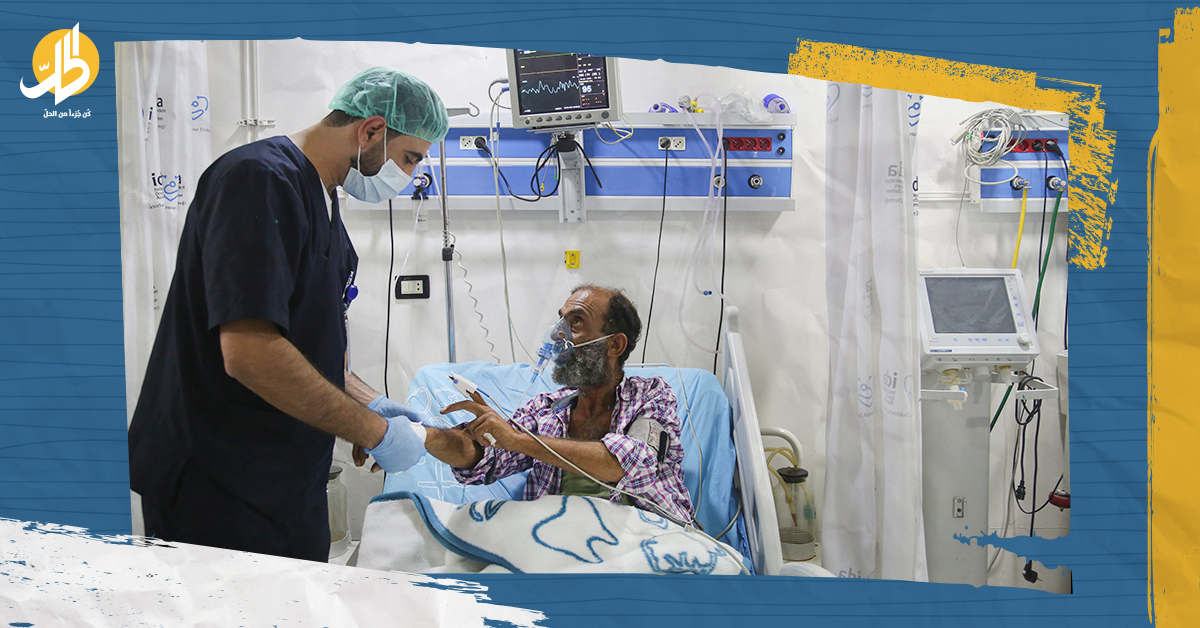
“If a person wants to perform medical tests, whether blood tests or general tests, it costs him twice his salary or perhaps more. Sometimes people take advice from pharmacists or online, to avoid the costs of conducting medical tests, and this exposes some to setbacks or harmful side effects. But if the citizen does not have the financial ability to conduct medical tests, he has no choice but to resort to these methods, and in fact people no longer care about their health after this outrageous price amid low salaries and incomes.” “Also, the price of everything rises from time to time in Syria, starting with foodstuffs and not ending with medical care, etc., so the employee’s salary is now only sufficient for a few days,” this is how Mrs. Manal Al-Sharifi explains to Al-Hal Net website, the condition and suffering of the Syrians with the high costs of medical tests and general medical fees, amid the low level of salaries. The health sector in Syria is facing the risk of collapse, with the continuing decline in the level of services in hospitals and the migration of medical personnel, to the point of a decline in the quality of services in medical laboratories, as well as a significant increase in their prices, which has led to patients reluctance to visit laboratories. You may be interested in: The $100 salary is a dream for university graduates in Syria, available only in the private sector! It is strange that there are not a number of medical tests in state hospitals that provide their services for nominal fees, while the patient can have them performed in one of the private laboratories spread in the capital, but for very high fees and many times the official prices, according to a report by the local newspaper “Al-Watan”, today, Tuesday. While a number of hospitals suffer from a shortage of some laboratory tests, especially hormonal glands and others, all of this is available in the private sector. There are significant increases in medical tests in the capital, Damascus, as this varies according to the nature of the area, whether it is popular or in Al-Maliki or Abu Rummaneh, and according to the amount of labor and costs incurred by the laboratory and its work requirements at the present time. You may be interested in: “Broken bone” before the onset of winter.. Transportation fees in Syria are subject to whims. “Caustic prices” In the context of the reality of medical test prices, there is no fixed price in laboratories, but on average the costs of blood tests range between 5 thousand and 10 thousand, and gland tests range between 30 thousand and 40 thousand, while the cost of hormonal tests exceeds 60 thousand liras and vitamins 200 thousand, with an increase This is clear due to the large number of tests that the patient costs, according to the local newspaper. A number of workers also confirmed that, in some laboratories, there are major impacts on laboratories as a result of the crisis conditions, which prompted many laboratories to change professions, or raise prices as a result of the costs and supplies they provide in terms of the high costs of workers, power racks, and rents, and the significant increase in raw materials, equipment, and all the details related to the work of laboratories and providing their services to patients. One of the workers indicated that the increase in laboratory analysis does not cover the real costs, especially since a number of laboratories were closed during the last period, and some of them thought about changing their profession as a result of the large burdens, indicating that the Ministry of Health’s pricing for medical analyzes has not been modified since 2011. Therefore, the operating laboratories price according to their mood without any restriction on the official prices issued as a result of their lack of compatibility with the current conditions and the reality of living, and according to the laboratories, the increase is a profit margin. Simple, with a clear difference in prices. Mrs. Manal Al-Sharifi (46 years old), who is from a neighborhood in Damascus and works as a teacher in a school, adds in this context, “The prices are empty and not at all commensurate with the level of our salaries. For example, not long ago, my husband had some tests done because he was suffering from pain in his esophagus and stomach. The doctor requested several tests in addition to the endoscopy, and this cost us nearly two million and perhaps more than that.” Al-Sharifi added in her speech, “The costs of my husband’s tests are burdensome on us, as we can barely secure a living. The problem is that our salaries are very meager, and do not exceed 120 thousand Syrian pounds, in addition to other living expenses. Therefore, I had to borrow the amount of the costs of the tests and the rest of the matters from my relatives, and without them, we would not have been able to secure my husband’s treatment.” Al-Sharifi concluded her speech by saying, “If the situation remains as it is and the Syrian government does not raise salaries, people’s conditions will deteriorate, and will even head toward hell. In fact, this high price and living situation has become exhausting on all levels: financially, psychologically, and physically. In short, most Syrians today want to immigrate and escape from this miserable, tired country.” You may be interested in: Prices are rising daily.. Between the government and Syrian merchants, they are the victims of patient brokering. A number of citizens confirmed to the local newspaper “Al-Watan” that there is difficulty in completing all analyzes in government hospitals in light of the lack of them in full, forcing the patient to resort directly to private laboratories to obtain the required analysis from the specialist doctor or from the hospital itself, or this matter prompts some doctors to ask the patient to resort to a specific laboratory and not another under the justification that there is accuracy in his analysis. The General Director of Damascus Hospital, “Al-Mujtahid,” Dr. Ahmed Abbas, claimed that 90 percent of the tests are available in the hospital and are performed on a daily basis, with a shortage of a percentage of tests (immunological and hormonal), especially in the economic blockade, tenders, and a number of measures taken, especially since the prices of raw materials for these tests are high in light of the high prices of their raw materials. Abbas explained that 40,000 laboratory tests are performed monthly, noting that the cost of the tests in hospitals is symbolic and ranges between a thousand and two thousand Syrian pounds. He added, for example, that the hospital still charges 800 pounds for a TSH test, while the cost of the analysis in the laboratories exceeds 8,000 Syrian pounds. In turn, the General Director of Al-Mowasat Hospital, Dr. Issam Al-Amin, also claimed that most laboratory tests are available in the hospital, with a number of them being interrupted at times as a result of delayed supplies, noting that about 160 tests are performed monthly. For his part, the head of the Doctors Syndicate in Syria, Dr. Ghassan Fandi, explained to the local newspaper that two years ago a health decision was issued to dissolve the laboratory body, provided that an alternative be created, but to date the matter has not been completed, knowing that this matter is decided by the Ministry of Health, adding that since 2005 no new prices have been issued to doctors, and the same applies to laboratories that did not issue prices during the crisis. There are laboratories that stopped performing part of the analyzes due to the high costs. Fendi noted that prices are supposed to be adjusted every 3 years to adapt to circumstances and changes, especially with the import of materials and the impact of the exchange rate. Fadi Samir (a pseudonym), a doctor in a hospital in Damascus, added to Al-Hal Net that the price of tests is rising due to the rise in the prices of everything, on the one hand, and because the requirements for tests come from abroad and in foreign currency. As for the interruption of some tests in government hospitals, this is due to the high costs of laboratory supplies, which led the Ministry of Health to withdraw from supplying hospitals with some expensive laboratory supplies. Samir pointed out that the prices of tests, medical examinations, and medicines will continue to rise if the Syrian pound continues to gradually deteriorate, and therefore the government must either raise employee salaries in proportion to the living reality or develop solutions to limit the rise in prices and the deterioration of the Syrian pound. You may be interested in: “A cylinder every 100 days”… The gas crisis increases the suffering of Syrians in the winter. Lack of supplies. In a previous press statement to the local “Athar Bas” website, the Director General of Hama National Hospital, Dr. Salim Khalouf, did not deny the loss of sodium bicarbonate, which is needed for kidney dialysis, pointing out that the import of kidney materials is centralized by the Ministry, according to the instructions of the Presidency of the Council of Ministers in 2018, and the Ministry was informed of the shortage of the aforementioned substance. Regarding working or broken dialysis machines, the head of the engineering office at Hama National Hospital, Abdel Karim Jarjanazi, pointed out that there are 14 dialysis machines working under great pressure from patients, numbering between 70 and 80 patients on a daily basis. In contrast, there are 8 broken machines, of which 6 machines are being maintained, and they cost very large expenses, as he described. From time to time, some dialysis supplies are repeatedly interrupted for patients in Daraa Governorate, which imposes large financial burdens on them that they cannot continue to bear in light of the difficult living conditions that the whole country is experiencing. The shortcomings needed now, according to what some patients and their families reported to the local newspaper “Tishreen” earlier, are (the tube, the filter, and the cartridge), which forces them to buy them from the market at a value ranging between 70 and 75 thousand Syrian pounds, which is a large amount, especially since the patient needs 8 regular sessions per month, with the exception of emergency care when needed, which means that the patient needs to buy these shortcomings in order to complete the dialysis session, amounting to about 600 thousand Syrian pounds per month, which is An amount that most patients cannot afford. Patients called on the relevant authorities in the Syrian government to solve this problem as quickly as possible, and to provide all the requirements for dialysis sessions that cannot be dispensed with or postponed, pointing out that there is no convincing justification for stopping them because they are available on the market. On the other hand, Dr. Ashraf Barmo, Director of Daraa Governorate Health, explained to the local newspaper that securing dialysis supplies is a central matter, and correspondence and follow-up are being conducted in this regard, in the hope of providing them in full as soon as possible, pointing out that the Health Directorate needs between 1,500 and 1,750 sessions per month, for patients undergoing dialysis in its various hospitals, and in the comprehensive clinic complex in Daraa, where some patients, in addition to the regular sessions, require emergency sessions as needed. While Dr. Yahya Kiwan, Director General of the Daraa National Hospital Authority, pointed out that the supply is also centralized, and the monthly need ranges between 250 and 270 dialysis sessions for kidney patients in the National Hospital alone, as the patient sometimes needs non-periodic emergency sessions, and continuous and diligent follow-up is carried out in order to secure all supplies through the Ministry of Health, as he described it. You may be interested in: Prices continue to rise in Syria… “Only the citizen pays the tax.” One million liras. The cost of a tomography scan. The local newspaper, Al-Baath, indicated in a previous report that there is a “stock exchange” for imaging using resonators and tomography devices, in light of the scarcity of devices in government hospitals, where the cost of the scan reached more than 600 thousand liras in private centers, and exceeded a million in some cases. The newspaper added that government hospitals are still providing the service at nominal prices, “not exceeding 9 thousand liras, and zero liras for some cases,” but sources to “Al-Hal Net” confirmed earlier that most of the devices are broken down and do not provide the service as required. In turn, the doctor supervising the radiology department at Al-Mowasat Hospital in Damascus, Khaled Al-Khattab, confirmed that the hospital is suffering from great pressure on the magnetic resonance devices, as this problem constitutes a burden on government hospitals and patients alike. Al-Khattab said in statements reported by the local newspaper, “The number of devices is small, and over the past years, many hospitals have gone out of service, thus increasing the pressure on what remains of them, including Al-Mouwasat Hospital, which contains six Echo machines, in addition to CT, mammogram, X-ray machines, and a resonator device, which serves between 500 and 600 patients per month, as it receives a very large number of patients from various governorates, especially those that completely lack a device.” Resonant, like the city of Latakia, which, as a result of the failure of its only and basic system, made the capital’s hospitals the only destination for its patients.” The letter noted the presence of cases of corruption in the hospital, “as some patients were forced to pay 50 thousand liras to employees who exploit the patient’s need to obtain CT services, which prompted the hospital administration to launch a platform or mobile application that enables the citizen to book a role directly, and thus control all violations occurring by some, to confine the matter completely to the administration.” The black market virus and its impact on the health sector is the concern expressed by many patients in Latakia, some of whom suffer from chronic and malignant diseases, in addition to heart and bone problems, in light of public hospitals losing many of the medical services that are still provided by clinics and private hospitals in Syria. According to a report published in the local newspaper “Al-Watan” at the beginning of last September, some heart patients in Syria are suffering from difficulties in obtaining cardiac catheterization operations at the “Al-Basil” Hospital for Cardiology and Surgery, in Latakia, due to the malfunction of the catheterization device for several months, while those who go to “Tishreen” University Hospital are required to purchase the necessary supplies to perform the operation from outside the hospital. According to the information, patients are forced to go to private hospitals and pay very high prices, ranging from 600 to 800 thousand liras, for a catheterization procedure and about 6 million liras to install a single network, so that the required numbers become causes of increased “sorrow on the heart,” according to what citizens stated, demanding that solutions be found that revive patients as soon as possible. The medical sector in Syria has declined significantly over the past years, due to the deterioration of the Syrian government’s economy on the one hand, and the deterioration of the Syrian pound in front of foreign exchange on the other hand, as all medical sector supplies are valued in hard currency, in addition to the unprecedented migration of medical personnel, and the destruction of a large percentage of medical facilities and centers, during the past years. You may be interested in: “This is how we will not go bankrupt.” Alternative crops are a way for farmers to survive in Syria.