
اخبار سوريا اليوم – وطن نيوز
سوريا اليوم – اخبار سوريا عاجل
W6nnews.com ==== وطن === تاريخ النشر – 2022-11-07 14:45:00
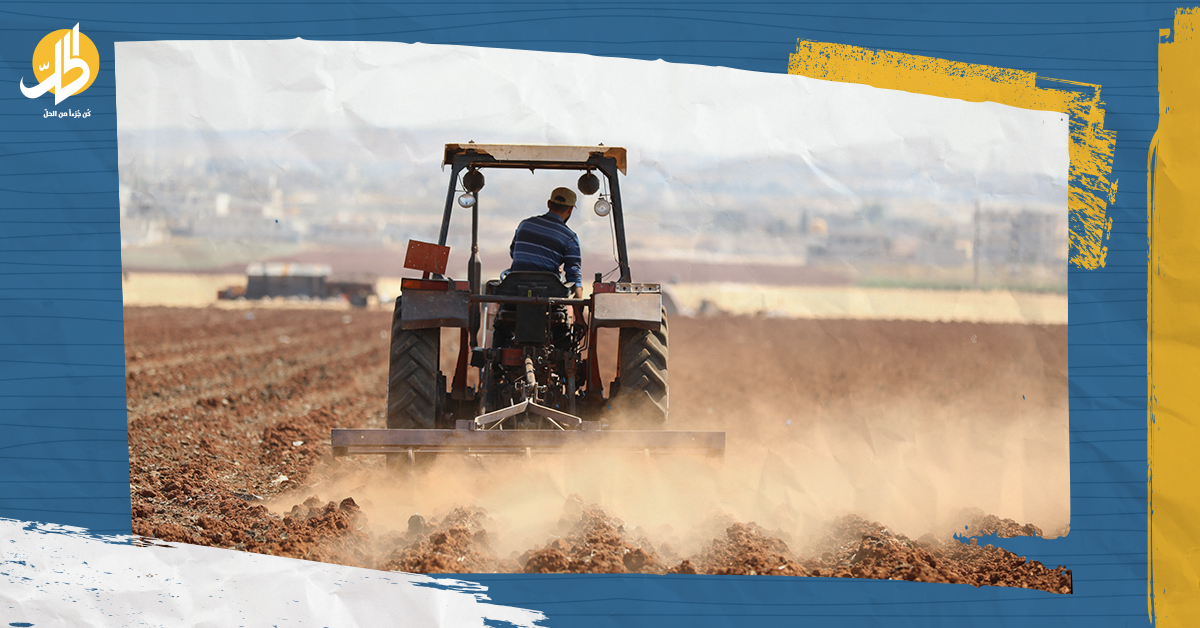
“Every season, we either lose or we are not left with a good margin of profit equal to our fatigue and effort as a result of the drought that struck Syria several years ago, in addition to the lack of government support for marketing plans and agricultural supplies, such as diesel, seeds, etc. If a farmer or any other person suffers a loss in his work, he will certainly resort to alternative work. It is not reasonable for a person to work at a loss, especially in an economically collapsed country like Syria,” this is how farmer Hassan Al-Mustafa explains to Al-Hal Net the suffering of farmers and how they lose in Their crops are lost for many reasons, the most important of which is the lack of government support, thus turning to other businesses or cultivating alternative crops. As a result of the decline in the production of citrus and other crops, such as wheat and barley, during the recent period, and farmers incurring many losses, many farmers resorted to uprooting citrus trees and establishing alternative crops in their place. Among these new varieties were some introduced crops, such as beverages such as coffee, yerba mate, and tea, as well as invasive and exotic plants, such as paulownia, azolla, Nile flower, and other exotic plants, in addition to tropical fruits. A large percentage of them succeeded in this. Cultivation, after these imported fruits were previously limited to some shelves in commercial malls for many years. In order to avoid “bankruptcy” during the recent period, many types of introduced plants have spread in different regions in Syria, between crops that settled in the place of the original lands cultivated for the purpose of financial gain, and among plants that were introduced for different purposes that may be necessary to avoid loss, especially since agriculture has become a profession that no longer has a good financial return as it was before. Some of these plants, according to a report by the local newspaper “Tishreen” yesterday, Sunday, have a wide-ranging negative impact, and some of them are still under study. Farmer Hassan Al-Mustafa, who hails from the Syrian coast, has an orchard in which he grows some summer and winter vegetables, but due to winter rainstorms and the absence of government support, he suffered many losses, so he resorted to agricultural crops to avoid losing money and not reach a state of “bankruptcy” on the one hand, and to cover his family’s expenses on the other. In this context, he added, “It was almost compulsory for me to turn to alternative crops. When the government does not support me and I suffer many losses before their eyes, in the midst of all this high prices, especially since I have a family and they need daily expenses, then of course I will either turn to another profession or to grow alternative crops.” Al-Mustafa pointed out in his speech that many Syrian farmers turned to alternative crops, not with the direction and support of government agencies, whether in terms of guidance or through securing seeds and agricultural supplies, especially since the types of seeds entered the country illegally. Returning to the “Tishreen” newspaper report, with regard to plant species that have a negative impact, the Assistant Director General of the Scientific Agricultural Research Authority, Dr. Bahaa Al-Rahban, spoke to the local newspaper, indicating that a group of plants had been introduced that had clear negative effects, including the wild eggplant herb, which invaded the eastern regions and began to spread in most of the Syrian governorates. It is a difficult species to control and its control requires a program of several years of chemical and mechanical control. The Ministry of Agriculture has launched several campaigns to combat it, starting with 1990s, and control operations are still ongoing. Also, there are invasive species, such as the water hyacinth plant (Eicornia), which is considered an aquatic weed that is difficult to control. Perhaps one of its most important harms is the evaporation of large amounts of water, the negative impact on other living organisms, and the disruption of the environmental balance. They were introduced in some way and occupied water bodies in the jungle area and the Mahardah Dam, and began to move to the rivers and irrigation canals in Idlib, Hama, and Homs, as well as the Syrian coast. Prevention workers in the Agriculture and Research Directorates were able to eradicate them. From the coastal region, the suffering remained great in the Al-Ghab and Hama areas, and efforts are continuing from the Ministries of Agriculture and Water Resources to control this harmful aquatic weed, and an action plan was drawn up to combat it after the Ministry of Agriculture took a set of practical measures to combat it. The sixty-year-old farmer, Hassan Al-Mustafa, added in his speech, “If some alternative crops have major negative effects, the government and the concerned authorities must move to support the farmers, whether with instructions and guidelines or supporting them with marketing plans and other requirements, especially diesel, in addition to compensating the farmers when their plastic reserves are exposed to many destructions due to winter storms. Here, the farmer will not resort to other crops that may have negative effects, according to what the government authorities claim.” You may be interested in: “A cylinder every 100 days”… The gas crisis increases the suffering of Syrians in the winter. Types of alternative crops. On the other hand, there are other species that have been introduced into Syria, including the paulownia tree, also without prior permission from the relevant authorities in the Ministry of Agriculture. It is known that the introduction of any plant species requires a set of precise conditions and standards, in addition to conducting studies and research related to the environment of the incoming plant and its behavior in terms of growth, reproduction, spread and environmental requirements. In addition, they may become invasive plants that occupy the place of planting local trees adapted to the Syrian environment. As mentioned in the references, they require large amounts of water and produce large numbers of seeds. It is feared that they will grow and spread to different areas and may compete with local species, and may become a source of threat to their existence and survival. Within this framework, development expert Akram Afifen believes that it is possible to consider this type of plant as a “research landfill” and benefit from it in the production of biogas (biogas) or as a fodder ingredient, given that it was experimented with vermicompost, and it was a very successful experiment if it was converted into “research landfills” in cooperation with the Agricultural Research Authority, and the experiment will be circulated if it is successful, according to the local newspaper. Afif believes that the farmer is not in the process of planting wheat now because he will suffer a loss according to the current price, and the matter must go beyond the social goal of agriculture, which is to secure the basic needs for living. It was necessary to search for agricultural alternatives, and although some of the introduced crops, such as beverages (such as coffee, mate, and tea), were merely “personal diligence,” these diligences came in their right place, and although they were non-Syrian crops, they were better in taste than in origin, and this is due to the Syrian environment that helps to make them successful. Many types of plants. Considering that there are large quantities of yellow corn that were received only from some merchants at low prices, according to Afif’s opinion, and when used as a fodder ingredient, it will become beyond the citizen’s purchasing power, so it was necessary to search for less expensive fodder alternatives, including Azolla and Bunicane, and it is better to adopt them as research plots in partnership with agricultural research in support of the citizen’s experience and work with them, and of course, if they fail, they will be removed. Agricultural engineer, Alan Muhammad, adds within this framework to Al-Hal Net website that farmers’ orientation towards alternative crops, which have negative effects on the soil and increased water consumption, is due to the government’s negligence in its duties towards agriculture in general, in addition to farmers being exposed to many losses and the deterioration of their living conditions as a result. The agricultural engineer pointed out that the concerned authorities must reconsider the agricultural sector in general, and in particular about farmers’ orientation to alternative crops, especially invasive and exotic plants (paulownia, azolla, Nile flower, and other exotic plants), and that the Syrian General Authority for Agricultural Research, in cooperation with the Directorate of Forestry and the Directorate of Plant Protection, should study and follow up on these crops in terms of their adaptation to the environment, the pests that could affect them, and their water and fertilizer needs, and then take the right decision based on it, along with Looking at the conditions of farmers in general. You may be interested in: Prices are rising daily… between the government and Syrian merchants are the victims. Positive results. According to a previous report by the local newspaper “Al-Baath”, alternative crops have flourished in the country after the personal experiences of several farmers, which in turn opened the door to tropical agriculture wide open. However, despite the success of most of them, their adoption by the government sector is still governed by several restrictions in terms of protecting local agriculture and not replacing tropical agriculture as an alternative to it, especially since the price of one piece of any fruit exceeds the price of one piece of any fruit. 4,000 Syrian pounds, and sometimes it reaches 30,000, depending on its quality, weight, and where it is located or sold. For its part, the Syrian Ministry of Agriculture confirmed that tropical crops fall within the framework of the “private sector,” and are still far from government support despite the economic returns resulting from them if they receive the necessary support for them, for unknown reasons. On the other hand, Iyad Muhammad, Secretary of the Import and Export Committee at the Federation of Chambers of Commerce, told the local newspaper that the reason for turning to this cultivation is the high demand for products that were previously imported in foreign currencies, accompanied by the deterioration of the economic output of citrus growers and the inability of the concerned authorities to find radical solutions for growers of local fruit trees, so a group of farmers took the risk as individual attempts by carrying out numerous experiments on large groups of modern tropical seedlings. Muhammad pointed out that there are tropical varieties that have been grown locally for more than twenty years, such as “avocado and kiwi,” in a purely commercial and economic manner due to the decline in citrus prices over the past ten years. There are many difficulties in marketing and exporting it, in addition to the significant increase in the costs of protected crops in coastal areas, as he described it. As for the requirements for producing these crops and the extent of support provided by the Ministry of Agriculture to their farmers, Muhammad said that the agricultural requirements have not yet been included in the agricultural directorates and guidelines, as “how-to-farm agriculture” is still not subject to an organized agricultural plan, and if it is subject to the Ministry of Agriculture, it will have good support, as Muhammad claimed. You may be interested in: “Break a bone” before the onset of winter… Transport fees in Syria are governed by whims “Government drumming” On the other hand, there are many experiments that are still waiting for their results on the ground regarding tropical fruits whose seeds were extracted by farmers in devious ways and methods, according to the local report, with the aim of abundant profit that the government was unable to provide for them, as Hussein Kharma, one of the owners of tropical farms, believes that these experiments did not bring direct positive results, but rather after repeated experiments in Cultivate it. Kharma pointed out that government agencies ignore the efforts and costs exerted by farmers to secure the requirements for these crops and content themselves with singing and “drumming” on media platforms about the farmers’ achievement and success in introducing an imported variety to their markets, while ignoring the material value that they add to the state treasury, as he put it. In turn, development expert Akram Afif, in his previous statement to Al-Baath, did not deny the success of this experiment in Syria, especially since it was able to give distinctive flavors that surpassed those in the country of origin as a result of the fertile soil in Syria. He called on government agencies to support it, given that these crops have very high productivity. As tropical crop farmers explained in previous press statements; They faced difficulty in marketing at first due to the lack of government support on the one hand and people’s lack of knowledge about these varieties. Later, the crops were marketed inside Syria, and then part of their productivity was exported abroad last year through special efforts from farmers, amid the absence of government support, especially at the level of marketing and foreign export. You may be interested in: Life for the category of “financially comfortable” people.. The purchasing power of Syrians is groaning under the weight of inflation. Reasons for the collapse of the agricultural sector. After all the setbacks and losses that befell the agricultural sector, which in turn affected livestock in Syria, over the past years, it seems that climate change and drought are not the only reason for this, but rather the negligence and marginalization of those concerned by the authorities in the Damascus government and its ill-considered decisions in crisis management, as well as the high prices of raw materials and operational matters, all of which are multiplying reasons that led to The collapse of the agricultural sector, which constitutes about 25-30 percent of the gross domestic product, in addition to being one of the most important pillars of food security in Syria. In terms of numbers, there are one million hectares of agricultural land in Syria that depend on rainwater and 690,000 hectares irrigated with water from agricultural projects. However, it is no longer a secret that this important sector is witnessing a decline, according to a recent report by the local newspaper “Tishreen”. For his part, the head of the Farmers’ Syndicate in Hama Governorate, Hafez Salem, said in response to a question that climate changes alone caused the decline in Syrian agricultural production. He replied, “No, at all, climate changes alone are not a cause of this, but climate may be one of the many causes and contributed to the decline in production to some extent, but the largest share in this decline is the rise in the prices of production inputs without taking that into account when studying production costs.” Salem added, in his previous interview with the local newspaper, that “fertilizers and fuel are no longer available as in previous years, in addition to transportation wages, labor, and cultivation of the land. Some of these matters are not considered when estimating the cost, and this is a mistake. There must be a stimulating and attractive profit margin for farmers in order to increase production, as the farmer must not be left without support if we want our production to flourish and grow.” In general, many farmers in Syria have been suffering since the beginning of this year from successive increases in the prices of agricultural costs for various crops, and the absence of marketing plans and government support in general, which leaves them with the option of refraining from farming, reducing the area of cultivation, or turning to alternative crops, which appears to be the only way for farmers to escape from being exposed to major losses, amid the failure of the Syrian government to find a mechanism that satisfies the farmer and takes into account costs. You may be interested in: Prices continue to rise in Syria.. “Only the citizen pays the tax”