

اخبار سوريا اليوم – وطن نيوز
سوريا اليوم – اخبار سوريا عاجل
W6nnews.com ==== وطن === تاريخ النشر – 2024-02-06 12:46:55
“Minimum understandings”: What should be known about the course of the relationship between Cairo and Tehran and the “red lines” of Egyptian national security
There are indicators and several reports that frame the features and approaches that formulate scenarios for the return of relations between Egypt and Iran, and the same indicators go towards a move by both Cairo and Tehran to do so against the backdrop of several developments in the Middle East scene, especially at the level of the conflict in Gaza, which has been extending since the seventh of October. October last year, while its consequences escalated across new arenas through Iranian agents, most notably those related to the Red Sea and Bab al-Mandab, and the weight of those repercussions on Egyptian national security.
On the other hand, the two parties appear to be seeking to formulate a new path that will break through the silence that has enveloped their diplomatic relations, which have been known for stagnation and tension for decades. This step was affected by the step taken to resume relations between Saudi Arabia and Iran in March of last year.
With Cairo taking a cautious stance in restoring relations with Iran for many reasons, it now appears that Tehran wants to pressure Egypt to enter into negotiations with it, using several pressure cards, including controlling the Hamas movement in Gaza, obstructing Egypt and Jordan’s initiatives to stop the war, and supporting the “Houthis.” In Yemen, who threaten the Red Sea trade, in addition to restoring relations with the President of the Sudanese Sovereignty Council, Abdel Fattah Al-Burhan, and providing him with military support, with the possibility of establishing Iranian bases and militias in Sudan, and these Iranian movements constitute a direct threat to Egyptian national security.
Frosty encounters
There have been several irregular meetings and tours at unspecified times between Cairo and Tehran in recent years. According to some news reports, an Iranian intelligence delegation visited Cairo in July 2021 and entered into discussions with its Egyptian counterparts in the General Intelligence Service.
The main objective of these talks was to explore possibilities for improving bilateral relations and develop strategies aimed at preventing any potential misunderstandings or clashes related to regional issues.
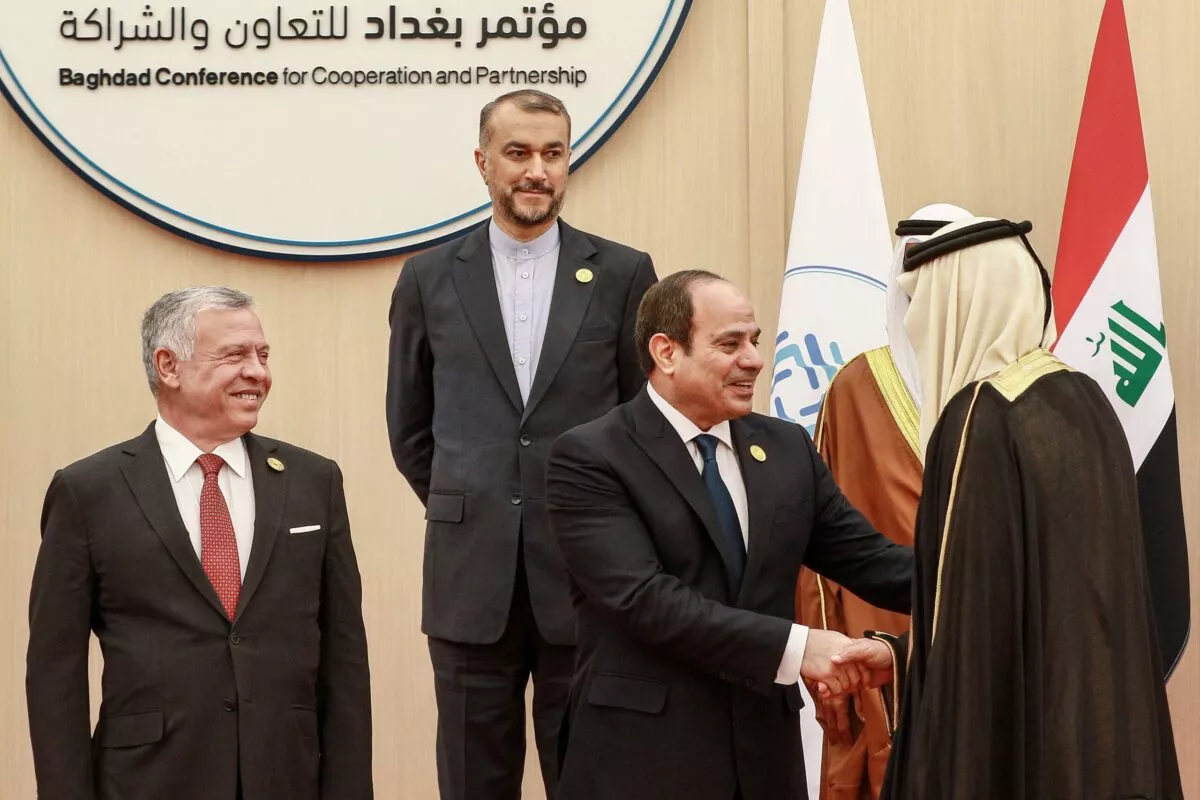
These meetings took place on the sidelines of several events and foreign visits, as a security meeting was held during the visit of Egyptian President Abdel Fattah al-Sisi to Amman in June 2022, where Egyptian and Iranian officials met on the sidelines of the visit.
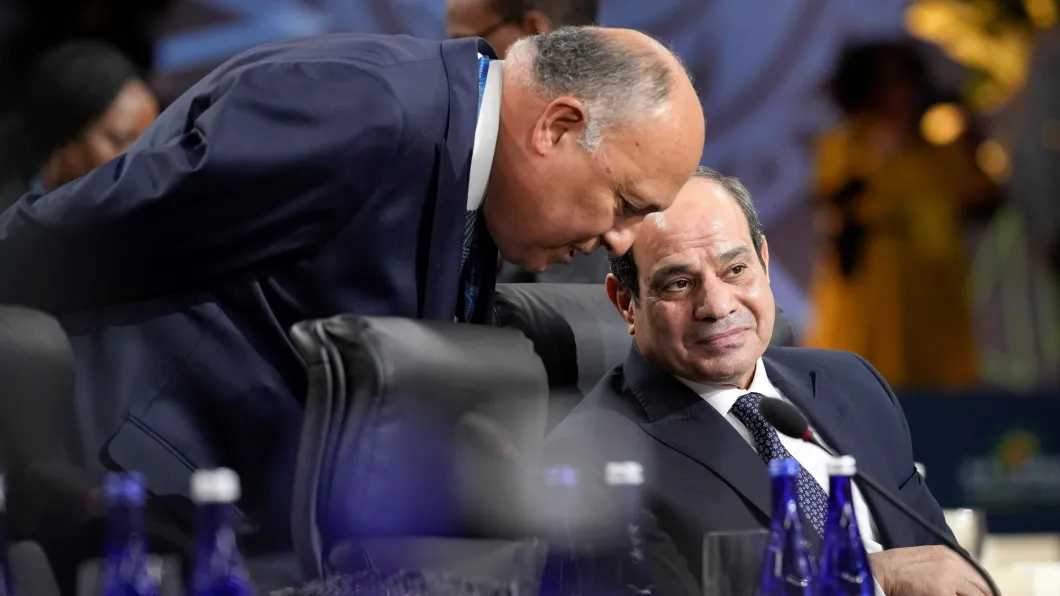
This meeting was followed by another unannounced meeting in Cairo in November 2022, in which the Director of Egyptian General Intelligence, Major General Abbas Kamel, and Ali Seljuk, the Iranian Vice President who participated in the COP27 climate summit, participated. It was held in Sharm El-Sheikh in Naham the same year and met with the Egyptian Foreign Minister, Sameh Shoukry.
In addition to the recent call that Egyptian President Abdel Fattah al-Sisi received from his Iranian counterpart, Ibrahim Raisi, at the end of last year, to congratulate him on his victory in the presidential elections. According to the official spokesman for the Egyptian presidency, “During the call, the two presidents discussed developments in the situation in Gaza and followed up the discussion on the outstanding issues between the two countries.”
A few days ago, Sameh Shoukry, the Egyptian Foreign Minister, received a phone call from Hussein Amir Abdollahian, the Iranian Foreign Minister, and the developments of the situation in Gaza and the related repercussions were discussed, according to Ambassador Ahmed Abu Zaid, the official spokesman for the Egyptian Ministry of Foreign Affairs.
Red lines for Egypt
There is no doubt that Tehran’s direct involvement in many of the region’s issues and its field presence in geographical hotspots, bordering the depth of Egyptian national security, pushes Cairo towards examining the form of relations with Tehran and evaluating the experience of direct and indirect contact during the past periods.
Also, the extent of the need to develop this with the escalation of tension in the Middle East against the backdrop of the war in Gaza, and the attacks of Iranian agents in the region through the relations that unite Iran with many Palestinian “resistance” factions, especially “Hamas” and “Islamic Jihad.”
For its part, Cairo is keen to maintain stability in the Gaza Strip and reach a safe formula that allows for a long truce that will move towards implementation, in addition to Cairo’s movements towards the threshold of Palestinian consensus, the future of the Gaza Strip, and the form and features of the executive authority there.
In this context, the former Egyptian Assistant Foreign Minister, Alaa Al-Hadidi, sets out a number of determinants through which the paths of the relationship between Egypt and Iran should be understood in general, and during the recent events, their developments, and their direct repercussions on Egyptian national security.
The Egyptian diplomat points out, in his statements to Al-Hal Net, that Iran “is one of the main players in the region and therefore cannot be ignored, especially with the escalating developments of events, and on the other hand, what is related to the path of the return of Saudi-Iranian relations, regardless of the intentions of each party towards… “The other party.”
Ambassador Al-Hadidi continues by saying: “The decision to restore relations between Saudi Arabia and Iran may pave the way for opening direct channels of communication with Tehran.”
It seems important and necessary to open channels of communication with Tehran, to listen to their point of view, and also to listen to the point of view of the Egyptian party regarding what is happening in the region. Thus, opinions are exchanged and it is possible to some extent to transfer information without full coordination, which should also be linked to a new development according to Cairo’s assessment.
At the very least, the dialogue between Cairo and Tehran will take place against the backdrop that current events are forcing this dialogue, as a result of the combustion of more than one file, some of which directly relate to Egyptian national security, especially what is related to the dangerous situation in Bab al-Mandab, in addition to the seriousness of the field situation in Gaza, which has put A direct impact on Egyptian national security.
Cairo’s position is unified
The development of events on the part of Cairo, according to the Egyptian diplomat, means searching for “a formula that leads to minimum understandings” on some of the issues that concern the Egyptian state, especially those related to the situation in Gaza and Syria, as well as the complexity of the situation in Bab al-Mandab.
However, there is an imperative that Cairo assumes for the political and military leadership in Tehran, represented by paying attention to the red lines of Egyptian national security, so that they remain clear to the Iranian side, and realize this in light of the messages Cairo sends. Cairo is also determining its positions and future steps in light of Tehran’s movements.
So, the conversation extended to the Egyptian diplomat Alaa Al-Hadidi, about the path of communication channels between Cairo and Tehran, and not relying on indirect communications because this stage cannot proceed without direct communication.
Regarding the possibility of developing the path of direct communications, especially since many estimates agree that Iran will continue its escalation within the Middle East through its agents to increase pressure on the United States of America and Israel, especially during the current year with the American presidential elections, Al-Hadidi says that Iran, of course, has its “calculations.” It has its own assessments, and according to that, it will take what it deems to be steps that sometimes move toward escalation at a given moment, and at other times tend toward calm, especially if vital Iranian interests are exposed to a direct threat.”
If the Iranian assessment is that the position of the current American administration is weak, under the pretext that it will enter the scene of presidential elections by the end of this year, then Iran will work to increase pressure and escalation against the interests of the United States in order to force it to make certain concessions, even tactical ones, in the period In the future, Al-Hadidi certainly disagrees with this perception.
Al-Hadidi considered that the previous “is a wrong assessment because, on the contrary, any American administration works in an election year with great care not to appear weak, and this may have become clear after the killing of American soldiers in Tower 22, as it was a striking part of US President Joe Biden’s response to this matter.” “It is the result of pressure from the Republican Party in the election year, so as not to appear as a weak party.”
Therefore, it is important for Tehran to realize the unease of Cairo and the concerned countries with any tension and escalation in the Middle East, and not to accept this depending on the state of turmoil in the situation and the international system.
Egyptian prohibitions
In any case, for Cairo, the matter is working to calm the hotspots in the Middle East, adjusting the balance of liquidity in the region, balancing the Iranian role, and controlling its movements to the extent that preserves Egyptian interests, since any Iranian escalation in the region completely contradicts Egyptian interests.
Likewise, the Egyptian Ambassador, Alaa Al-Hadidi, prefers to describe this situation as settling with some understandings without full coordination. This is due to the determinants of Iran’s foreign policy and the fact that the Iranian agenda is known, so Cairo comes to appreciate that its entry into a straight line of relations with Tehran will contribute to calming some of its practices that reach the point of danger, so that its impact will be reduced.
Regarding Iran’s scenario in Sudan and the possibility of Tehran’s involvement there being repeated and the approach of other Arab capitals being repeated, and the impact of that on Cairo, Al-Hadidi indicates that it may be possible on the part of Tehran and Khartoum, but “it is not acceptable to Cairo and cannot be allowed at all, and this represents A number of red lines in the mentality of the Egyptian state.
Iran must realize the seriousness of this and that Cairo does not allow any perception of this kind in its national depth, especially in Sudan, and that this is absolutely not permissible for Egypt and its relevant agencies.”
There is an indication in the form and structure of incomplete alliances and fluid interactions, which accept cooperation on some files, disagreement in viewpoints on specific issues, and perhaps competition across other regions and topics that may be the most logical vessel in Cairo and Tehran’s move towards reacquainting themselves with diplomatic and political relations between them. .
However, the reality of the two countries and their history indicate that the state of competition, and perhaps intense, will overshadow other points, which places heavy obstacles in front of the complete strategic alliance, especially since the axis of differences between the two sides is deep and extends to pivotal issues that directly affect Egyptian national security, and it is not possible to expect or recommend a scenario in which Tehran will back down. About the contents of its foreign policies and its harsh actions in some hotspots.
In the end, it does not seem classically easy or difficult; But it is also not impossible according to the logic of politics, which often only understands the language of mutual interests and benefits. On this basis, it can be imagined that any move by Cairo towards all of Tehran’s movements and desires to normalize its relations with Egypt and move away from narrow isolation will only be tactical moves by the Egyptian state towards transferring information and sometimes coordinating between them, as well as isolating all risks that threaten national security. Al-Masry, especially in Bab al-Mandab and Gaza.