


اخبار سوريا اليوم – وطن نيوز
سوريا اليوم – اخبار سوريا عاجل
W6nnews.com ==== وطن === تاريخ النشر – 2024-01-22 14:32:35
Women in Iran live in a state of pent-up anger, constant oppression, deep-seated sadness, and never-ending revolution, as a result of injustice, discrimination, persecution, and the deprivation of rights in a society that does not care about the presence of women, and male discrimination that does not affect their gender, but even their right to live in dignity.
Women in Iran suffer from a number of abusive issues that affect their existence. Which resulted in a long debate of conflict between a state and its political, military and social institutions that work to return women to the era of patriarchal society, and between women seeking to obtain their right to live as independent beings with their rights and not subordinates.
The Guardianship of the Jurist regime wants to empower its brutal policy with the lives, bodies, and rights of women. For this reason, many of them were subjected to killing, torture, imprisonment, and sexual assault, and yet the angry women’s revolution continues!!!!
They are prohibited from leaving Iran
The Iranian authorities released two female journalists on bail last week, after they were imprisoned for helping to cover the death of Mahsa Amini in 2022, who was killed while being tortured in prison, according to what local media reported, that Nilofar Hamidi (31 years old) and Elaheh Mohammadi (36 years old) were released. They were temporarily released on bail from Evin Prison in Tehran.
Mohammadi, a correspondent for the “Hum Mihin” newspaper, was sentenced in 2023 to 6 years in prison on charges of spying for the United States, 5 years on charges of conspiring against the country’s security, and one year on charges of “propaganda against the regime.”
Hamidi, a photographer for “Sharq” newspaper, was sentenced to 7 years in prison on charges of spying for the United States, 5 years on charges of conspiring against the country’s security, and one year on charges of “propaganda against the regime.” At the end of her trial, Hamidi stressed that what she had done was “my duty.” “The journalist is within the framework of the law, and I did not commit any act against the security of Iran.”
The two journalists have been imprisoned in Tehran since their arrest in September 2022, days after the death of Mahsa Amini, and the value of the bail is approximately 170,000 euros for each of them, and the “Fars” agency affiliated with the Iranian “Revolutionary Guard” said that they are prohibited from leaving Iran, and the release decision applies. Until their trial before appeal, the date of which is not yet known.
They were arrested; Because of their coverage of the death of the 22-year-old Iranian Kurdish woman on September 16, 2022, after she was detained by the morality police in Tehran on the grounds of “poor hijab.”
Nilofar Hamidi and Elha Mohammadi received the support of organizations defending press freedom, including the “Reporters Without Borders” organization, which considered that the two journalists were punished for practicing their profession, while last May, 3,500 Iranian journalists and civil activists issued a statement demanding a public trial. And fair without preconditions.
Imposing the hijab is an Iranian policy
The imposition of the hijab on women since 1979 has led to harsh treatment of women in Iran. Political-ideological considerations influence cultural legitimacy in the Islamic Republic of Iran. The ideal woman should wear the traditional covering, which is advocated not only as a religious obligation; But also as a duty towards the Islamic government of Iran.
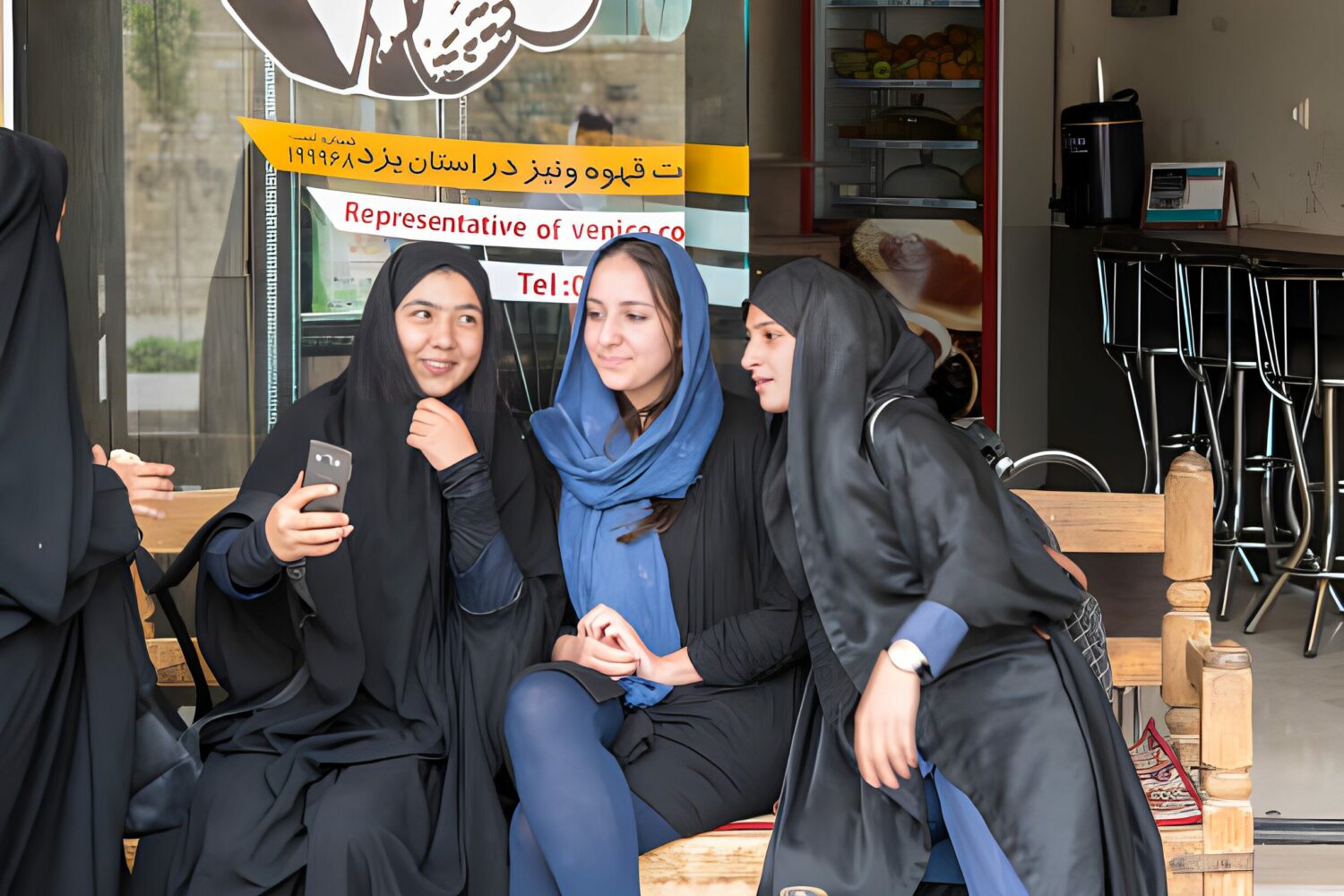
When it was imposed by the authorities, they did not hesitate to punish women physically and mentally for not wearing the hijab, as disobedient women were accused of committing the crime of blasphemy or other illegal charges such as prostitution and had to pay a fine to be released from prison.
During the Iran-Iraq War, women were treated more harshly because they wore what was considered an “inappropriate/bad veil.” For example, when the Iraqi army advanced to the Iranian border, the government tightened its grip on the issue of the veil, and women and their veils made headlines in every media outlet. It is controlled by the government rather than news of the advance of the Iraqi armed forces into Iranian territory.
This diversionary focus on the hijab was one of the strategies used by the government to distract the nation from the reality of what was happening in the war.
The matter did not end up being just a temporary policy imposed by the circumstances of the war. The situation was consolidated through the constitution as if it were misogyny under the auspices of the law. The preamble of the Iranian constitution explicitly prohibits any sector from using the image of women in commercial advertisements for services or goods, and defines the first duty of women, which is motherhood. .
While images of veiled women have been used to promote very specific ideological agendas including making money, such as the use of images of veiled women on postage stamps.
Suddenly, images of veiled women appeared everywhere, in every building, inside all companies, outside and inside public transportation facilities, and in every educational institution. The private and “sacred” woman in Iranian culture was transformed into a public image for everyone to see. In 1983, an amendment was even added to the Iranian constitution stipulating that women who harmed public chastity by appearing without a religiously permitted veil in the streets and in public places would be subjected to up to 74 lashes.
In this context, the Iranian human rights activist, Amelie Abdul Karim, spoke to Al-Hal Net, saying: “The women’s revolution continues, and it is a revolution against the oppressive male policy, against the law that supported these corrupt policies. It is our revolution as Iranian women searching for their rights, and nothing has resulted.” Violence and oppression except patience and perseverance in order to achieve our goals.”
The issue is bigger and deeper than simply imposing the veil on Iranian women. Rather, it is an attempt to impose a lifestyle suitable for the guardianship of the jurist, while women saw that the resistance and revolution against this stereotype is a sign of the increasing spread of liberal democratic principles in the new political culture that they want in Iran.
Women who protested against compulsory hijab have been abandoned by political groups and parties; Because those who controlled political discourse at that time did not believe in women’s freedom of choice, which is a stark indicator of the illiberal culture in revolutionary Iran.
Conquering a state… and rebellious women
All that Iran has done in terms of suppression and subjugation of women has only resulted in more women’s revolutions rejecting all these oppressive policies. Women see that hair is politicized, and the government controls people’s bodies, whether women or men to a lesser extent.
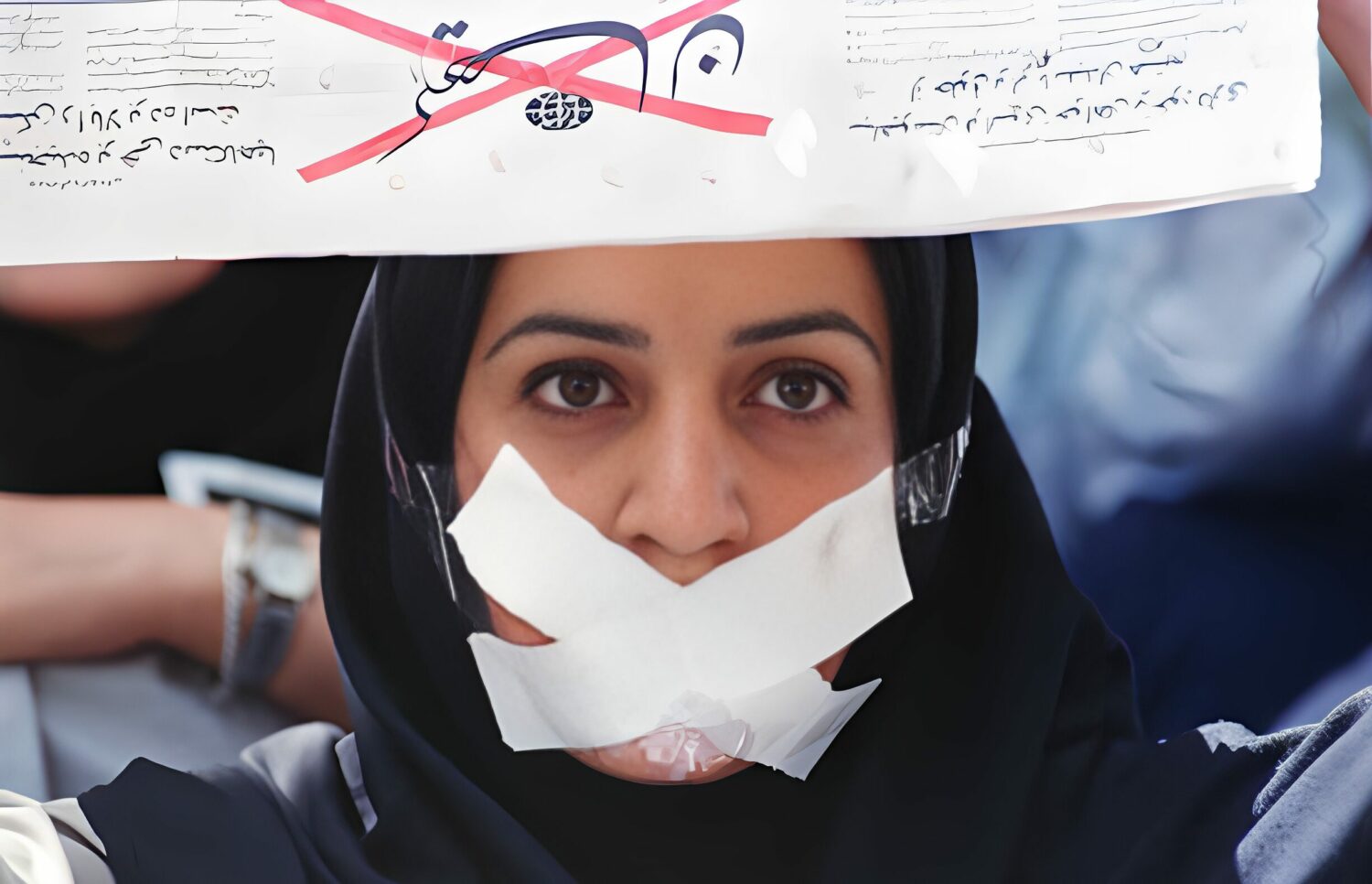
The government monitors women’s public behavior in part by issuing dress codes and monitoring women in public places. Iran’s supreme leader, Ali Khamenei, has issued a public threat that if a woman takes off her hijab, she is guilty of forbidden behavior (forbidden by Islam) and will be identified by cameras. Spying, then gets caught.
The women defied the threat by removing their veils and posting selfies on social media for all to see. Khamenei then ordered companies to refuse to provide services to women without the veil, or else their businesses would be closed. In this way, Khamenei expects ordinary people to spy on their fellow citizens.
This new law also stipulates that women who refuse to wear a head covering in public places or inside their cars will face judicial prosecution and their cars will be impounded.
The Iranian government is trying to intimidate its citizens into submission; But Khamenei’s recent order to deny service to women without the hijab has not been welcomed by business owners who are losing customers and their livelihoods.
Government agents are now arresting business owners, some of whom ignore the order and, after a warning, find their businesses burned in various parts of the country. Reactions to the burning and destruction of shops have backfired, with business owners going on strike and closing their shops.
In addition, Iranian women revolutionaries believe that there are more violations that require a loud revolutionary women’s cry, such as granting men the right to divorce and custody of children, obligating women to provide marital relations upon request, supporting child marriage, restricting women’s entry into stadiums, and imposing restrictions on women.
Moreover, Iran has unleashed reactionary religious groups to commit acts of violence against women in the name of religion and honor, and the authorities have intensified pressure on women’s rights activists, who are increasingly being arrested under various pretexts and severely sentenced in unfair trials, in order to silence them.
Women’s rights activists are also increasingly exposed to violence in prisons. According to Amelie Abdel Karim, the Iranian regime resorted to numerous cases of kidnapping some female activists as an attempt to deter the Iranian street and spread fear in their hearts, and sometimes some of them were arrested. After they witness all forms of torture, they are released as a message to the rest of the activists.
Is radical change imminent?
The Iranian regime responds to the protests with force, the death toll is rising, and whatever happens next, the September 2022 uprising in the name of “women’s freedom to choose” is a turning point in Iran. However, obtaining accurate statistics on the number of political prisoners in Iran is not an easy task.
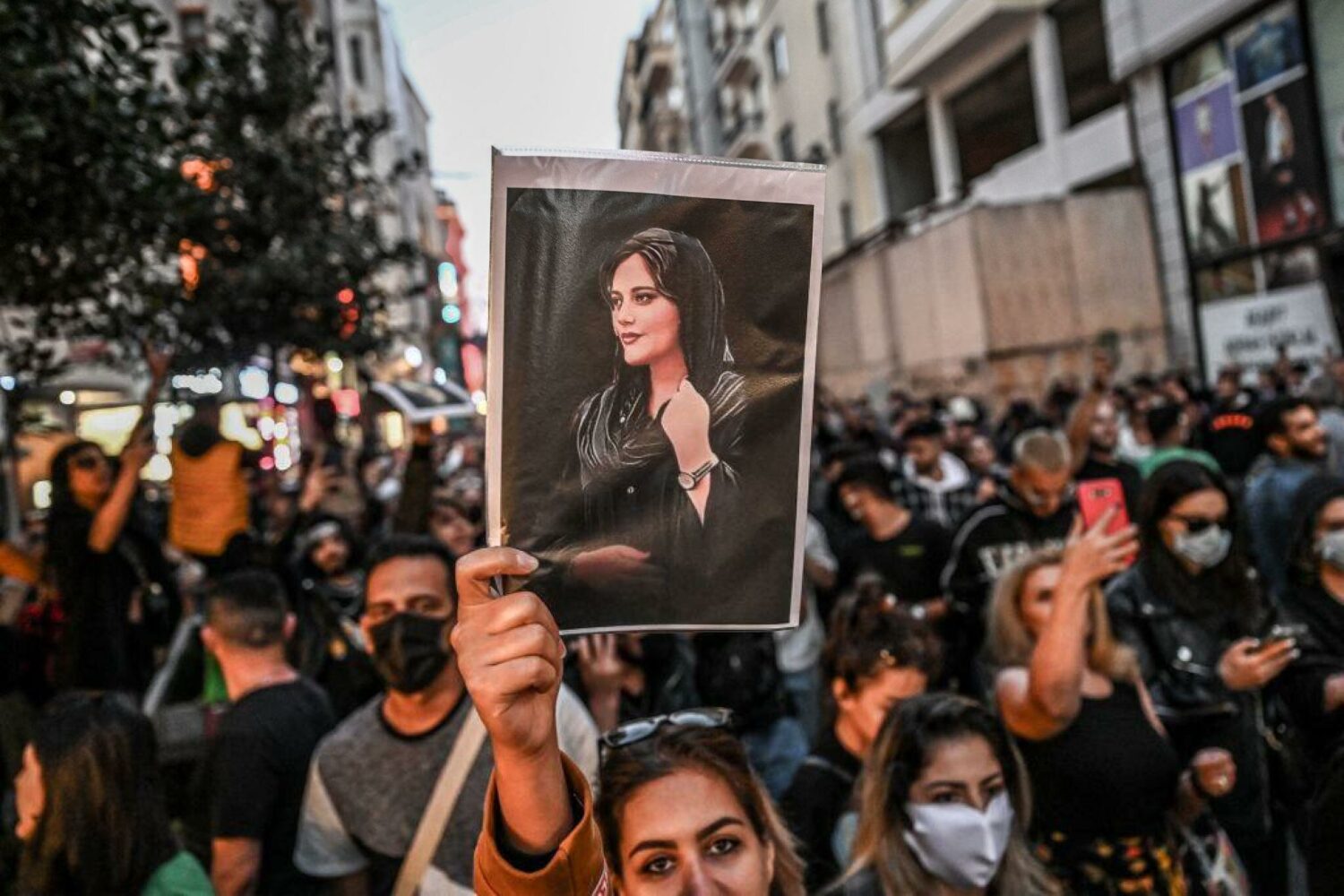
But according to the US State Department, security forces killed more than 500 people, including at least 69 children, and arrested more than 19,000 demonstrators, including children, according to the Human Rights Activists News Agency, a non-governmental organization.
Some of those detained were facing the death penalty, including children, and the Iranian government also routinely disabled access to the Internet and communications applications to prevent the free flow of information and attempt to interrupt or reduce participation in the protests.
However, in the context of mass demonstrations, it is difficult to see how the legitimacy of existing regimes can be restored, let alone adding new laws. The “Women, Life, Freedom” movement has demonstrated the unifying power and potential of women’s rights as a tool for mobilizing and demanding change, and this is what made the quest for These rights are an essential part of any path towards radical change.
Iranian women today, determined to change social norms imposed by authoritarian legislation, enjoy much broader social support, and recent events – from the women’s revolutionary movement – show how they have become active in seeking their rights, seeking to bring about change even in the absence of political transformation.
Narges Mohammadi is an Iranian icon
Narges, 51 years old, is the Vice President of the Center for Defenders of Human Rights, and she is the winner of the Nobel Peace Prize in 2023. The Iranian authorities arrested her 13 times and sentenced her to 31 years in prison and 154 lashes, according to the Nobel Peace Prize website.
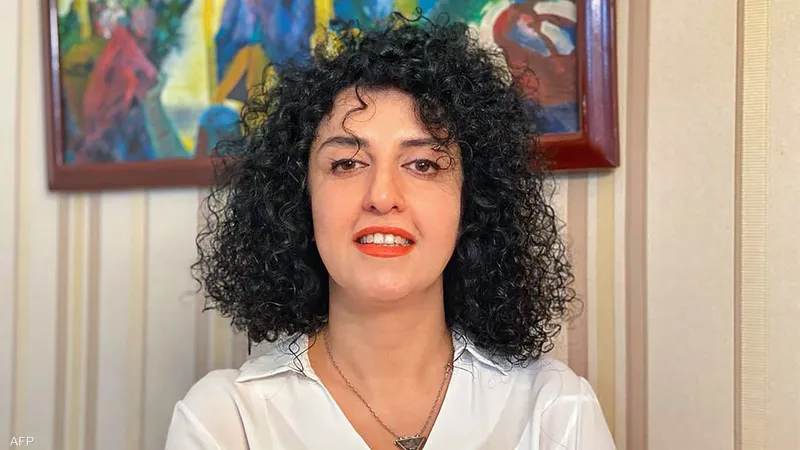
She was brutally arrested in November 2021 while participating in a ceremony to honor a victim killed during anti-government protests in the same month in 2019, and was sometimes placed in solitary confinement during her detention, due to her human rights activism.
The charges include; A call regarding her alleged loose hijab and the spread of propaganda against the state, as she was arbitrarily detained in Zanjan prison, where her health condition deteriorated, and she suffered throughout her imprisonment from physical and sexual assaults.
Narges Mohammadi has proven herself as a resistance figure to the theocratic regime in Iran and a standard-bearer for women and life, as she has always fought against the death penalty and torture, and in favor of gender equality. Karim Lahidji, Honorary President of the International Federation for Human Rights and President of the International Federation for Human Rights, said: “Narges Mohammadi was able to send… “A message of solidarity from prison to Armita Garawande, a 16-year-old girl who is now in a coma for refusing to wear the hijab.”
Narges Mohammadi went on a hunger strike last November to protest the denial of healthcare to prisoners who were forced to choose between the mandatory hijab in the Islamic Republic and death, and in solidarity with her, seven of her fellow prisoners followed suit.
A few weeks ago, Narges Mohammadi was assaulted by guards in the prison yard because she exposed the torture and ill-treatment of her fellow prisoners. While in prison, she was an outspoken critic of the government regarding the death of Mahsa Amini, and Mohammadi wrote an op-ed in the New York Times titled: “The More They Lock Us Up, the Stronger We Become.”
Finally, women and men are tired of the suffering imposed by the Iranian totalitarian regime, and they are demanding change. Iranians, led by women, are working to reinvent their culture by weaving liberal values into its fabric and getting rid of the current system with its old, outdated values that have become unsuitable for a country whose citizens aspire to Openness and freedom.

