


اخبار سوريا اليوم – وطن نيوز
سوريا اليوم – اخبار سوريا عاجل
W6nnews.com ==== وطن === تاريخ النشر – 2024-02-14 15:14:30
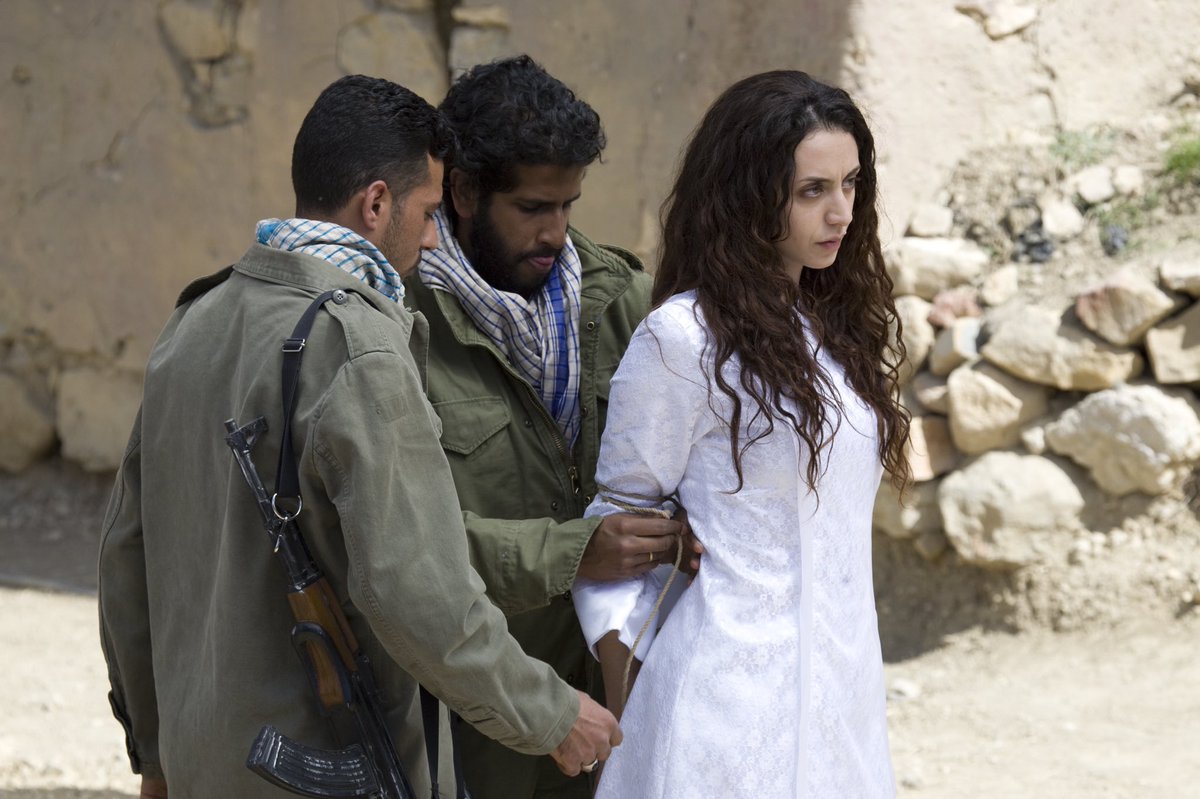
When I watched, for the first time, a few years ago, at the height of the powerful wave of the “Arab Spring,” the Iranian film “The Stoning of Soraya,” the hall in one of the important cultural centers in the Garden City district, in central Cairo, was so full that the event’s person in charge had to put up a screen. An additional third is in front of the stairs because the space in the two halls inside is overflowing with evil, as well as feelings and suppressed moans from girls who felt the pain and bitterness of injustice, the aggression against their rights, and the slaughter of their weak bodies. This is in a historical restoration of the scene of women’s infanticide simply because it is this “thing” that is used, in the fundamentalist and primitive mind, and comes in a lower level than the “master” man.
In the latter’s imagination, the female is nothing more than a “vulva” field for pleasure, or to fill his transcendent and masculine authority and achieve his utilitarian sovereignty. If she rebels against what the man considers his historical entitlement, the easy result will be the tearing apart of her perverted body.
Soraya was only a girl in a society witnessing a revolution against itself, while it was controlled by extremist clerics, and allied with them by a group of beneficiaries. For them, religion was only a fragile card to impose their control and ideas, strengthen their authority, and seek privileges. This Iranian girl, with her tragic fate, which will be repeated later with others, reflected a reflexive and regressive path in Iran after the rise of Khomeini’s rule, and the apostasy that women witnessed in terms of their rights.
While the man took refuge in his superior and dominant position within a patriarchal male society dominated by the “black turbans,” despite his personal deviations and his assault on his wife’s rights and the waste of her dignity and humanity, the latter was unable to prove any of her rights in light of the authoritarian blindness of the ruling radical religious elite and its oppressive influence. Rather, they succeeded in distorting her reputation, staining her honor, and judging her falsely and slanderously from the mouth of a “cleric” that oozes hatred. The result is the “stoning of Soraya” and the continued public killing of women, the latest of whom is the Iranian Kurdish girl Mahsa (Gina) Amini, for no reason other than the fact that she is a woman trying to rebel against the oppression of the ruling establishment, which makes submission to men an absolute obedience that has its inviolable sanctity.
Self-defense and right are met with murder!
Outside the cinematic frame, the execution of the Iranian girl, Reyhaneh Jabbari, who was accused of killing a man in the Iranian Revolutionary Guard intelligence, in defending herself from a brutal sexual assault, was an image that had another poignant dramatic meaning. But without lights, sound effects, or camera movement, it attempts to describe the dense and overlapping details, circumstances, and psychological, temporal, spatial, and social dimensions.
Rehana Jabbari, who is not yet 26 years old, exposes the mullahs’ aggression against women, which is a recurring aggression despite their claim of false chastity, which exposes their fabricated opportunism. Iranian prisons are full of documented crimes committed by officers and security personnel that constitute sexual assault, according to international human rights reports. Sexual torture is one of the tools of the “Guardian Jurist” regime against women.
Accordingly, the twenty-year-old girl was executed because she defended herself and her right to a secure personal space that no individual could exceed, regardless of his influence or authority. Reyhaneh Jabbari removed the religious claims with which the regime in Tehran framed its existence and revealed the realities taking place beneath this layer. She refused to be the existing female model in the fundamentalist mind, which could be a personal and temporary enjoyment, and she resorted with steadfastness and courage to the difficult choice of becoming a new case in the record of crimes of the “Ayatollahs” that extends over four decades.
Rehana Jabbari wrote a letter from her prison to her mother, in which she said: “Dear Shoala, do not cry over what you hear from me now. On my first day at the police station, an elderly single officer scolded me because of my nails. I knew that day that beauty is not a characteristic of this era. The beauty of appearance, thoughts and desires, the beauty of handwriting, the beauty of eyes and vision, and not even the beauty of a beautiful voice. Dear mother, my philosophy has changed and you are not responsible for this. My message is endless and I delivered it to someone who pledged to send it to you after I was executed without your presence or knowledge. I left you the written trace as an inheritance. But before I die I want to ask you to fulfill part of my will. Don’t cry and listen to me carefully. I want you to go to court and declare my wish. I cannot write this wish from inside prison, so you will have to suffer for me again. It is the only thing that I would not be angry if I had to beg for it, knowing that I refused to beg to save me from execution.”
She continued: “My dear, kind mother, Shaala, is dearer to me than my soul. I do not want to rot under the ground. I do not want my eyes or my young heart to turn into dust. I begged them to give my heart, kidneys, eyes, liver, bones, and everything that could be transplanted into another body to someone who needed them, once I was executed. I don’t want him to know my name, buy me flowers or even pray for me. I tell you from the bottom of my heart that I do not want to be placed in a grave for you to visit and suffer. I want you to wear black. Do your best to forget my difficult days, and leave me to be scattered by the wind. The world did not love me, nor did it leave me to my fate. I surrender now and face death with open arms. Before God’s court, I will accuse the inspectors and judges of the Supreme Court who beat me while I was awake and did not hesitate to harass me. Before the Creator, I will accuse Dr. “Frondi.” I will accuse “Qasim Shabani” and everyone who wronged me or violated my rights, whether out of ignorance or lying, and I did not “They realize that the truth is not always what it seems.”
It was an influential scene and has remained until this moment like a fixed mural that does not shake or change with time. These are Reyhaneh Jabbari’s strong and striking responses before the judge, who appeared to be a merciless executioner and who has no degree of integrity or transparency in his conscience, but in the face of her solid and stubborn stance, he only has the weapon of oppression, while she It possesses rights and justice that are absent and deliberately absent. When the judge asked her why did you kill him, that is, this intelligence official who attacked her to rape her?
She replied: In defense of my honor
The judge replied to her, saying: That is not justified!
I responded to his words with a brief phrase that sums everything up: Because you have no honor.
Does the Islamic religious heritage link women to seduction?
Perhaps, Rehana Jabbari’s scene resists all the temptations and possibilities of cinema and its artistic influences. The proposal that I presented is more profound in its spontaneity, simplicity, and clarity, and carries infinite aesthetics, despite the presence of pain as a result of this controversy arising in society due to the struggle over rights, and the attempt of new powers to marginalize a group, persecute its existence, and give it a space from which it cannot depart.
It is true that heritage books are full of conversations about women, love, and its theories, but, in reality, the general and historical path confirms that women did not witness this historical decline despite the abundance of what was written about and about them with reverence, except for considerations of political jurisprudence.
In the eyes of some harsh and strict clerics, women remained merely a means of pleasure and desire. It is an eye that spies on women from behind doors, as in the movie “The Terrorist” by Adel Imam. Hence, cinema, as it approaches the hidden and undeclared in the implicit awareness of the extremist’s behavior and his distorted mind, exposes the stereotypical image of a woman who does not emerge from the circle of temptation, temptation, and stirring desires. This image has been circulated and promoted to Islamist groups and fascist theocratic regimes in Tehran and Kabul.
The story of creation and the mythological narrative in the Islamic religious heritage that links women to seduction, and equates the female with a serpent or serpent, is not real in the founding text, that is, the Qur’anic discourse, but rather this perception goes back to other civilizations.
But what is surprising is that radical and extremist movements continue to rely on this narrative that is outside the religious framework, simply because it serves political interests, enhances influence, status, and accumulates privileges. This dual and mythical formation of the Satanic woman in the form of a snake has succeeded in creating a mentality that is hostile to her existence and is wary of her image, and demands that she be shunned and concealed from her alleged “evil.”
All of this ensures that women do not compete in the public sphere, and that influence remains in the circle of men who ensure obedience and non-rebellion. Disciplining or suppressing bodies and labeling some of them as ugly is a rejection of freedom from its foundations and a continuation of the idea of fatalism and religious and political coercion achieved by the “Taliban” and the “Guardian Jurist.”
Primitive minds are wary of women
It is true that heritage books are full of hadiths about women, love, and its theories. Indeed, they contain a discrepancy between the emphasis on the required moral and religious commitment, on the one hand, and the prohibition of approaching love or involvement in it, on the other hand, but, in reality, the general and historical path emphasizes that women It did not witness this historical decline, despite the abundance of what was written about it and with reverence, except for considerations of political jurisprudence, which is based on the perpetuation of power in a specific group and then opening the circle of prohibition and excommunication among others.
There are exciting, sweet meanings about women and love in the sayings of philosophers and jurists, which do not contain any level of belittling them. Ibn Hazm Al-Andalusi says in his famous book, Tawq Al-Hamamah: “Love, may God bless you, begins with jest and ends with seriousness.” Its meanings for Her Majesty are too precise to be described, and its truth can only be understood through suffering. People have differed about its nature and have said and gone on at length, but what I go to is that it is a connection between the parts of souls divided in this creation at the origin of its sublime element. We have learned that the secret of mixing and contrasting creatures is connection and separation.
While love remains in the field of view and vision of jurists and fundamentalists, as well as the reactionary and backward cultural heritage in general, linked to bitter obsessions and the necessity of curbing it and restricting it by social and religious norms and placing it within a supervisory and disciplinary framework and perhaps under the weight of coercive speeches.
So, we are dealing with dilapidated fundamentalist minds and a crumbling, ancient and primitive heritage vision that, with its historical discourses and dominant cognitive tools, besieges the female image while attracting it into a male sphere. With men’s male leadership and unshakable political and societal authority, the language of discourse towards women must remain oppressive and extremist and take on the character of sacred violence as performed by the jurists of power and the religious elite in the ruler’s court.
Therefore; The woman remains hidden behind the door of temptation and temptation. Even other models of women in history who played influential roles in jurisprudence and politics, most of them were deliberately marginalized in our social, educational and cultural heritage.
There remains a final point documented by the Iraqi historian Jawad Ali in his famous book: “Al-Mufassal fi Tarikh al-Arab before Islam,” which is that women were described as “deceitful,” and they viewed them as the devil, but “this view hides legendary data, as they are strong and weak at the same time, strong with their magic.” Feminine/sexual, weak in the eyes of the male tradition that fears her and makes her the level of Satan, which means the conjunction between the sacred and the feminine.” This is contrary to what is common and what is negatively promoted about women in terms of wasting their rights and rejecting their status.
This view “was not specific to the pre-Islamic people, but rather it is a general view that we find among others as well. Rather, it is a man’s point of view regarding women all over the world at that time. This is a view that we find in the urban population to a particular degree, because the urban environment has the characteristics of gathering and agglomeration, and the adhesion of homes to one another, and because of its social, economic, and political life, which may force women to contact strangers, and thus this opinion emerged from the urban people more than the Bedouins.”


