

اخبار سوريا اليوم – وطن نيوز
سوريا اليوم – اخبار سوريا عاجل
W6nnews.com ==== وطن === تاريخ النشر – 2024-01-24 14:23:48
Two steps on the field and towards its immediate depth, and the third on the field of politics and its diplomatic tools. The first was an operational strike carrying many messages and connotations, while the second was a similar reaction of the same degree and severity. The third and final responded to the degree of strategic control and the dynamics of interaction and competition across the theater of the international system and its deep contradictions on the foreseeable horizon, which imposed with it talk of calm and the stillness of the taut string of the bow.
This is what has accompanied Iran’s recent activity. It launched missile strikes against Pakistan, which the latter quickly responded to. The targeting was against the “Jaish al-Adl” group inside Pakistani territory, while Pakistan carried out similar strikes against the “Liberation Army” in Balochistan Province. Iran is a fabrication attempt and a maneuver on the issue. Minorities to start a path of calm between the two parties and a desire not to escalate, specifically on the Iranian side, which seemed to have carried out the operation with inaccurate calculations.
Between regional accounts and bilateral dimensions
These strikes, exceptional in their timing and implications, came on the sidelines of the exchange of accusations between Tehran and Islamabad of using their territories to launch attacks against each of them. However, it has never in the past turned into a direct operational action by one party against another, which puts the timing and implications under consideration and scrutiny.
The Iranian attacks within the Pakistani borders came at a time when tensions are escalating between Tehran, the United States, and Israel through the agents of the Revolutionary Guard against the backdrop of the war in Gaza and its repercussions on the ground in more than one arena.
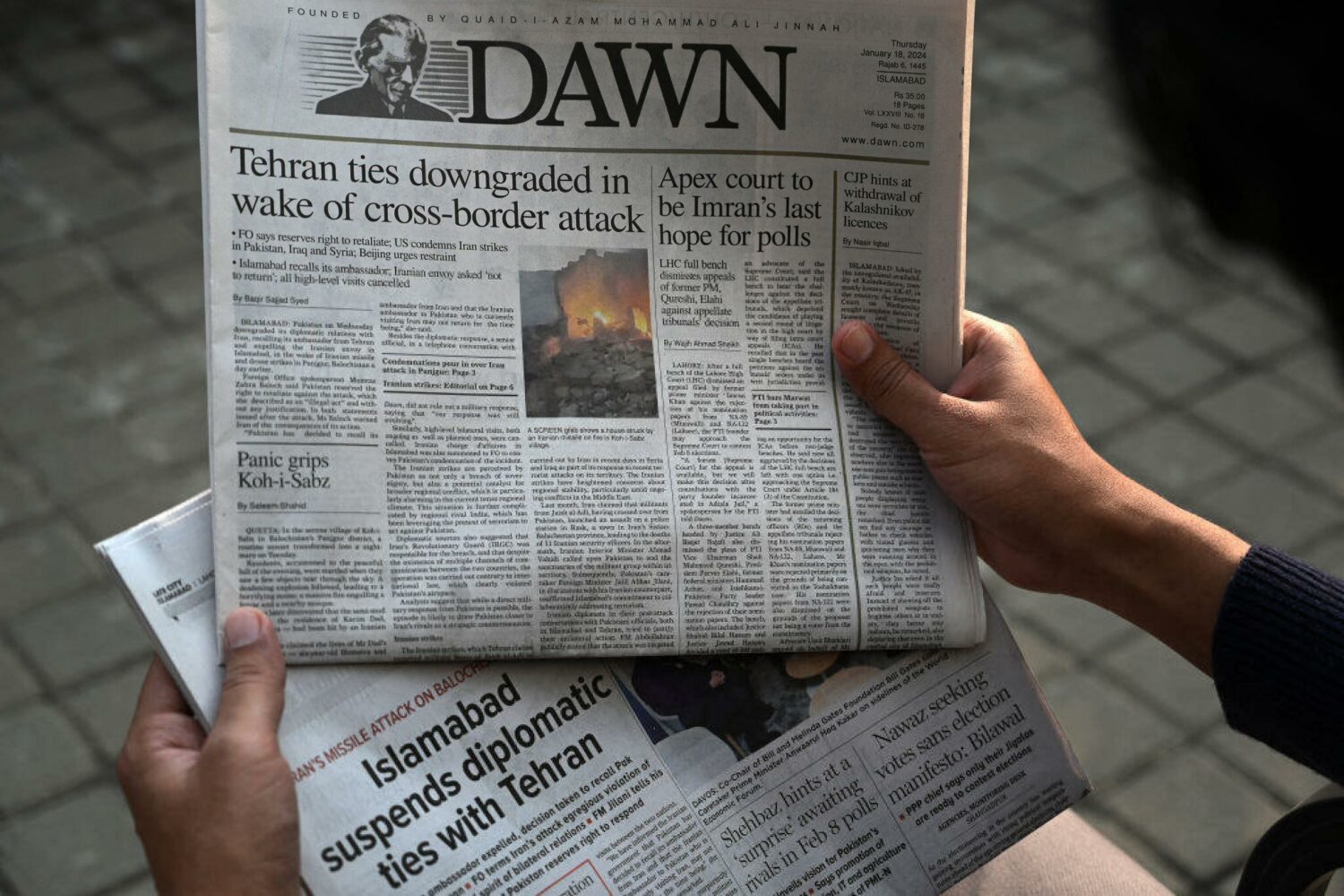
These strikes coincided with political and diplomatic action and official statements, as Pakistan recalled its ambassador to Iran and announced that it would not allow the return of the Iranian ambassador to it, in addition to a strongly worded statement denouncing Tehran’s violation of Pakistan’s sovereignty and considering it an illegal and unacceptable act, according to a statement by the Pakistani Ministry of Foreign Affairs.
Hours after Pakistan responded in kind deep into Iran, and China announced its readiness to mediate between the two countries, the Pakistani government decided to end the crisis with Iran and restore diplomatic relations with it, as the Pakistani Prime Minister’s Office said on Friday, the nineteenth of this month, that Pakistan and Iran are capable To overcome minor differences together through dialogue and diplomacy, he added: “Pakistan will welcome and reciprocate all positive measures taken by the Iranian side.”
He continued: “It is in the interest of both countries to take steps to restore relations to what they were before January 16.”
This came after a phone call between Pakistani Foreign Minister Jalil Abbas Gilani and his Iranian counterpart Hossein Amir Abdullahian, where they “agreed on the need to strengthen cooperation at the working level and close coordination on combating terrorism and other aspects of common interest.”
On the other hand, Abdullahian said – in a statement – that he assured his Pakistani counterpart of Tehran’s respect for Pakistan’s sovereignty and territorial integrity, stressing the need to neutralize and destroy what he described as terrorist camps in Pakistan. During that call, Iranian Foreign Minister Hossein Amir Abdollahian revealed to his Pakistani counterpart that the government did not know about the strikes carried out by the “Revolutionary Guard” on the neighbor or the plan, according to the “Iran International” website.
Pakistan is the land of Iranian letters
An expert on Iranian affairs, Wijdan Abdel Rahman, spoke to Al-Hal Net about the motives behind Iran’s targeting of a group inside Pakistan at this time, saying: “The Iranian-Pakistani disputes are old and have deteriorated recently. Because the latter believes that Iran is cooperating with Indian intelligence in supporting Baloch opponents to Islamabad, while Iran believes that Pakistan is harboring groups of Baloch opponents of Tehran within its territory.”
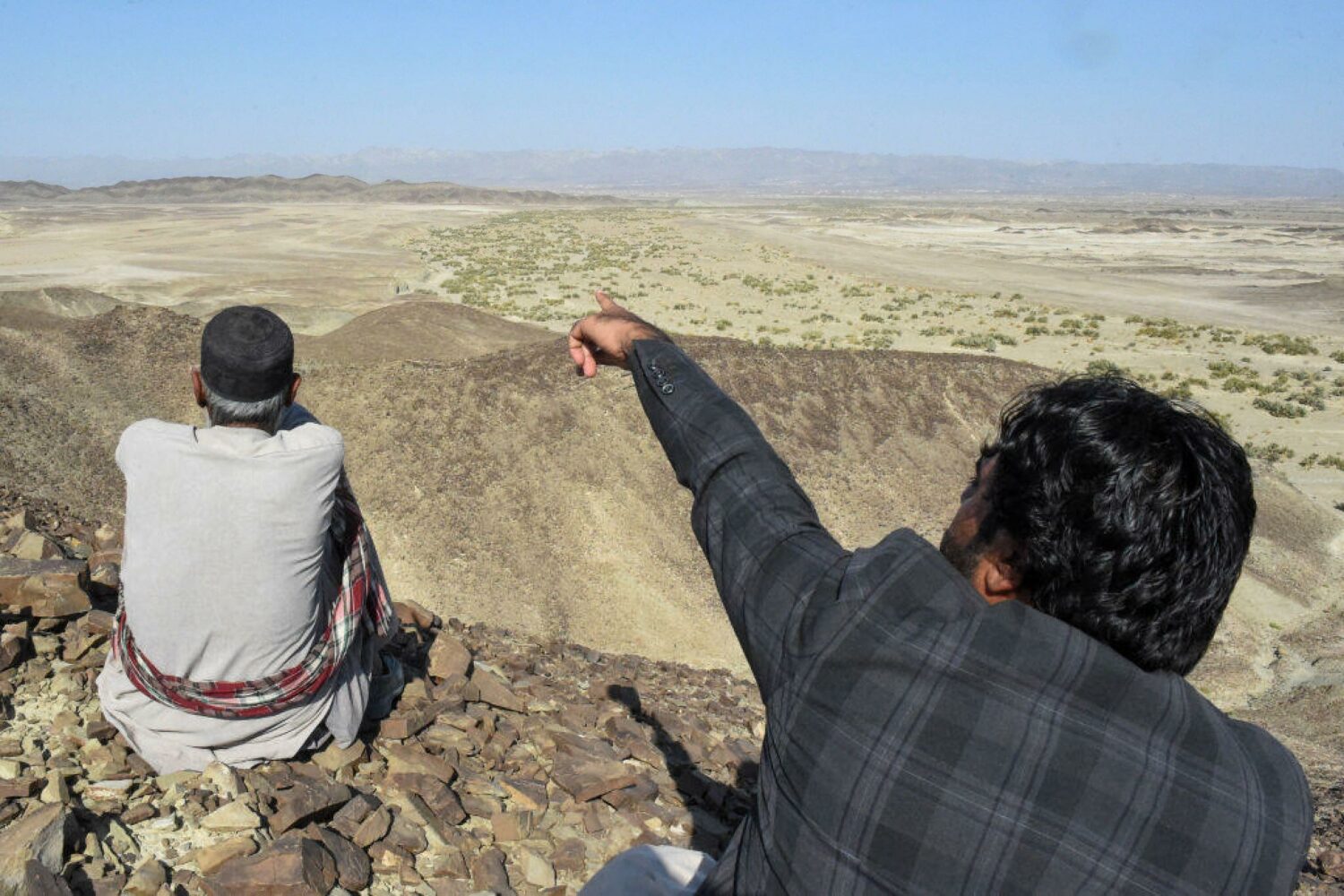
Abdul Rahman continues his speech by saying that recent events prove that “the Iranian Revolutionary Guard’s calculations are wrong” in terms of its vision of transferring the internal problems that Iran suffers from outside the borders by demonstrating “its military ability and Iran’s power of deterrence.”
Wijdan Abdul Rahman, an expert on Iranian affairs, adds that Tehran also wanted to send a message to Israel that its missiles that reached Pakistan are capable of reaching Tel Aviv if they target Iran, as well as a message about the ability to deter, addressed to Washington and the West regarding their differences with it over the Iranian nuclear file.
In the context of his statements to Al-Hal Net, Abdul Rahman based his description of the Iranian strike on Pakistan as “wrong” on the fact that the “Revolutionary Guard” did not expect the Pakistani response to this degree and speed. It believed that Pakistan’s crises would disrupt it, but the Pakistani response was greater than the Iranian strike. .
The expert on Iranian affairs concludes his statements by affirming that it is natural and logical for Iran to move toward “calm, absorb the blow, and remain silent, since Islamabad, for its part, sent a clear and firm message to Iran, that there is no courtesy or appeasement regarding the violation of its territory.” In addition to the fact that Tehran does not have the ability to confront the escalation with Pakistan at the present time, especially as it is approaching parliamentary elections next March, in addition to its economic problems.”
The disruption of the Iranian system
Pakistani researcher Abdul Karim Shah, Director of the Islamabad Center for Political Studies, for his part, described the Iranian action as a “fatal mistake,” adding to Al-Hal Net that complaints about Baloch attacks by both sides have been the subject of study and research for a long time, and he has worked countries to reach peaceful solutions regarding them.
In this context, Shah revealed in the context of his statements that the two countries formed committees that included officers from the Iranian Revolutionary Guard and members of Pakistani Military Intelligence, which visited Tehran last week, as the two parties were about to reach a joint agreement to allow for tightening border controls and the exchange of information. About that.
Abdul Karim Shah, Director of the Islamabad Center for Policy Studies, concludes his statements by saying: “Although the two countries expressed their willingness to reach a peaceful, negotiated settlement of border security issues, Tehran’s admission that this was a grave mistake on its part was a logical consequence of Pakistan’s implementation.” Retaliation was more appropriate and that made Iran understand the lesson well.”
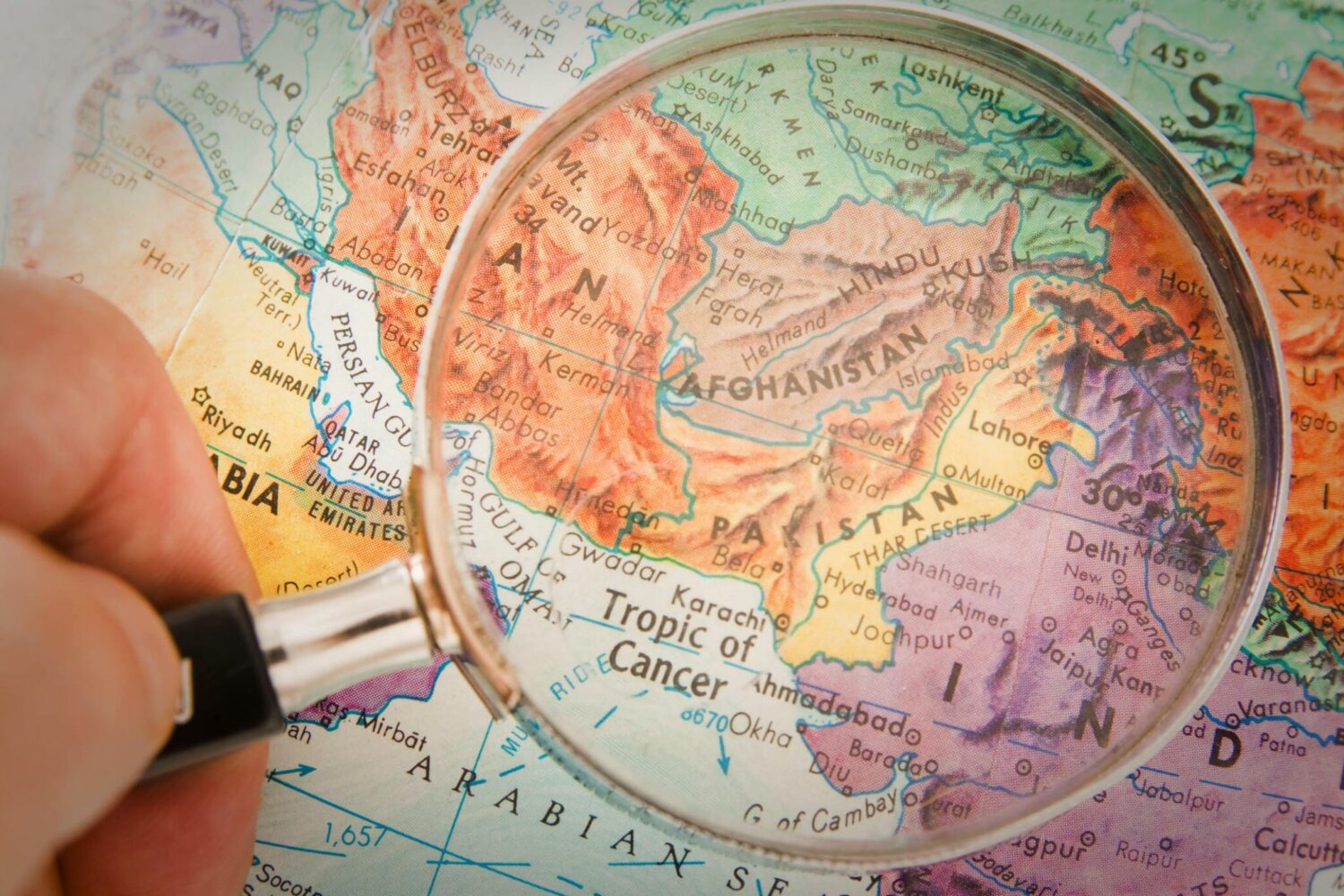
Geography reveals that Iran and Pakistan share a border extending for about nine hundred kilometers with the Pakistani province of Balochistan on the one hand and the Iranian province of Sistan-Baluchestan on the other. The two countries have long been fighting militants in the troubled Baloch region along the border, and despite the two countries fighting a “common separatist enemy,” it is It is unusual for one to attack the other in depth.
The province of Sistan-Baluchestan in southeastern Iran and the Balochistan province in western Pakistan are among the poorest regions in the two countries. Balochistan is home to the Baloch group, whose total number is estimated at about ten million people, the majority of whom live in Pakistan, including the Sindh province, with several million in Iran and a smaller minority. Much in Afghanistan.
Historically, the “Army of Justice” was established in the first years of the last decade after the disintegration of the “Soldiers of God” organization, which had carried out attacks against Iranian security forces for years. However, the pace of its work has declined since Iran executed the organization’s leader, Abdul Malik Rigi, in 2010 following his arrest.
Activists have long complained that the region has been subjected to economic and political discrimination from the Iranian authorities, who executed large numbers of Baloch people on several charges, most notably drug smuggling.
In a reflection of the poverty that prevails in the region, a large number of Baloch work in fuel trucks and smuggle fuel across the border into Pakistan, where it can be sold at a higher price, according to the French news agency, Agence France-Presse.
On the other hand, the Baloch in Pakistan complain that they are deprived of their rights and that revenues generated from natural resources are not spent appropriately on local administration and social needs.
Nuclear power transformations
The relations of Tehran and Islamabad are based on several difficult measures towards achieving secure horizons, going beyond calm diplomatic language, towards common interests and benefits, and resisting the contradictions that emerge with the escalation of the Iranian “Revolutionary Guard”’s recruitment of Pakistani Shiites in order to join the “Zainabiyoun” brigade to fight in the areas in which it is involved. Especially Syria and Yemen.
On the other hand, Iran is concerned about external support for Baloch and Sunni militants in Sistan-Baluchestan.
In addition, the United States and the United Nations called on the two countries to exercise restraint, and National Security Council spokesman at the White House, John Kirby, said that the United States “does not want an escalation in South Asia and Central Asia” in response to a question about the exchange of strikes between Iran and Pakistan. in the last days.
Kirby confirmed to journalists accompanying President Joe Biden on the presidential plane on Thursday, January 18, that the US administration is “closely following” the tension between the two countries, and said: “They are heavily armed countries, and again we do not want them to witness an escalation.”
The National Security Council spokesman indicated that the Iranian attack that started this escalation was “dangerous and a new example of its destabilizing role in the region.” In the same sense, US President Biden’s statements came earlier on Thursday about the escalation, when he said it appears that Iran “ “It is not appreciated” in the region and he “does not know where this matter will lead,” while Russia said that it is in contact with both sides, considering that the escalation is a partial result of the Gaza crisis.
In turn, American politician Tom Harb, director of the American Middle East Alliance, points out that Iran is trying to play a role larger than its size in the region, and today it sees what is happening on the international scene, and knows that President Biden’s administration is not confronting it with the required “firmness and strength.” Due to the multiple internal and external crises in America, which Iran is exploiting in one way or another.
Harb continues in the context of his statements to Al-Hal Net, saying that the presence of problems between Iran and Pakistan has been present for a long time, but Iran, by carrying out three strikes in Syria, Erbil and Pakistan simultaneously, is a message to several regional parties on the one hand and Washington in particular on the other hand. It is included in the “region equation.”
Tom Harb adds that, without a doubt, Pakistan took the required reaction and bombed Iran in the same way, and there is no doubt that this was a strong message from Islamabad.
Harb believes that this was in coordination with Saudi Arabia because if the war between Pakistan and Iran expands, the former will need to arrange defense and financial coordination with the Gulf states, led by Saudi Arabia, which makes Harb, a member of the Republican Party in the United States, look at the upcoming horizon with great suspicion. As a direct result of Tehran’s hostile behavior in its surroundings.
Challenges facing the Chinese role
Regarding Chinese mediation and Beijing’s role in controlling Tehran’s rhythm, Tom Harb concludes his statements to Al Hal Net, stating that Beijing is not in a state of harmony with Tehran and despite the strategic economic agreement between China and Iran; But last week witnessed differences regarding the issue of oil prices between China and Iran, and the result was that China did not buy Iranian oil from Tehran, in addition to Beijing’s concern about the level of its relations with Arab countries.
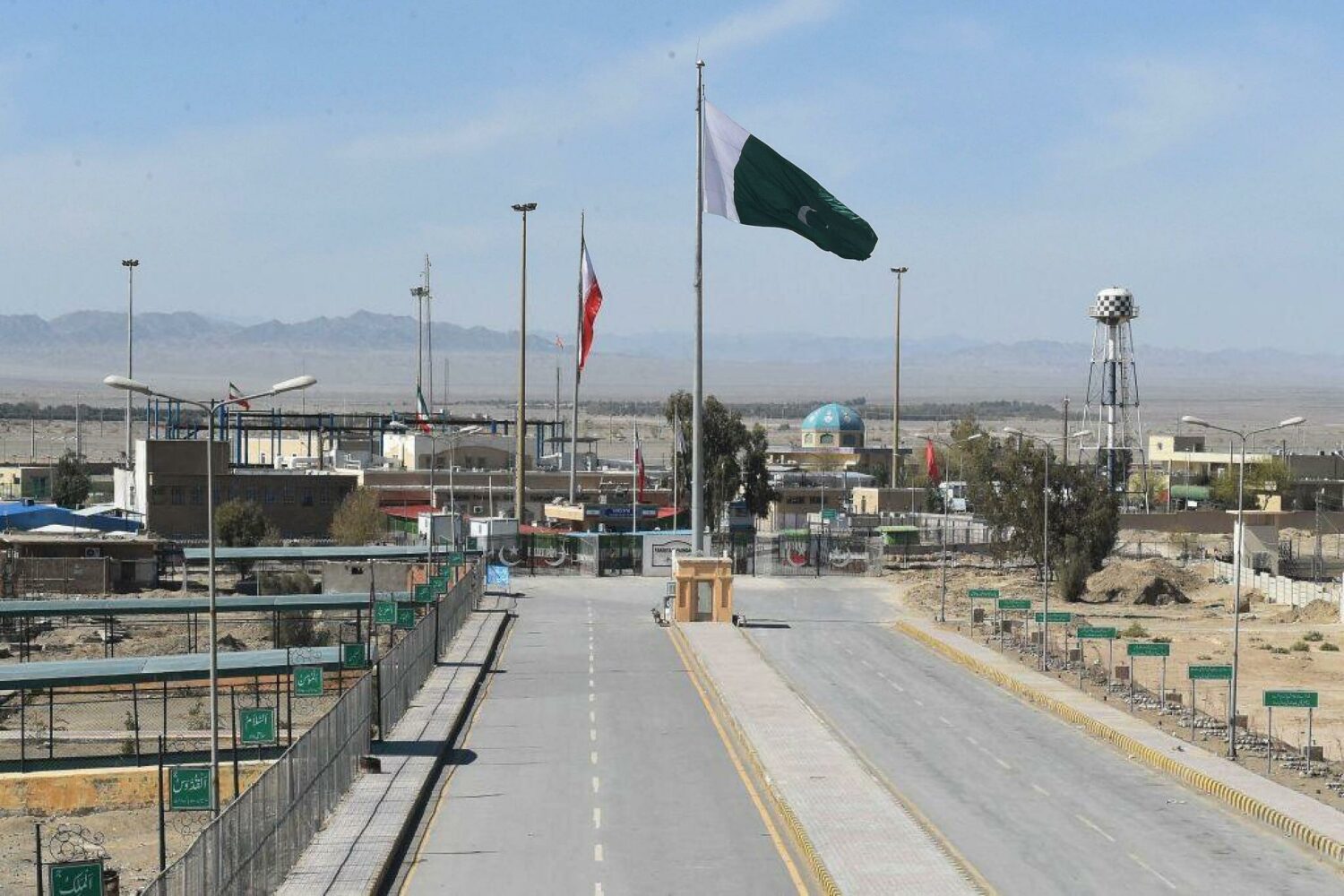
The continuation of the clashes that Pakistan and Iran are waging against the “separatists” who are active on both sides of their borders is neither sudden nor a result of the moment. Rather, they go back and extend for many years, while their last occurrence before last week’s attack was what happened in December of last year. .
This is when Iran accused the “Army of Justice” militants of storming a police station in Sistan-Baluchestan, which led to the killing of eleven Iranian police officers, according to the official Iranian news agency, Tasnim.
Despite all of this, there is a fragile will in confronting the common challenges of Tehran and Islamabad to overcome crises and give common interests greater space, and this may have been evident during the recent meeting of the ministers of the two countries in Davos and the conduct of joint maneuvers by their naval forces in the Strait of Hormuz and the Gulf.
So, we are deep in the dilemma of geography, the cycle of history, and the interaction of security threats between them, which imposes continuous challenges, and puts the relations of Iran and Pakistan to the test through the common borders or from neighboring countries, such as Afghanistan and India, and the regional and international partnerships of each of them, and the use of the ideological and sectarian aspect. In addition to the threats of armed organizations, which makes the scenario of fluid events and heated arenas likely and likely to be repeated.
