
وطن نيوز
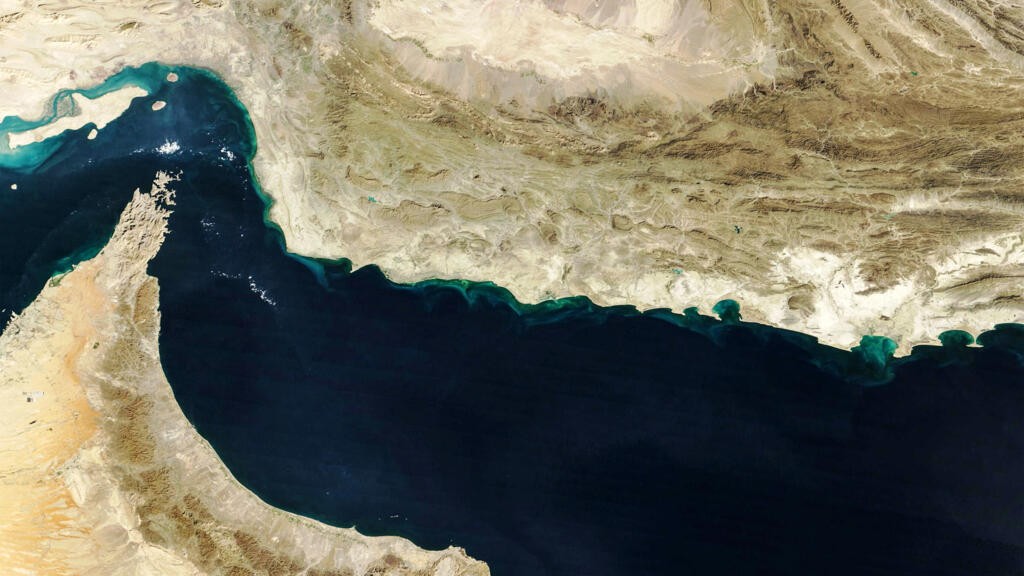
Hebrew translation – Quds Network: Israeli experts and analysts criticized what they considered a gap between military force and actual control of the world’s vital energy corridor, the Strait of Hormuz, which Iran decided to close as a result of the American-Israeli aggression against Tehran. They pointed out that the Strait remains an unequal battlefield, where cheap mines and submarines succeed in neutralizing Western superiority in terms of quality. Main Samon, an expert on Iranian affairs and a former advisor to the Chairman of the Foreign Affairs and Security Committee in the Knesset, stated, “The Strait of Hormuz is the main energy artery of the global economy, and a large portion of global oil and gas trade passes through it. For the West and the occupying state, controlling the stability of the Strait does not only represent a matter of military prestige, but rather preventing a systemic shock that could raise energy prices, destabilize markets, and harm the economic system of developed countries. As for Iran, it represents a strategic bargaining chip that enables it to threaten the regime.” “global”. He added, “The conflict in the strait is not limited to freedom of navigation only, but also extends to the issue of who has the ability to disrupt and control the flow of energy that drives industry, transportation, and financial markets around the world. Despite clear military, intelligence, and technological superiority, the United States, Israel, and their allies are unable to remove the threat surrounding the strait through a single military operation.” He pointed out, “From the perspective of naval operations, the combination of mines, asymmetric warfare, physical constraints, and the global risk structure makes the Strait an arena in which full control is not a realistic goal as long as Iran is strong. As for the Israelis, they tend to believe that Trump is acting out of zealous Zionism, but this is not true. His ultimate goal is China, which represents the only real challenge to the United States now and in the foreseeable future.” He explained, “Trump realizes that energy is the lifeblood of any empire. Whoever controls it controls the world. For this reason, he chose Venezuela as a main target, while China invested years in building relations that generated the flow of oil, but he cut off this tap from it. The first building block fell with Venezuela, and he is now targeting Iran. China imports 10 million barrels of oil daily, and is the main purchasing power for Iranian oil.” He stressed that “one-fifth of global oil traffic passes through the Strait, without counting gas and other minerals in Iran, and after the flow of oil from Venezuela has been significantly reduced, and the United States has taken control of the flow of oil from Iran, China will find itself in a huge dilemma, and its industries, factories, and energy-intensive sectors, such as computing centers and artificial intelligence, will be severely damaged as a result of the closure of the energy arteries, which leaves us facing Trump’s cold war, which he is waging like a chess game without a direct military confrontation between the two superpowers.” He pointed out that “Iran possesses different types of sea mines, including impact mines that operate based on changes in the magnetic field, sound signature, or water pressure. They are programmable with a delay, count, or relatively simple choice. They do not explode automatically at every target. As is the case with the system itself, their purpose is to remain for a long time, pose a continuous threat to the opponent, even if the threat is not great, and slow down the operations of the attacking side.” He stressed that “the process of opening the corridor is slow, gradual and local, and every kilometer requires repeated checks, and one mistake is enough to turn into an injury to a Western ship, to cause complete chaos. Mines are not removed using regular warships, but rather by special mine-clearing ships, made of materials with a low magnetic signature to reduce the risk of mine activation. These ships are relatively small and slow-moving, and have limited defensive capabilities, which makes them vulnerable to great danger from Iranian naval defenses.” He noted, “This transforms the ability to open a shipping lane from a function of offensive power to a function of time. Iran has built its naval power around cheap, multiple, and distributed platforms. Speedboats, drones, and coastal missiles are not designed to destroy a Western fleet, but rather to force it to hesitate, invest precious resources, and move slowly in the face of the dynamism of defense systems. Even an attacker’s tactical failure can be considered a strategic success if it causes a delay, cancellation, or change in behavior.” He stressed that “Iran also operates Ghadir-class midget submarines, modified to operate in shallow waters, weighing less than 150 tons, and are usually operated by a very small crew consisting of a small number of individuals. It is true that they are not immune to detection, but their locations are difficult to determine, which forces the investment of significant resources in anti-submarine warfare, and increases the state of operational uncertainty surrounding slow and exposed forces.” He explained, “The attempt to control the strait is not a short process, but rather a process that may take weeks or more. Any damage to a ship creates a media and economic resonance. The markets and the energy sector respond immediately, and the pressure on Trump will increase. And unlike the ground conflict, there is no clear decision point here. Any local success requires constant maintenance. What Trump is striving to avoid, which is the deployment of American forces in the straits. Israel has nothing to do with this situation, because the chances of it sending permanent forces to Iran are almost non-existent.”