
اخبار فلسطين – وطن نيوز
فلسطين اليوم – اخبار فلسطين اليوم
W6nnews.com ==== وطن === تاريخ النشر – 2026-04-05 13:58:00
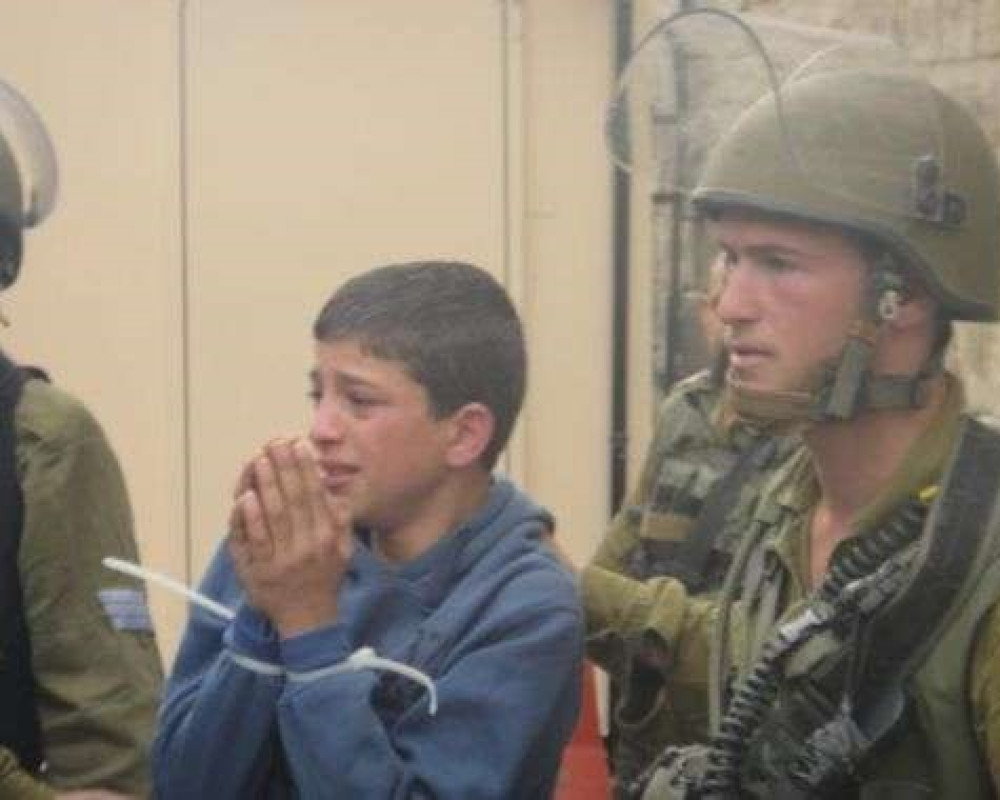
Ramallah / PNN – Prisoners’ institutions (the Prisoners’ Affairs Authority, the Palestinian Prisoners’ Club, and the Addameer Foundation for Prisoner Care and Human Rights) said that Palestinian childhood was never outside the circle of targeting, but rather was placed at the heart of policies of repression and control as a direct target. The prisoner’s institutions added, in a report issued today, Sunday, on the occasion of Palestinian Children’s Day, that the period after the genocide war constituted the harshest stage for child prisoners, whose number today in the occupation prisons is about 350 children, in addition to dozens of children who were arrested from the Gaza Strip during the war in extremely dangerous conditions. She stressed that the structural system of torture practiced in the occupation prisons has become one of its most prominent tools and forms, including forced disappearance, preventing visits, and cutting off means of communication, which made knowing the real numbers or the fate of many of them extremely difficult. She indicated that the arrest of children was not an exceptional case or the result of emergency circumstances, but rather a systematic policy. And deeply rooted over the years, it reflects a clear will to subjugate an entire generation through the tools of organized oppression, which affected tens of thousands of children. She explained that since the outbreak of the crime of genocide, the occupation authorities have launched widespread arrest campaigns throughout the occupied Palestinian territories, affecting more than 1,700 children in the West Bank alone, and this number includes everyone who was arrested, whether they were released later, or remained in detention. She said: The moment begins Arrests often occur in a violent and sudden scene in the early hours of dawn, as the occupation forces carry out raids into homes without any prior warning. Families wake up to the sounds of explosions and the breaking of doors, accompanied by the screams of soldiers and their spread inside the house, in an atmosphere of fear and chaos. After that, the children are taken outside their homes towards military vehicles, where they are handcuffed and subject to strict movement restrictions. During the transfer process, which may pass through several checkpoints and military centers, some of them are subjected to beatings and harsh treatment, in addition to being detained for long hours without food or water. In many cases, children are transferred blindfolded, which deepens their sense of fear and confusion, and leaves severe psychological effects from the first moments of detention. Captive children in interrogation cells and extract their confessions. Children are detained in conditions that lack the most basic necessities of life, and are subjected to long hours of continuous interrogation without the presence of their families or a lawyer. Testimonies reveal that this stage is used to psychologically intimidate the child and force him to confess under the pressure of isolation and fear. The severity of these violations has seriously escalated in light of the genocide. The interrogation cells have become tighter and harsher, with increased deprivation of sleep and rest, in complete disregard for the child’s privacy and his right to humane treatment. The severity of violations escalated during this stage following the genocide. The brutality of the methods used has increased, both through the practice of physical and psychological torture against children. Thus, the period of investigation, which is supposed to be a legal procedure, turns into an area of systematic violation that leaves deep effects on the souls of the children and their future, as a result of exposure to continuous pressure in a detention environment that lacks the most basic human rights. Children Without Charge: Forced Absence Behind Administrative Detention Cells Administrative detention against Palestinian children constitutes one of the most deadly and painful aspects of the Israeli repressive system; The child is put behind bars without being charged, and in formal courts, based on what has become known as the “secret file” – a document whose contents are hidden from the detainee and his lawyer alike. Although this policy has accompanied the occupation for many decades as a tool for collective punishment and control, it has witnessed an unprecedented turn in light of the ongoing war. The prison doors opened wide to receive thousands of Palestinians under this name, and children were at the forefront of the victims of this systematic abuse. The number of children in administrative detention has reached levels not recorded by human rights institutions in the history of the Palestinian prisoner movement, and until the end of 2025, and according to what the prison administration announced, 180 children are in administrative detention. A child in administrative detention does not suffer from the burden of detention alone, but also suffers under the weight of continuous psychological torture. His arrest order was renewed in the last moments before the supposed release date, and he found himself and his family in a never-ending spiral of anxiety and anticipation. In light of the war, this detention has doubled and been accompanied by almost complete isolation: no family visits, and no contact with the outside environment, which makes the child vulnerable to policies of starvation, humiliation, and intimidation inside the cells. Targeting children with administrative detention on this scale puts the occupation in clear confrontation with international conventions and conventions, which explicitly prohibit the detention of minors without trial. With the increase in the total number of administrative detainees in Israeli prisons to (3,442) detainees, which confirms that this policy is no longer an emergency exception, but rather has become an established pillar in a system that targets the Palestinian fabric from its roots – starting with its children. Children imprisoned in the occupation prisons… systematic violations and international complicity. About 350 children are languishing in the Israeli occupation prisons, under the weight of extremely harsh detention conditions, which constitute All in all, a systematic and blatant violation of their most basic human rights. These violations multiplied in the wake of the genocide to form a new phase in terms of the level of brutality. A number of factors combined to deepen the suffering of these children. First and foremost is severe overcrowding in rooms with poor ventilation, in addition to the lack of clothes and blankets, in addition to almost complete restriction of movement and confiscation of personal belongings. What is most severe of all is that these children have been deprived for more than two and a half years of any contact with their families, which deepens their isolation and doubles the devastating psychological impact of detention, in light of continuous raids and repression within the departments. At the health care level, violations related to intentional medical neglect are worsening, in light of an acute shortage of health services and the deprivation of children from the necessary treatment. Overcrowding and lack of basic hygiene supplies have contributed to the spread of skin diseases, especially scabies. The violations do not stop there, as children suffer from food scarcity as part of what is described as a systematic starvation policy, which has had a severe impact on their health and led to the exacerbation of existing diseases and the emergence of new ones. “These practices represent a flagrant violation of the 1989 Convention on the Rights of the Child, which prohibits the arbitrary detention of children, and requires that detention be a last resort and for the shortest possible period, while ensuring humane treatment and the preservation of dignity. These practices also violate Article (37) of the same Convention, which prohibits torture and cruel or inhuman treatment, and guarantees the child’s right to communicate with his family and obtain legal assistance, in addition to violating the principles of international humanitarian law, in particular The Geneva Conventions, which impose special protection for children as a civilian category, and prohibit all forms of abuse and neglect against them. And the mistreatment of minor prisoners, within a broader context of systematic violations against detainees. According to what was documented by the medical autopsy reports, the results revealed severe physical deterioration, represented by severe atrophy, apparent emaciation, and a lack of muscle mass and subcutaneous fat, in addition to clear indications of malnutrition, dehydration, and intestinal infections, which reveals a gradual and deliberate health collapse within the detention facilities. In a later development, the occupation announced the closure of the investigation file into the circumstances of his death, citing “the exhaustion of legal procedures,” despite the serious facts proven in the medical reports. Starvation and gradual health collapse. This decision embodies a continuation of an established approach based on ignoring medical evidence and obliterating responsibility for crimes committed against minor prisoners, in the absence of a complete absence of any form of accountability or accountability. Testimonies of children who were subjected to abuse and torture in occupation prisons. The child (Q.N.), who was arrested from his home on 1/7/2026, narrates that he was severely beaten before he was tied, blindfolded, and transferred to a camp, then to Megiddo prison, with repeated assaults on him during the way and inside. The prison confirms that the youth section witnesses frequent raids and beatings, amidst extreme cold, overcrowding, and a shortage of clothing and food that is not enough for the prisoners. Detainees also face restrictions on “freshness” and showering, a scarcity of basic tools, in addition to constant annoying lighting. He points out the absence of adequate care and the presence of rooms designated for scabies patients, under harsh detention conditions. In the same vein, the occupation arrested the child (M.S.) on 2/19/2025 from his home in Bethlehem, when he was not more than fifteen years old, as he was later transferred to arbitrary administrative detention. (M.S.) narrates that his arrest process began at dawn by storming the house, and he was transferred to the Etzion Detention Center, then to Al-Maskobiyya, where he was subjected to a period of An arrest and investigation lasted 21 days before he was transferred to Megiddo Prison. Since then, he has lived inside an overcrowded section in the Cubs Section (Section 8), containing between 6 and 10 prisoners per room, with a number of them forced to sleep on the floor, and a clear shortage of blankets, towels, and basic needs. In addition to a daily shower that does not exceed half an hour, and a few bathrooms shared between several rooms. He also suffers from toothache without receiving treatment, painkillers, or referral to the clinic, in light of repeated raids and cases of repression within the department, which makes the detention conditions in Megiddo harsh and persistent, especially as a child in administrative detention. In the context, the detained child (A.H.) (17 years old) narrates that from the moment of his arrest, he began a harsh detention process that extended from the checkpoints to the detention centers and then to Closed detention centers. “I was completely stripped, tied up, blindfolded, and thrown to the ground,” he says, according to his testimony. He added: “I remained sitting on my knees for hours and we were subjected to continuous severe beatings.” He describes that stage as being full of humiliation and physical and psychological violence, with frequent transfers between unknown places of detention and harsh conditions from the first hours. He later describes the detention system inside the occupation prisons, as he says about the first days of detention: “I was handcuffed in front and blindfolded for 24 hours, even while eating and showering,” pointing to poor food, scarce quantities, and repeated deprivation. Of cleanliness and comfort. He also recounts being subjected to weekly oppressive raids that included “throwing bombs into rooms, random beatings, and forcing prisoners to lie on the ground,” in addition to harsh interrogations that included “beatings, threats, shocks, and loud music as a method of psychological torture,” in an environment he described as based on constant humiliation and systematic violence. The children of the Gaza Strip were not immune to widespread arrest campaigns during the war, as a number of them were arrested and transferred to military detention places. Among these testimonies is the testimony of the child (F.S.), born in 2010, who was a student at the school before his arrest. He narrates that he was arrested from Khan Yunis with four other people, and he was the only child among them, saying: “The militias arrested me and four people, and I was the only child among them, then they handed us over to the army, which transferred us to the Sde Teman camp.” He adds that he was placed in barracks with adult prisoners and another child, noting that “living in Sde Teman was a form of humiliation,” and that he stayed for nearly 40 days bound with iron shackles. He describes the details of daily life inside the prison by saying that “food is little and drink is little,” and that the food consisted of “toast bread with a little jam or tuna that did not satisfy,” while sleeping conditions were very harsh, as “sleeping on a very thin mattress as if “You’re on the rocks,” with blankets only given at night. He also explains that bathing was allowed twice a day for a few minutes. He recounts that raids and oppression were repeated weekly, as prisoners were taken out, tied, and beaten. He points out that he was subjected to interrogation twice, each for an hour, saying: “There was no special treatment for me. They treated me like adults,” before he was later released. With the continued grave violations against Palestinian children in places of detention, and coinciding with Palestinian Children’s Day, prisoner institutions (the Commission for Prisoners and Ex-Prisoners’ Affairs, the Palestinian Prisoner Club, and the Addameer Foundation for Prisoner Welfare and Human Rights) confirm that the arbitrary arrests, harsh conditions of detention, and treatment that children are exposed to This is a degrading act that constitutes a blatant violation of international law, especially the Convention on the Rights of the Child, and rises to the level of war crimes and crimes against humanity in accordance with the provisions of international humanitarian law. The institutions stress that the basic demand is the immediate and unconditional release of all detained children, considering their detention in itself an unlawful violation. States also call on third parties to take urgent action to oblige the occupying state to stop all violations against children, ensure their protection, and respect the advisory opinion issued by the International Court of Justice regarding the illegality of the occupation and its application, in addition to imposing accountability and accountability for all crimes committed against Palestinian children.


