
اخبار فلسطين – وطن نيوز
فلسطين اليوم – اخبار فلسطين اليوم
W6nnews.com ==== وطن === تاريخ النشر – 2026-05-30 14:30:00
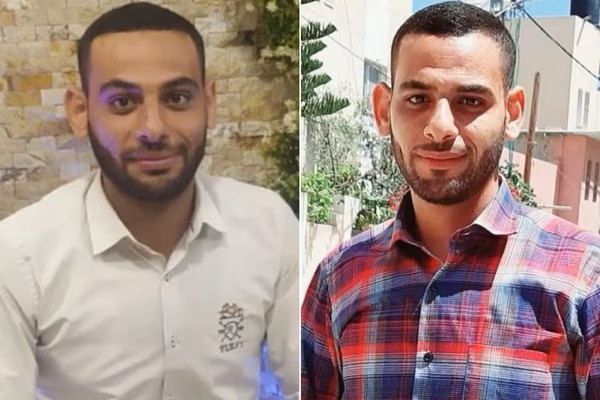
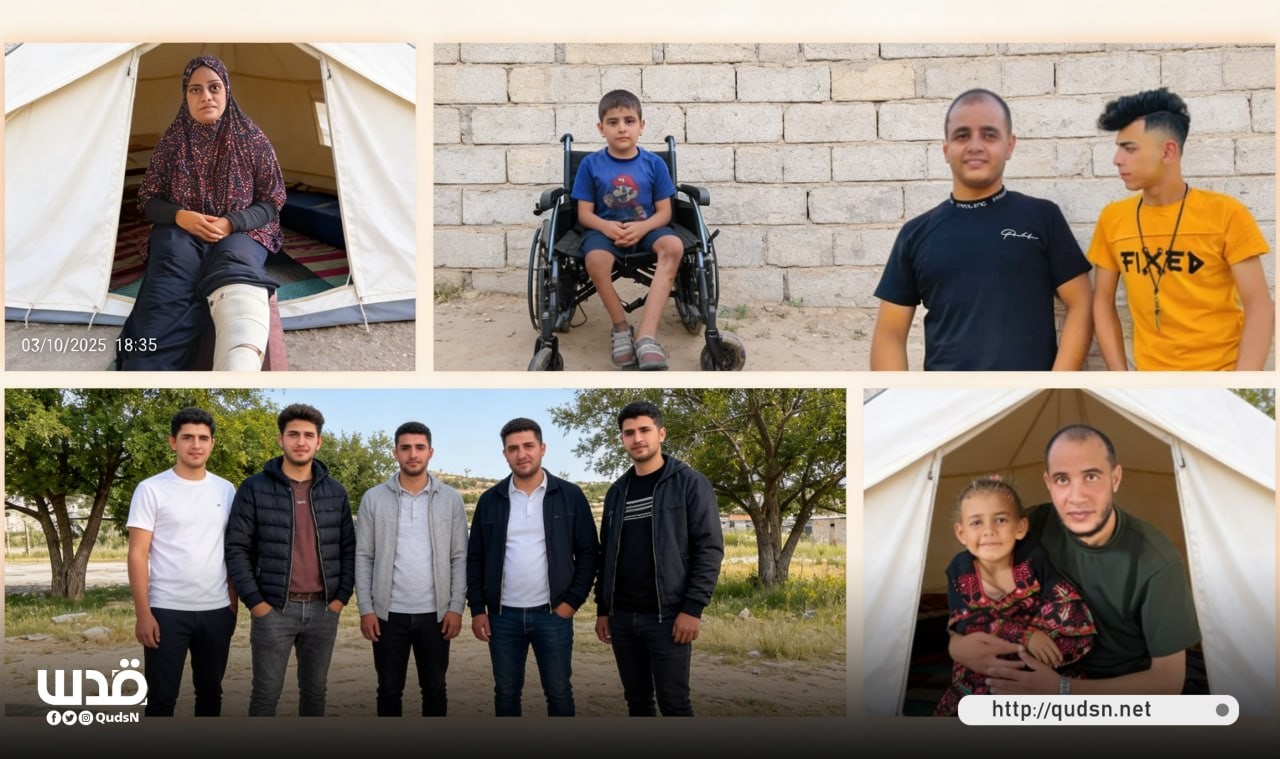
Quds News Special: The sixth Eid during the genocide is celebrated by people in the Gaza Strip as it appears in the picture, each according to his ability. Some of them buy new clothes from them, and some hang decorations on what remains of the walls of houses or tents. They visit each other and eat sweets and do not forget “the Eid”. Among these details, many things have changed. In the hearts there are pains that nothing can heal and sorrows that make the feeling of happiness farther away and make the holidays of the bereaved a stagnant, in addition to the ability to commemorate the Eid. It declined significantly for various reasons, most notably money, including tent life, the difficulty of movement, and the separation of families between places of displacement. The Eid is passing and about 300,000 families are living in tents, and poverty and hunger are increasing day after day, not to mention the injuries that are hampering the lives of their owners, all of this amidst grief for tens of thousands of martyrs, concern for the missing, and lack of security, and this third Eid is almost without sacrifices, and the price of a lamb currently ranges between four and six thousand dollars. For this reason, Gazans are almost unanimous in saying that the last Eid was before the war and that they did not feel any holidays after it, just like their lives, which feel that time has passed. He stopped there before the annihilation. Alone with the memories of buying Eid clothes, a meal in a restaurant, a quick walk… details that were constants the day before any Eid for Mahmoud Sukkar and his twin, but today they are flooding him from the doors of sadness that have not been closed since neighbors and relatives called his phone on the evening of the twenty-first of October, the first of the genocide, to tell him: “They bombed your house, your family is in Al-Shifa Hospital.” Sukkar (22 years old) is spending the Eid alone in a tent over the ruins of his house. He says: “We were 18 people in the building. 17 were martyred and I remained. Of course, there are no Eid holidays after this pain. How can I feel happy without those I love?” He added: “My last Eid was with them, with my father, my mother, my brothers, two girls and three boys, my brother’s wife and his daughter, in addition to my grandfather, my uncle, and his family. In their presence, the Eid was a complete life and many rituals full of happiness, but now I do not leave my tent during it.” He remembers the details: “We used to start it with Eid prayers. Me, my brothers, and my cousins would come back to gather at my grandfather’s house, meet the rest of my uncles and their families, exchange congratulations and Eid gifts, then go off to visit the relatives. As for the second day, it was more private. My father, my mother, and my brothers and I would go out to entertain ourselves.” Of all the details, what kills him most is his nostalgia, the first moment in the morning of the first day of every Eid, when he opens his eyes to his mother’s smile as she wakes him up with the rest of his brothers to pray the dawn prayer and then the Eid prayer. Instead of many activities, Sukkar had one journey; The cemetery, and until this visit the occupation deprived him of it, he used to go on the morning of Eid to the graves of his family, but currently the cemetery is behind the yellow line, and the occupation has bulldozed it. Thus, the Eid activities are over for him, so what should he do? The answer in his own words: “I move between pictures and memories in the tent. I recall my holidays with my family. I think about how we were and how we have become. The matter is made more difficult by the fact that my tent is in the ruins of the house. Here I have beautiful memories in every inch, and the visits of my friends relieve me a lot. They do not leave me alone.” His twin occupies the greatest place in pain and memories. He is his partner in everything. They shared every step and every dream together. They were preparing for Eid together, and were not separated during it. After all the pain he endured, Eid became for him a reason for sadness after it had been a time of pure happiness. He pointed out that he was injured eight months ago by shrapnel in his back, which made him paralyzed for a while, and now he walks with difficulty, which made the idea of celebrating Eid more distant. “I wish I had a man.” Abboud will not play with his peers in front of the house on Eid. He will sit in his wheelchair, watching the children’s movements, and recalling Eid memories with his martyr father and his amputated leg, until one of his brothers pushes the chair as a signal to begin an entertainment tour that may relieve him. Abdul Karim Aziz (9 years old) is one of thousands of Gazans who lost limbs during the war. His right leg was amputated in December 2023 due to a shell that exploded in the house. Since then, everything has changed. About a year later, his father was martyred, adding to his pain endless sorrows and longings. However, his “spirits are high,” as his mother confirms. Maysaa Aziz says about her son: “He was very mobile before the injury, and this is what helped him after it. The amputation did not incapacitate him. He jumped from one place to another without calm. His activity gave him patience with his suffering.” She added: “No matter how strong he seems, he is a child who misses his childhood, and this is what he reveals when he talks to me about his wishes to run and leave the house easily. He repeats from time to time, ‘I wish I had a man.'” During Eid, Abdel Karim misses his father a lot, and he wishes he were able to play and visit relatives as people do, but his injury forces him to be content with sitting in front of the “block” in which the family lives after the destruction of their house, while his brothers, who is the youngest of them, try to comfort him, so they take him wherever they can. His mother held back her tears as she said: “We lost the most precious person in our family, and since then the Eid has passed without joy, but I do everything I can to make my children live their days happily, and I try to carry out the Eid rituals as much as I can.” When hope was lost, “I had hoped during the previous holidays that my missing son would be alive, but I was certain that he had been martyred the previous Ramadan.” With these words, the mother of the missing “M” explains why the last Eid al-Fitr was the most difficult for her since the beginning of the genocide. The grieving mother who requested that her name not be mentioned for security reasons related to the occupation’s persecution of the families of the participants in the October 7 operation. She says: “I am not saying that it was just the last Eid before the war, but all of life has ended in my view. So how can the bereaved live an Eid? And will she enjoy the days after the pleasure of her liver has passed away?” She added: “I remember all my memories with him during the holidays. I remember the clothes that I bought for him in his childhood, and those that he bought himself when he got a little older and came to ask my opinion about them. I can almost see him leaving his room on the morning of Eid, kissing my hand and his father’s hand, giving me my Eid, and then visiting his sisters.” She continues: “I also remember how his interest in the matter of clothing changed when he joined the ranks of the mujahideen, especially in recent months. His interest in religion and his aversion to the world increased. I do not mean that he gave up on his grooming and cleanliness, but there was something else that was occupying his mind, and I never imagined that he was one of the elite members of the Qassam Brigades, even though my husband and I encouraged him to continue on the path of jihad.” Before she was certain of his martyrdom, she used to think about him and his fate more on occasions, including Eid, wondering if he was a prisoner or a martyr, and what he would live like if he was in the grip of the occupation, but now hope has been cut off, and those thoughts have cut off with him, and her greatest wish has become to find his body and bury it, as she explains. I waited for freedom, but… Nassim the infant spent four holidays behind bars, during which he planned beautiful days to spend with his family after his release, but he came out of prison to find five death certificates, and a single survivor, as his father, wife, son, and two of his daughters were martyred, and his daughter, “Sama,” remained. He learned of their departure late, so he did not learn the difficult news until the moment he arrived in Gaza, while he was searching the faces of the people coming to receive their freed children. Due to this harsh experience, he adopts the prevailing opinion in Gaza: “The last Eid was before the war. After it, the holidays have no meaning or taste,” he says. He added about his holidays in prison: “The first day of the first Eid al-Fitr during the genocide, I thought I was returning to Gaza when the jailers took me out of isolation, after I had spent difficult days between interrogation rooms and a solitary cell, until the truth shocked me that I was on my way to the Ofer slaughterhouse, and then the holidays were in Nafha Prison.” He continues: “The jailers were preventing us from performing Eid prayers, and they were mobilizing to suppress any protests, but we were circumventing the harsh conditions in the hope of putting a smile on each other’s faces.” He continues: “We were 15 prisoners in the cell, and we chanted the Eid takbirs in a low voice that the jailers could not hear. We started the takbirs together, then we withdrew one by one, and each of us took a corner to cry when memories surrounded him and nostalgia overwhelmed him.” In more detail, he explains, “I used to remember the previous holidays and their rituals, and as I recalled that happiness, I found myself between the walls of the cell and collapsed.” Contrary to his plans, his holidays after freedom became an extension of memories, but with no hope of meeting, as was the case in prison. He explains: “I did not spend the days before him in the markets to choose the most beautiful clothes for my children, and they did not turn around to ask for Eid gifts, and we did not take Eid photos together. I used to buy simple gifts and give each of them one to give to my mother. They and my mother were martyred in another country to be treated for injury.” His son Muhammad (10 years old at the time of his martyrdom) has special memories and special pain. He explains: “He is my eldest son, and the first of the male grandchildren in the family, so his status was great in the family. Everyone waited for him on holiday visits. I used to choose his clothes to resemble my clothes. I see him as a man and a support despite his young age. I am filled with happiness when I take him with me. He rides behind me on my motorcycle and we go.” As for “Sama,” she asked him a lot about her mother and siblings during Eid. The five-year-old daughter remembered her mother preparing her and her brothers for Eid, and for her sake he was forced to be together, but no matter what he did, he would not make up for the deficiency, he said. Regarding the larger family, he says: “The idea of brothers and sisters meeting in the family home has ended, as the father was a martyr, and the mother has been away for a long time, and the brothers’ residences are separated by long distances,” adding: “On the previous Eid, my male brothers and I visited our girl sisters as we were accustomed to, but that visit fueled more sadness because of the memories it raised in our minds.” The occupation arrested the infant in December 2023, and released him last October, about two years during which he consoled himself by meeting his family after liberation, but he was freed and did not find them. Trapped in the tent for the sixth Eid, without Eid preparations, in Iman’s house, may God grant him relief. The house is destroyed, and Iman has been paralyzed by injury, and now she is feeling her leg in the face of the increasing possibility of it being amputated unless she travels for surgery. She says: “A shell exploded in my house in the third month of the war, and I suffered fractures in my leg. I thought the matter would end after removing the metal strips within a matter of months, but I did not get rid of the platinum until two weeks ago, without recovery, but rather decline.” She added: “The doctors removed the strips after they had rusted inside my body for a long time, and due to the large number of infections and the continued emergence of worms from my legs. Now I have two options: either amputation, or obtaining my right to treatment outside Gaza, and the opportunities to travel are almost non-existent.” She remembers Eid with pain, and she tells us that she and her husband were preparing for it. They would buy sweets, decorate the house, and of course new clothes, visit acquaintances, and receive loved ones. She explains: “Now, I am in the tent, sleeping on a floor mattress, and I do not have a wheelchair. I only move when necessary, as the doctors prevented me from moving after removing the platinum, and using crutches on the sandy ground increases the chances of falling,” explaining: “No matter how hard I try to overcome the injury during Eid, I cannot. I am in pain around the clock, my mother helps me, and my husband receives visitors.” The two most difficult holidays in the war were during her husband’s detention in the occupation prisons, as the absence of support increased her pain. She says sadly: “Since the war began, I have been deprived of holidays with all their details. I cannot leave my tent anywhere, and I, who had my life and my profession, used to provide treatment to people in the pharmacy where I worked, and now I hope to get treatment.”