
اخبار قطر اليوم – وطن نيوز
اخر اخبار قطر – اخبار قطر العاجلة
W6nnews.com ==== وطن === تاريخ النشر – 2026-02-18 00:00:00
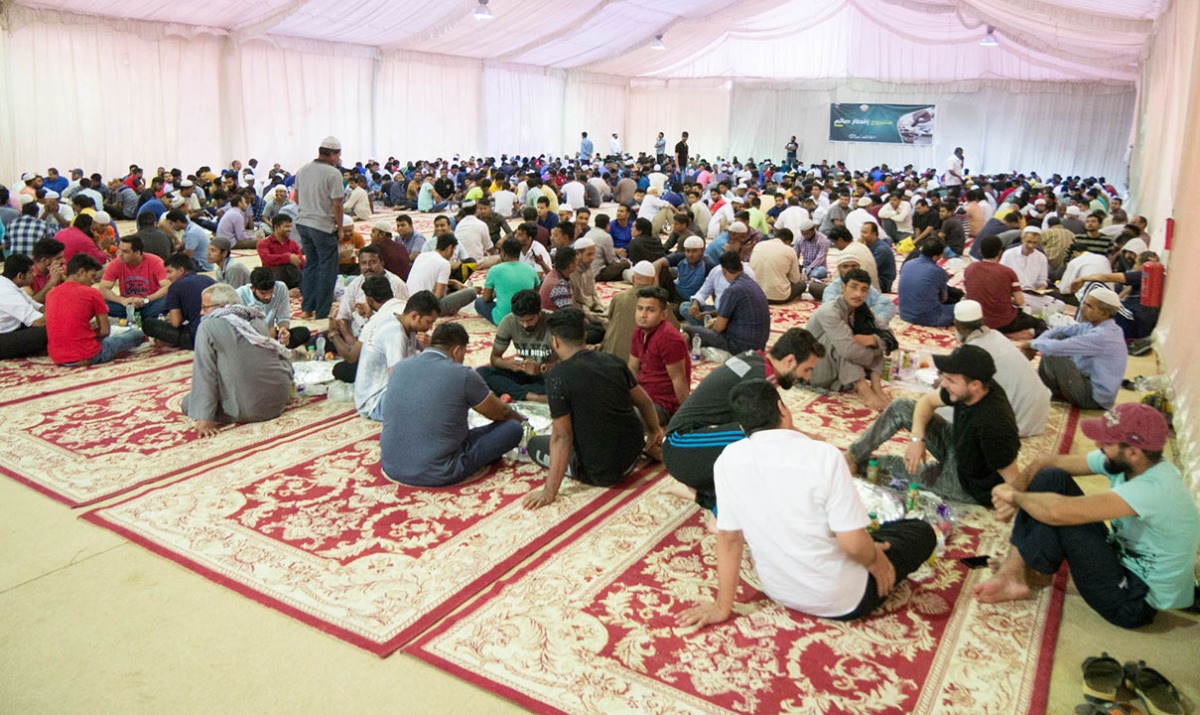
Lusail explores its development plans in Ramadan Special Copy – Lusail With the advent of the holy month of Ramadan, charitable efforts within the State of Qatar accelerated to provide direct and organized economic support to needy groups, based on the values of solidarity, compassion, and human dignity that the holy month embodies. This economic support for a wide segment of society is focused on providing basic food supplies, purchase vouchers, and cash and in-kind assistance that reduces financial burdens and enhances purchasing power, which contributes to the temporary economic stability of thousands of low-income families, expatriate workers, and individuals with special needs within the country. By distributing resources efficiently and transparently, these initiatives turn into an effective social and economic mechanism that preserves the dignity of beneficiaries, reflects the values of justice and solidarity, and embodies the spirit of Qatari giving in facing the living challenges during the Holy Month, so that Ramadan becomes a real opportunity to relieve financial pressures and support economic stability for the most needy community within the country. Ramadan Work Axes Dr. Ayed bin Debsan Al-Qahtani, CEO of the Thani Bin Abdullah Foundation for Humanitarian Services, confirmed that the holy month of Ramadan represents a central annual milestone in the Foundation’s work map, because of the lofty meanings and high human values it carries, embodying the spirit of solidarity and compassion and enhancing the presence of sustainable institutional charitable work. He added: During the month of Ramadan, the Foundation is keen to expand the scope of its humanitarian and social programs, in a way that meets the needs of the most needy groups and keeps pace with the requirements of the holy month, based on its mission to serve people and preserve their dignity, and in line with the vision of the State of Qatar in humanitarian work and sustainable development. Dr. Al-Qahtani explained that iftar programs for the fasting person represent one of the most prominent aspects of Ramadan work, as the Foundation works to provide iftar meals for needy families, workers, and communities, through organized mechanisms that guarantee access to those who are eligible, in a way that achieves a direct impact during the holy month, and reduces their living burdens. He pointed out that the workers’ watering and care program receives special attention during Ramadan, by providing water and basic needs and promoting health awareness, which reflects the Foundation’s commitment to the humanitarian rights of workers, and confirms its approach based on comprehensiveness and equity in providing assistance. Supporting needy families: On the social care side, the CEO stated that programs to sponsor orphans and support needy families continue during Ramadan at an increasing pace, as the Foundation seeks to provide living and psychological stability for orphans and ensure the sustainability of educational and social support for them, which contributes to building a better future for them. Dr. Al-Qahtani stressed that the Foundation pays special attention to Quranic and educational projects during Ramadan, foremost of which is the Tabyan Project, which aims to print and distribute the Holy Qur’an and its translations in several languages to serve non-Arabic-speaking communities and disseminate the meanings of the Holy Qur’an on a large scale, in a way that enhances religious awareness and Islamic identity. He also pointed out the continuation of education and knowledge programmes, including initiatives aimed at supporting students and empowering them scientifically, in the belief that education is an essential pillar of sustainable development. In the comprehensive humanitarian framework, His Excellency explained: During Ramadan, the Foundation implements a number of social and health initiatives, including the Sanabel Al Khair project, which focuses on supporting patients and reducing their health burdens, in cooperation with the competent authorities, and with mechanisms that ensure transparency and proper direction of resources. Dr. Ayed bin Debsan Al-Qahtani concluded his statement by emphasizing that the humanitarian impact the Foundation achieves during the month of Ramadan is the result of integrated efforts between the Foundation and its donor partners and supporting bodies, calling for continued support of institutional charitable work, because of its profound impact on the lives of individuals and communities. He said: At Thani Bin Abdullah Foundation for Humanitarian Services, we believe that giving during Ramadan is not only a seasonal act, but rather an extension of a sustainable humanitarian approach that puts people at the top of priorities and works to build more cohesive and compassionate societies. An integrated package of projects Mr. Mohammed Ahmed Al-Bishri, Assistant Secretary-General for Communication and Resource Development at the Qatar Red Crescent, stated that the QRCS launched an integrated package of humanitarian projects dedicated to the holy month of Ramadan, stressing that the Ramadan projects for families are distributed through ration cards designated for the cases studied, to enable them to purchase Ramadan supplies and basic materials for the breakfast table, as the number of beneficiaries reaches 27 thousand beneficiaries, in addition to the project to clothe students with school clothes and uniforms, which aims to 10 thousand beneficiaries. Al-Bishri explained that the Qatar Red Crescent has vital health projects inside Qatar during the holy month, which include performing surgical operations and providing simple medical devices such as earphones and heart devices for 600 patients, in addition to the This is My Wish project, which is directed to children with chronic medical conditions (between 10 and 20 children) to provide them with all their needs within the Ramadan campaign. With regard to economic empowerment, Muhammad Al-Bishri revealed the implementation of 3 projects to relieve the distress of families, including the disbursement of monthly financial guarantees to families whose breadwinner suffers from illness and has no source of income, most of whom are families of orphans or people with disabilities. Al-Bishri concluded his statement by referring to Al-Hilal’s efforts in the debtors’ file, where the debts of defaulters, those threatened with imprisonment, or those actually imprisoned are paid. Broad economic support. As the holy month of Ramadan approaches, Qatar Charity is intensifying its preparations for the largest charitable season of the year, through the Al-Aqrabun Center, which was launched in early 2026 as the latest step in developing the social care system within Qatar. This launch, which was approved by the Association’s Board of Directors in December 2025, represents a qualitative leap in social welfare efforts within the country, and an enhancement of the support system provided to families and groups most in need. Mr. Faisal Al-Fahida, Head of the Al-Aqrabun Center, said that as part of its preparations for the Holy Month, the Center is working to implement an expanded social welfare program that includes 32 projects in the fields of health, education, livelihood, housing, and sponsorships, in addition to seasonal projects such as the food baskets project, the Ramadan supply, the Charity Kitchen, the distribution of Zakat Al-Fitr, and the Orphans’ Eid. The center is also working to increase the number of sponsored families from 1,500 to 2,500 Qatari families. Al-Fahida continued, saying: On the occasion of the holy month, the Al-Aqraboun Center is preparing to mobilize support worth 100 million riyals to expand its services to a wide segment of beneficiaries, including low-income families, orphans, widows, divorcees, and abandoned women, in addition to helping the sick, people with special needs, debtors, the elderly, prisoners and their families, workers, students, those about to get married, community funds, and emergency humanitarian cases. He explained: The center pays special attention to emergency situations through digital verification procedures and rapid social research, in line with its vision to enhance sustainable social impact and direct resources to the groups most in need. Al-Aqrabun is based on broad local partnerships, most notably its ongoing partnership for the third year with the Ministry of Social Development and Family, and cooperation with the Charitable Activities Regulatory Authority. The center also works to expand cooperation with companies and banks within the framework of social responsibility. A call to philanthropists Faisal Al-Fahida called on philanthropists and institutional bodies to support the Center’s programs during Ramadan, to enhance solidarity and expand the scope of assistance provided within Qatar. The establishment of the Al-Aqrabun Center came in response to the noticeable growth in societal needs, and to develop the social care sector, which has become one of Qatar Charity’s largest sectors within the country. He added that transforming the previous administration concerned with social care into a specialized institutional entity gives greater operational and administrative flexibility, and allows the development of programs and procedures in a manner commensurate with the nature of local work and the increasing demand for aid. The center was built on an advanced system of governance, control, quality and risk management, with the adoption of modern technical systems and clear financial and regulatory strategies, which enhances transparency and increases the efficiency of resource use. He said that the goal is to build an entity that will be the first reference in providing social assistance within Qatar, and with a more professional and sustainable approach that enhances the values of solidarity in Qatari society. In conclusion, Al-Fahida noted that the Al-Aqraboun Center is a natural extension of the Social Welfare Department at Qatar Charity and the Al-Aqraboun digital platform, which during the years 2023-2025 provided aid exceeding 624 million riyals inside Qatar, benefiting more than 300,000 people, with the percentage of Qatari beneficiaries of the total value of aid reaching about 70%. Supporting the most needy groups Mrs. Zulekha bint Hassan Al-Asmakh, Acting CEO of the Al-Asmakh Charitable Foundation (Afeef), said that the Foundation has completed its comprehensive and early preparations to welcome the holy month of Ramadan by launching and implementing a wide range of specific charitable projects that focus on supporting the most needy groups in Qatari society, while ensuring that all donations it receives through its website are transferred directly to the beneficiaries or implementing partner agencies without any administrative deductions. Mrs. Zulekha Al-Asmakh goes on to say to Lusail newspaper: These initiatives come in support of the established role that the Foundation plays in the field of community development, represented in health, education, empowerment, and direct financial support to the target groups, to contribute to spreading and consolidating the values of solidarity, compassion, and charity among the segments of society in this holy month. Mrs. Al-Asmakh also indicated that a large portion of the support is directed to patients with kidney failure, heart operations for needy patients, needy and limited-income families, and workers. She continued: One of the most prominent projects announced for this year is the opening of a dialysis clinic at an estimated cost of 6 million riyals. It is a project that represents a qualitative leap in supporting kidney failure patients inside Qatar, as it will provide awareness and training sessions for peritoneal dialysis patients, which is a complement and continuation of the Foundation’s current program in covering session fees for kidney failure patients for the incapable and the poor. It is a project that instils reassurance in a heart exhausted by the disease. The most important development programs Zulekha Al-Asmakh added: One of the Foundation’s most important programs this year is a fasting Iftar project for workers, where iftar meals will be distributed to fasting people in four different main locations at an estimated cost of 600 thousand riyals, at 1,300 meals per day throughout the holy month, to provide an atmosphere of reassurance and comfort for fasting workers and low-income families, in continuation of previous efforts in providing breakfast and suhoor meals to categories of municipal workers. Then she pointed out: distributing Ramadan food baskets to 300 needy families at an estimated cost of 300 thousand riyals, to secure basic food needs during the month, while preserving the dignity of the families. This is consistent with the Ramadan food baskets coupon program, which confirms that the donation secures food for a needy family and brings joy to fasting hearts. Zulekha bint Hassan Al-Asmakh confirmed the provision of financial aid to 100 needy families, with an estimated value of 300,000 riyals, as part of the cash support program or purchasing coupons to cover basic living expenses for needy families inside Qatar. She indicated: Eid gifts totaling 100,000 riyals will also be distributed to needy families and orphans, to bring joy and joy to them at the end of the Holy Month and the blessed Eid al-Fitr. Mrs. Zulekha bint Hassan Al-Asmakh concluded by saying: The estimated total of these Ramadan initiatives exceeds 7.3 million Qatari riyals, which reflects the Afif Charitable Foundation’s commitment to sustainable and direct charitable work, in addition to its other programs in supporting education (tuition fees, university scholarships), treating children at Sidra Hospital, heart surgeries, providing wheelchairs, watering water in mosques, and empowering young people professionally.