

اخبار سوريا اليوم – وطن نيوز
سوريا اليوم – اخبار سوريا عاجل
W6nnews.com ==== وطن === تاريخ النشر – 2024-02-01 14:58:51
Iranian escalation operations against American forces are occurring in more than one geographical point in the Middle East, based on areas of Iranian influence and the presence of militias affiliated with Tehran. Through this, Iranian militias bombed a number of American bases in Iraq and Syria, while Washington responded to this bombing by directly targeting those militias. .
However, the recent escalation against American forces in the border triangle between Jordan, Iraq and Syria, at the end of last January, was a sudden step that sent a qualitative expansion beyond what was expected, and the American announcement came of the killing of three soldiers and injuries exceeding, in its initial estimates, 30 injuries as a result of a drone attack on One of its military bases.
There is no doubt that this latest operation is a dangerous escalatory step. Rather, it will inevitably be followed by serious steps from the United States related to the need to undermine Iranian influence, paralyze its activity, and curb its aggressive movements. It seems that the American administration will not move towards a direct confrontation that would result in the expansion of the scope of the conflict, and its steps will be limited to… A strategy that aims to paralyze the ability of state militias and reduce their capacity to the extent that prevents repeated targeting in other areas, especially those bases that are less secure.
Devastating military revenge
Washington is considering a response through several paths, and President Joe Biden did not disclose the nature of the response, its timing, its limits, and the expected horizon. US National Security Council spokesman John Kirby said, while on Air Force One, that “it is very possible that you will witness a gradual approach in this case.” “It is not just one action, but the possibility of taking several actions.”
Aaron David Miller, the former US peace negotiator in the Middle East who now works at the Carnegie Endowment for International Peace, said that there are a number of ways in which the administration can respond to the new attack on “Tower 22” without attacking Iranian territory.
These include striking Iranian personnel in Syria or Iraq or Iranian naval assets in the Arabian Gulf. He added, according to what was reported by the Wall Street Journal: “What the administration needs to do now is send a clear signal that the continuation of these attacks will lead to a reaction.” America is much stronger, and we can do that without crossing the Iranian red line, which is direct strikes on Iranian territory.”
However, some Republicans defended the Radical Union in response, noting that the possibility of striking targets in Iran should be taken into account. Republican Senator Tom Cotton, who sits on the Senate Armed Services and Intelligence Committees, said that the United States should To respond to the attacks with “devastating military retaliation against Iranian terrorist forces, both in Iran and across the Middle East.”
But Rep. Seth Moulton, a Massachusetts Democrat who serves on the House Armed Services Committee, warned against risking a major war with Iran. He said: “From Iranian-backed militias to China, we have enemies around the world who want to see America embroiled in another war in the Middle East. We must have an effective and strategic response on our terms and timetable.”
New hotspot
In the course of the escalation that the region is witnessing against the backdrop of the Israeli war on the Gaza Strip, many scenarios and outcomes appear to be on the table and within the realm of possibilities, making it necessary to follow up and scrutinize them to understand their repercussions on the political and strategic situation in the Middle East.
This is related to the form, degree, and extent of the American response to the latest strike, especially since the latest targeting was directly against American forces, and left dead and injured at a significant and remarkable time for the American administration, which is receiving the scene of the presidential elections.
There is another point in the recent targeting by the “Hezbollah Brigades” in Iraq, which is the addition of a new hotspot in the conflict between Tehran and Washington, and somewhat far from the areas where Iran’s militias are present, which puts the calculations of the confusion of the regional scene and the deepening of its contradictions into place. Weighting.
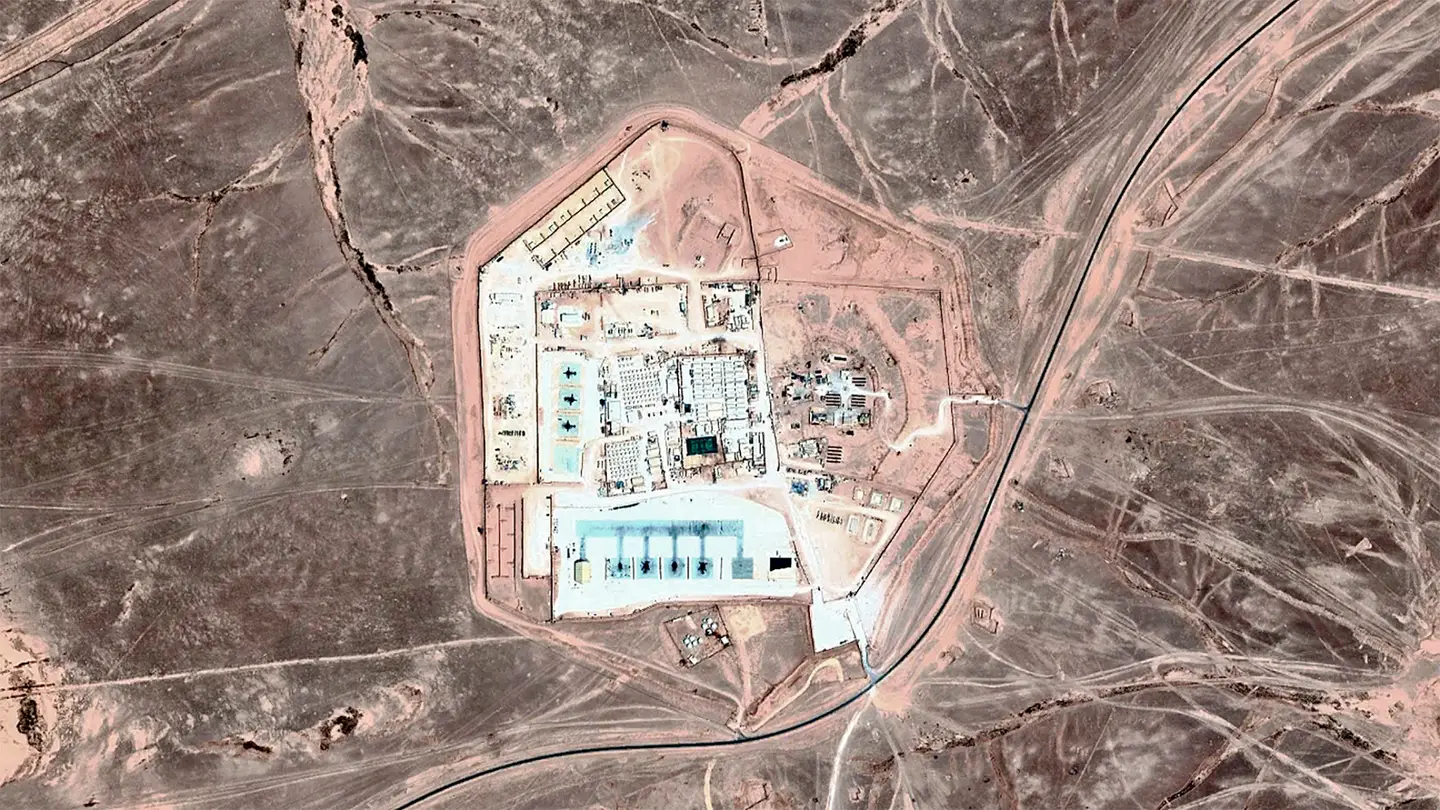
What is striking about the recent operation is the discrepancy in the statements and statements issued by the targeting parties regarding the precise location of the American military base where the three American soldiers were killed. According to the US Central Command, the attack occurred on the logistical support base located in “Tower 22” in the border triangle separating Jordan, Syria and Iraq, specifically northeast of Jordan towards the border with Syria.
This means that the operation took place in the Jordanian Rukban region, opposite the Al-Tanf region in Syria. While the initial Jordanian statement confirmed that the attack occurred outside the Jordanian borders, Jordan later issued an official statement in which it said that the terrorist attack targeted an advanced site on the border with Syria without specifying the nature of this site. Is it on its border with Syria, or did the targeting take place inside it?
Meanwhile, the statement issued by the “Islamic Resistance in Iraq” office stated that its factions targeted four external bases, three of which were in Syria, namely the “Al-Shaddadi” base, the “Rukban” base, and the “Al-Tanf” base, and the fourth towards the “Zevulun” naval facility inside Palestine with drones. The statement also did not miss the clear link between what it carried out and the course of events in Gaza.
Well thought out timings
Certainly, the recent targeting brought a qualitative development in entering a new geographical point represented in Jordan, which is facing increasing pressure from the Iranian side through Syria through drug and weapons smuggling operations into Jordanian interior, which poses the possibility of opening areas of movement for militias affiliated with Iran to operate against bordering countries.
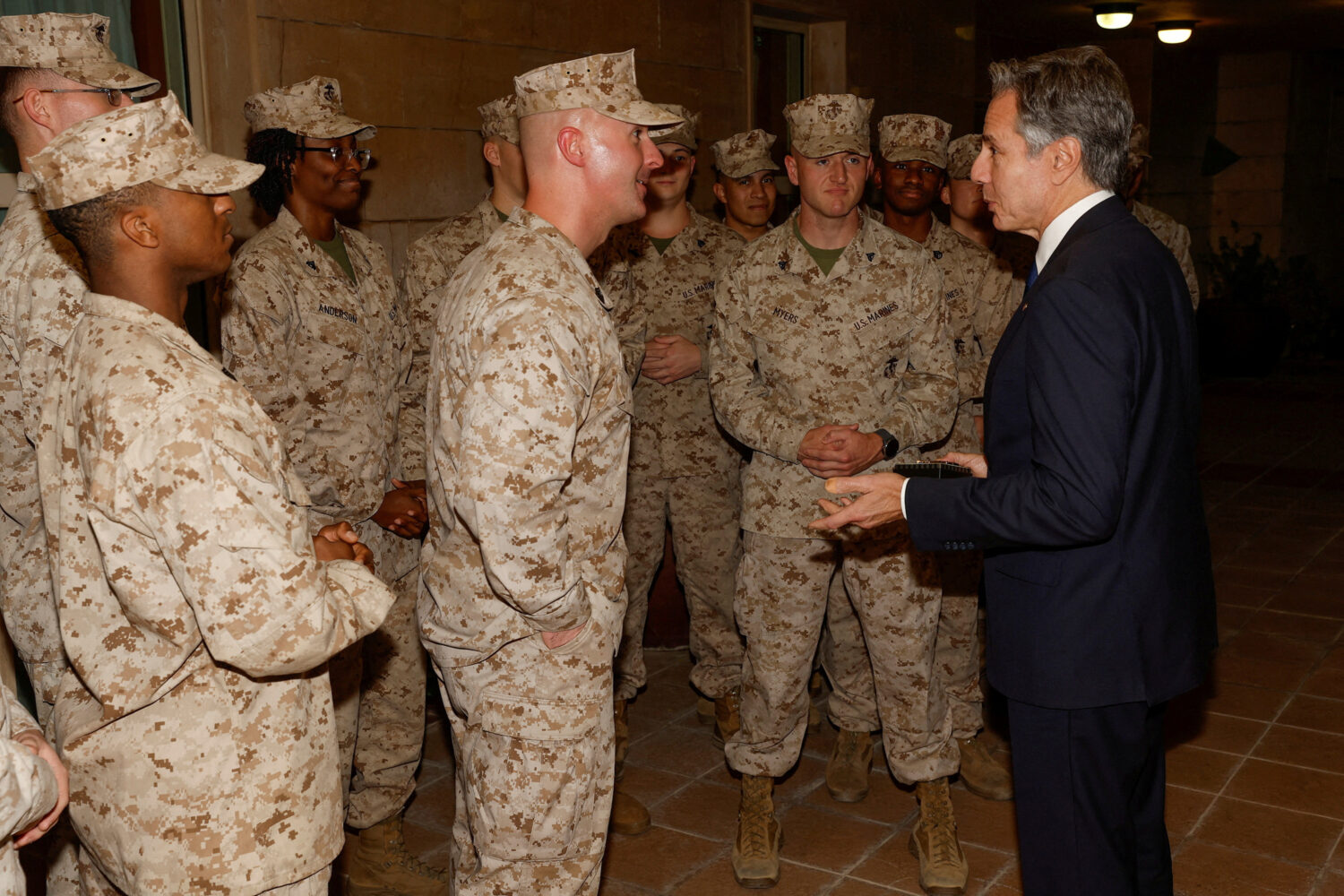
Likewise, the Jordanian academic, Muhammad Al-Zaghoul, points out that the context in which the attacks carried out by the so-called “Axis of Resistance” on the bases and sites of the United States of America in the region, as well as Israeli interests and sites, can be understood through two paths.
The chief researcher at the Emirates Policy Centre, speaking to Al-Hal Net, continues that the old path has existed for years and was mainly strengthened after the assassination of the former Quds Force commander, Qassem Soleimani, and the new path is linked to the context of October 7 last year in Gaza.
Al-Zaghoul points out that the old path boils down to the fact that Iran has historically been disturbed by the American military presence in the region, and that Iran reads in the international context that “the West in general is in a state of decline and the East is in a state of rise, and the Iranian strategic reading is in the mind of Supreme Leader Ali Khamenei and is adopted by the Revolutionary Guard forces.” Iran is based on the premise that heading east means Iranian strategic interest, and that openness to the West means an experiment that has been attempted several times and failed.”
Therefore, cooperation with the West always becomes conditional, and its conditions are harsh, reaching the point of compromising Iranian sovereignty and dignity, as the Jordanian researcher and academic explains. While cooperation with the East “is much easier, as China and Russia do not require changes from Iran in the structure, nature, relations, or ideology of the regime in exchange for strengthening technological, economic, military, and other cooperation.”
Therefore, according to this scenario, Iran found that the opportunity had become ripe in the Middle East region to put pressure on the American military footprint. This is an old decision, but this decision was announced publicly and officially adopted after the assassination of Qassem Soleimani, so that more than one Iranian official explicitly expressed that revenge The big thing for Soleimani would be to remove American forces from the region, and since then Iranian military operations began targeting American forces.
In the context of this strategy, the Iranian regime intends for its strikes to be qualitative, and aims to significantly pressure the presence of American forces in the region. However, Tehran also deliberately narrows the areas that ensure Washington’s response is broad and deep. Therefore, Tehran always works to ensure that the timing of its strikes and the escalation of their strikes are linked to deliberate timing, especially with the periods preceding the US presidential elections.
So, Qassem Soleimani’s philosophy, which Tehran still adopts to this moment, is “to raise the temperature of events in the region, and settle towards the fact that America must confront six armies before it fights the Iranian army.” Therefore, negotiations and policy talk can have important consideration and value, in addition to its current tactical move towards linking all the movements of its agents in the region to the course of the conflict in Gaza and putting pressure on Washington,” Al-Zaghoul says.
Joy in war
Iran is betting on the delicate balance of action and reaction with the United States of America, and estimates that the American reaction to the escalation of its militias against American military installations will most likely be based on Washington’s keenness not to escalate.
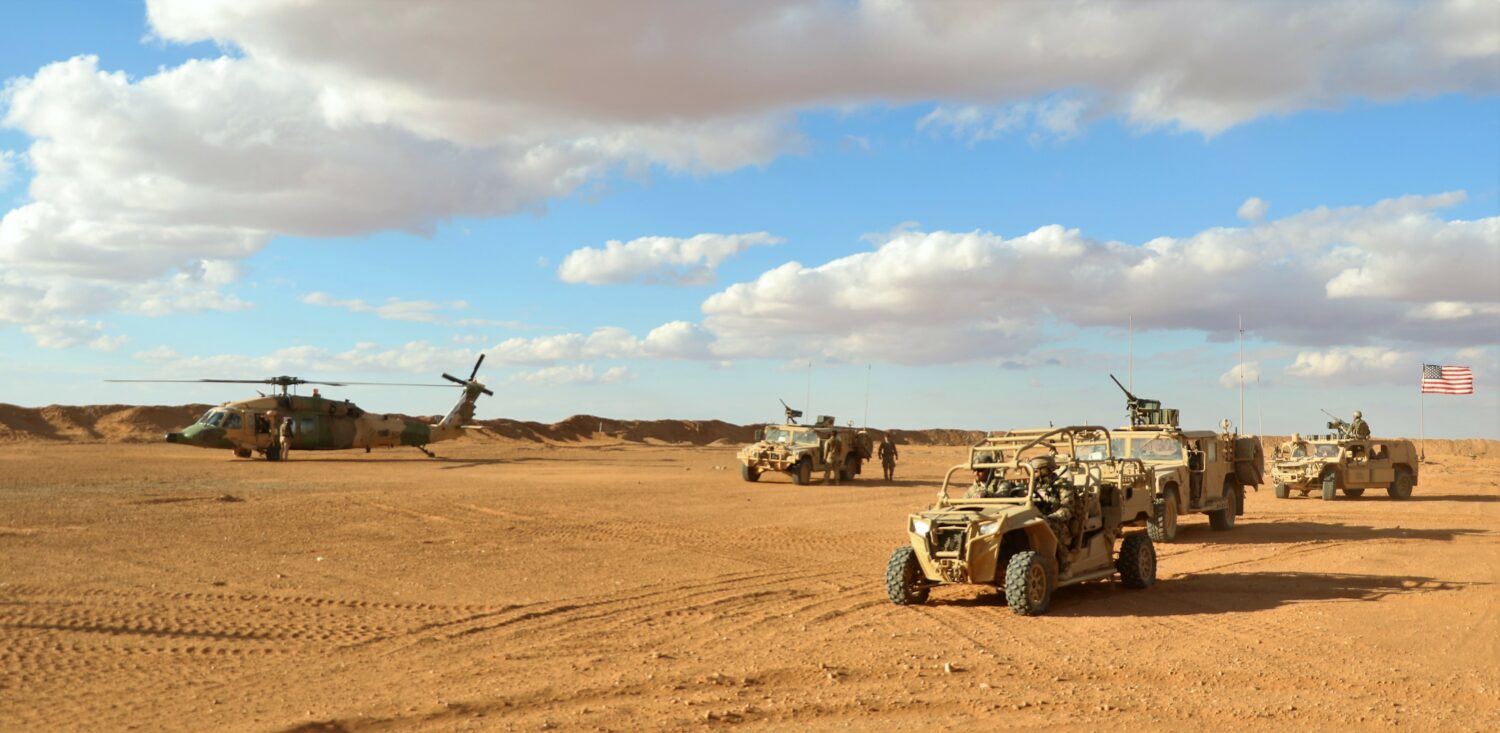
In any case, the American response to the recent attack on an American base cannot be delayed, and it can also be read that Washington’s response will be through a specific operation targeting the infrastructure on which the Iranian militias and their field leaders depend.
The least likely scenario, but not unlikely, is that one of the main sites of the Iranian Revolutionary Guard inside the country will be targeted to the extent that allows it to temporarily disrupt its movement and activity. However, the most realistic scenario is that the American strike will directly target the Iranian militia in Iraq.
For his part, Mehdi Aqbai, a member of the National Council of Resistance of Iran, says: “Perhaps it is logical to understand that neither America nor the Iranian regime, led by Ali Khamenei, wants to expand the war, and they have admitted this many times. Therefore, today we saw confirmation of that appeasement position from the positions of the Hezbollah Brigades in Iraq, which announced the cessation of its activities and the freezing of its operations against the United States. Khamenei not only wants to go to war, but also avoids it.”
While everyone is looking for a way to calm the situation, Khamenei and the regime’s leaders are the only ones who are very happy with the war and the extent of its expansion if they do not pay the price themselves, because by doing so they are trying to expand the scope of their influence.
Mehdi Aqbai, member of the National Council of Resistance of Iran
At the same time, they show extreme caution so that the effects of the war do not reach their doorsteps, but they want to expand the conflict at the expense of the lives and security of the peoples of Palestine, Iraq, Yemen, Lebanon and Syria without being willing to bear the consequences.
The war in Gaza and the nature of the Iranian regime’s dealings with it and its attempt to exploit it to its advantage, after the international community fully realized the negative role of this regime, “changed the international approach towards the Iranian issue, and knowledge of the suspicious goals and objectives of this regime, which were revealed by the Iranian resistance one after another, has become clear to everyone.” The war for the sake of the regime is nothing but a cover for internal suffocation, and this is the reason that prompted him to do so. The wave of executions has increased in these four months,” according to Aqabai.
As a result, the Iranian regime now seems to be in an irreversible dilemma, and although it is making one concession after another in the hope of its survival and continuation, no one trusts the regime and its commitment to its pledges, as it is like “betting on a losing horse,” according to the same source.
So, Aqabai believes that creating crises and war in the region is to ensure the regime’s survival inside Iran, in addition to being the mullahs’ regime’s strategy to protect its authority, distract its opponents, and conceal its crises and crimes. Therefore, peace in the Middle East will not be achieved unless the mullahs’ regime is overthrown.
Even if the war in Gaza ends one way or another, the war will continue in other regions, because the Syrian people have been suffering for more than 12 years due to the mullahs’ interventions in Syria and their incitement to conflict there, and the Iraqi people have been victims of the mullahs’ regime for more than 20 years.
Therefore, the scenarios of the American response to the Iranian-affiliated militia attack, and the degree to which it will be, will determine the extent of Tehran’s ability and potential to complete its sabotage policy that works to destabilize the region and employ its agents in the hot geography to serve its political goals.


