

اخبار سوريا اليوم – وطن نيوز
سوريا اليوم – اخبار سوريا عاجل
W6nnews.com ==== وطن === تاريخ النشر – 2024-02-02 14:43:28
The “Brotherhood” experience in Egypt is distinguished from other experiences in that it came to power in the country of origin. The “Muslim Brotherhood” group was established in Egypt by Hassan al-Banna in 1928 as a religious group aiming to adhere to religion and its morals, and it came as a response to the end of the “Ottoman Caliphate” and the pursuit of Restoring the Caliphate as an Islamic system of government that works to resolve conflicts and problems in Islamic societies. Throughout its history, all existing regimes in the Arab Islamic countries have been accused of collusion, collusion, and intentional sabotage.
The “Muslim Brotherhood” came to power in many countries following the events of the “Arab Spring” in 2011 and beyond, and their experience was unsuccessful to the extent that societies pushed them to denounce them, not just their political failure.
The “Brotherhood” in rule of Egypt
The “Brotherhood” came to power in Egypt, and continued to rule for nearly a full year, and obtained a majority in the People’s Assembly and the Shura Council, which helped them form the Egyptian government at that time without significant participation or significant pressure from other parties or movements, and based on this we see that the question that arises Same: Did the “Brotherhood” not get the opportunity to rule as they claim, or did the group not manage this stage well?!
Over the course of an entire year, Egypt witnessed the rule of the “Brotherhood” at all levels and institutions. This period caused confusion, confusion, randomness, and rifts in the management of all institutions, as technical committees were formed in the various departments affiliated with the institutions. These committees include members belonging to the “Brotherhood” group, and these committees represented the parallel administration of the state’s administrative apparatus, and the group relied on them to manage state affairs.
This raises a question about the Muslim Brotherhood’s efforts during this period to impose control over institutions, far from providing solutions to crises or a clear vision for the future in which everyone participates. Rather, it can be said that it showed the group’s true intentions to impose its control first, as it was not just an attempt to recognize it. Because it became an integral part of the historical moment, it sought to impose belief in it and belonging to it.
According to what the Egyptian researcher in the affairs of political Islam, Abdullah Bahgat, reported to Al-Hal Net, it appears that the transition from the stage of performing the role of the opposition, which provides community services and control over some service activities, and the spread in unions, to the stage of absolute rule, “with the brilliance of power.” The group lost the ability to think and manage.
Bahjat added that this experience, which lasted for only one year, during which the “Brotherhood” came to power in Egypt, demonstrated their narrow-mindedness, the absence of their awareness and understanding of society and its diverse nature, and a complete absence of the concept of the modern state, which is based on pluralism, and moved to the idea of control by populist groups and movements. It is biased, has one narrow vision, sees only itself, and its literature is based on excluding others, not on management and searching for a space through which to solve the crises of Egyptian society, which has made it lose its credibility and popularity within Egyptian social frameworks.
Especially since this popularity, according to which Mohamed Morsi came to lead the state, was in large part the result of the famous “Vermont” agreement, which came about through Mohamed Morsi meeting with the leaders of the opposition and agreeing to resign from the “Brotherhood” group to be president of all Egyptians in exchange for the support of the opposition and the left. In the presidential elections against Ahmed Shafiq, and indeed, as soon as Morsi succeeded in the elections in June 2012, he announced his resignation from the “Brotherhood” group, but he remained in relationship with them as the political candidate for the “Freedom and Justice Party.” Morsi tried, under pressure from the opposition, to And the leftist groups wanted to appear as an independent president, or a president for all Egyptians, which upset Khairat Al-Shater and Mohamed Badie, and they sought to take control of the government.
The conflict between the Presidential Palace and the Guidance Office
It is customary in the “Brotherhood” group for the general guide to be chosen and pledged allegiance to him in the cemeteries during the burial of the old guide and to chant the name of the new guide in the cemeteries. Therefore, it was called the Pledge of Allegiance of the Graves, but with the guide Muhammad Badie, the situation was different, as he was the first guide to be elected after the overthrow of Mehdi Akef, in 2010, and many of them accused these elections of fraud and challenged them, to the point that a not insignificant number refused to pledge allegiance to the new guide, Al-Defrawi and Al-Zaafrani. Abdel Moneim Abu Al-Futouh, Abdel Badie was the first guide on whom there was no consensus within the Brotherhood.
Throughout the period of Badie’s presence in the Guidance Office, there were many problems and divisions within the organization, perhaps the most famous of which was the defection of Abdel Moneim Abu Al-Futouh, and Muhammad Habib, a member of the Guidance Office and at one time a deputy to the Guide. Badie was accused of kidnapping the group, forgery, and overthrowing Mahdi Akef, and Khairat Al-Shater contributed to this and made… This is a major rift within the group, and heralded its end and departure from the principle of loyalty and disavowal at the hands of Muhammad Badie.
With the “Brotherhood” assuming power, these divisions emerged over the administration of the state, and a new clash emerged between the head of the “Freedom and Justice Party” and the Guidance Office. Which one of them runs the group? Will the group swallow the party or will the party swallow the group? Will the state be managed from the Guidance Office or from the Egyptian presidential palace? .
This issue was resolved at a meeting of the “Brotherhood” group in the Presidential Palace in Egypt. According to the leaks, Mohamed Badie then sat in the president’s place and managed the meeting. This was an indication of the group’s ownership of the presidential palace and the decision to administer the state, and this appeared in Morsi’s inability to be president for all Egyptians. The state was administered in an ethnic-exclusive manner.
According to what researcher Abdullah Bahjat added to Al-Hal Net, the state’s decisions were an attempt to appease Islamist movements, which the “Brotherhood” organization was betting on would stand by it and vis-à-vis the people. Like the Salafist movement, which adopted some resonant slogans, such as its claim of trying to implement Sharia law and Islamize society, the decisions or statements, more precisely, were appeasements to some movements at the expense of society, and this is what made its ground in Egyptian society disappear, and today’s supporters abandon it tomorrow. All of these matters at the time led society to descend into conflict and stand on the verge of division, as the group came to express a specific group and not to express society.
The pattern of exclusionary rule practiced by the “Brotherhood” and the state of administrative confusion that was imposed on Egyptian society did not only lead to the group’s failure in political management, but also prompted society to reject it in a negative way.
This confirms the state of anxiety and rejection of the elections, and what is meant here is not only the presidential elections, but also the legislative elections, because he realized the decline in his popularity in the Egyptian social environment, the “sympathetic milieu,” and then he resorted to accusing the institutions of non-cooperation, as he conceals the state of deficiency and impotence that appeared in him, Failure to provide a clear vision led to institutions being accused of not cooperating. If this was true, why did he not take legal action against those who were negligent?! According to Abdullah Bahjat’s vision, because he was counting on the formation of parallel departments affiliated with him, in addition to the state of confusion shown by those in charge of the institution, and thus this leads to the street’s anger at the institutions, so the opportunity is ripe for parallel administration.
Bahjat explained in clear and frank terms that it was a conspiracy by the “Brotherhood” to export crises to the Egyptian street through its institutions, in order to then justify the state of brutality that he was doing, and this is what the events have proven, as the mental formation pushes them to impose their vision and focus on believing in them more than trying to manage the state and search for a solution. In its crises.
Social division and society’s pronunciation of group
According to the style of investigative rule practiced by the “Brotherhood” and the state of administrative confusion that was imposed on Egyptian society, it not only led to the group’s failure in political management, but also prompted society to reject it in an averse manner.
This was proven by the Egyptian researcher in the affairs of political Islam groups, Ahmed Zaghloul Shalata, to Lahul Net, by the existence of an Islamic movement demanding not to pay the “Brotherhood” bill in Egypt, and declaring this as its slogan, and Morocco as well has for some time eased the burden of the “Brotherhood,” and the groups have advanced. Islamism in Morocco itself is in a form that denies affiliation to the “Brotherhood,” and declares its Islamic background, but at the same time they insist that they are a purely Moroccan organization with no connection to the “Brotherhood,” and the “Ennahdha Movement” of the Brotherhood in Tunisia announces, at many times, their abandonment of the authority. Islamic politics for not paying the bill for an ideology that has failed or an organization that has political crises.
The political failure and social terminology of the “Muslim Brotherhood” organization led to an attempt to disavow Islamic groups, especially after their social terminology. This appeared in the “Hamas” movement’s announcement of its isolation from the “Brotherhood” organization in 2017, and the Turkish government’s abandonment of sponsoring the “Brotherhood” in Egypt, at least. In terms of media promotion, and the recognition of the political administration of the Egyptian state as a legitimate administration and not a military coup, as well as the State of Qatar, this was considered an additional defeat for the “Brotherhood” that might push them to completely end these societies, but in the end the “Brotherhood” group excelled in making It is a secret organization, has the capabilities to politically circumvent such matters, and emerges at a time when the state is in a state of slackness or weakness, and its history bears witness to this.
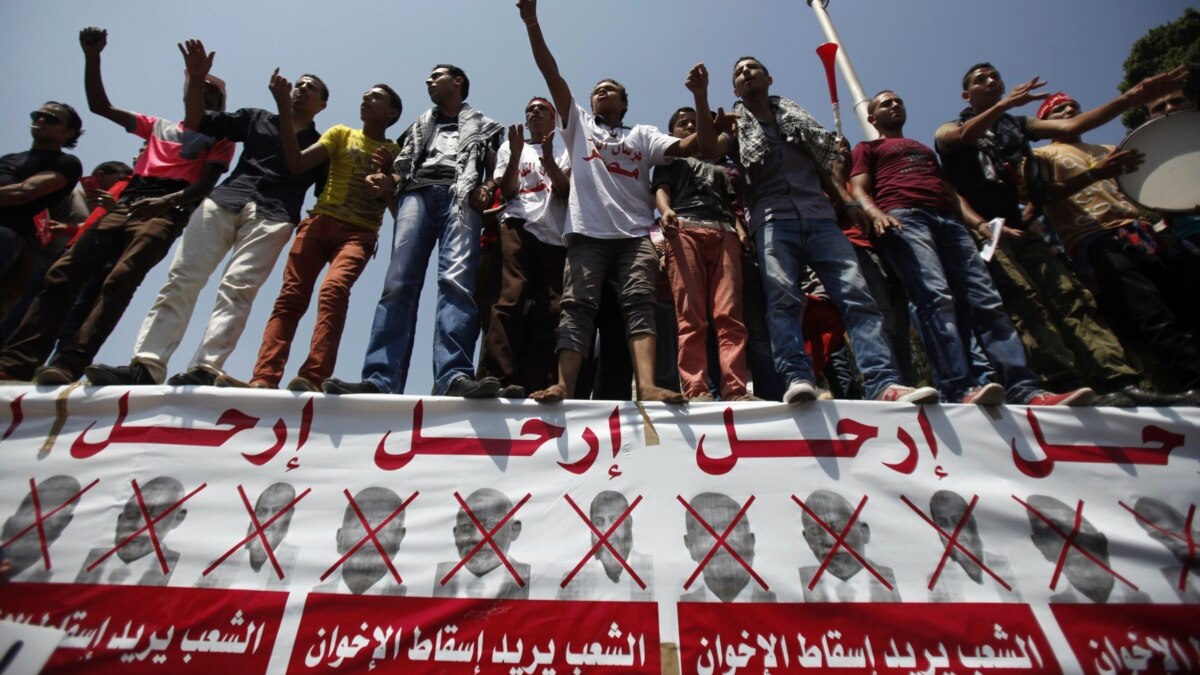
The political failure that occurred in the last decade and the absence of social incubators represented very large factors that make any conservative movement or close to the “Brotherhood” try to mitigate the political failure and political defeat that befell them, and be more interested than others in denying this failure, especially since the matter It did not stop at the point of political failure, but rather reached the social expression for them that came as a result of exclusionary ethnic rule.
Through the history of the “Brotherhood” group, it can be said that the group is adept at playing the role of preaching, distorting others, and exalting oneself, more than anything else. It is a divisive logic of action in which society does not accept its diversities and differences and works to manage it, as much as it aims to prove its unclear vision and impose it forcibly. If the matter is claimed, and this appeared in the experience of Sudan more clearly, where the organization ruled for thirty years and came out with a revolution that completely rejected it, and this is considered a response to the argument that its experience in ruling the Egyptian state was not complete, and the organization did not hesitate to push society into divisions and wars in order to return again to rule. .