
اخبار سلطنة عُمان – وطن نيوز
اخر اخبار سلطنة عُمان اليوم – اخبار سلطنة عُمان العاجلة
W6nnews.com ==== وطن === تاريخ النشر – 2026-03-03 15:31:00
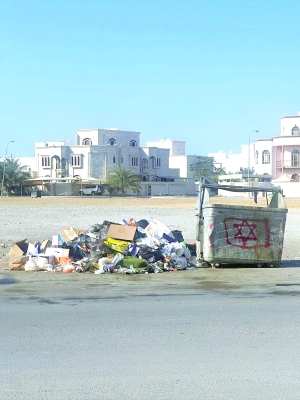
The reality of responsiveness constitutes a gap that threatens the effectiveness of digital transformation. Investigation: Ghalia Al-Dhakhri. Electronic platforms and smart applications have facilitated effective communication with citizens and beneficiaries, and government agencies are making concrete efforts in the field of digital orientation as part of the objectives of “Oman Vision 2040”. The “Response” platform has reflected citizens’ confidence in submitting their reports and observations with complete transparency. However, some digital platforms have turned from rapid response to silent channels and have become mere boxes for collecting complaints without radical solutions. Through this investigation, it reviews “Oman” highlighted the complaints submitted by citizens in the Muscat Governorate regarding municipal services via the “Tajawob” platform and the Muscat Communications Center, which – according to their testimonies – did not receive the desired response. A number of them expressed their dissatisfaction with the mechanism for dealing with reports, pointing to the slow procedures and the absence of actual follow-up, which leaves some complaints – as they described – without real and tangible treatment whose effects can be seen on the ground. Engineer Fida bin Ahmed Al-Balushi, a member of the Municipal Council in the Wilayat of Seeb, said: The state is witnessing a high population density, accompanied by a noticeable increase in the volume of claims received from various neighborhoods and regions. He explained that the majority of complaints that reach the Council are of a service and personal nature, and directly affect the details of the daily life of citizens and residents. He stated that the most prominent service claims are street maintenance, as the Council monitored the people’s need to address potholes and cracks in internal and service roads, in addition to urgent demands for the installation of lighting poles in areas that lack them, and the maintenance of broken poles. Requests for the construction of speed breakers in some internal streets are also at the forefront, in addition to complaints related to traffic congestion, especially in the Maabilah areas, with demands to find temporary solutions that contribute to alleviating their severity. He pointed out that the accumulation of waste is one of the prominent challenges, especially during periods of official holidays, in addition to the presence of some deficiencies in the services provided in some parks in the Wilayat of Seeb, such as insufficient seating chairs and the absence of appropriate grassy areas, which raises the dissatisfaction of residents and families. He explained that the treatment of these complaints varies. According to its nature; Some of them require time and field procedures, as the council visits the site and prepares a report that is submitted to the mayor of Darset after receiving an official letter from the people explaining the details of the problem. On the other hand, there are problems that can be dealt with immediately through direct coordination with Muscat Municipality, and they are resolved within hours or within one day at most. In his speech, Engineer Fida stressed the importance of encouraging citizens to use the “Tajawob” platform to submit their reports, because of the accuracy it provides in communicating the complaint and the possibility of following up on the stages of its treatment effectively and transparently, which enhances the quality of services and establishes trust between the community and the concerned authorities. Citizens’ ExperiencesIsmail bin Khamis Al-Hadidi, a resident of the Sur Al-Hadid area in the Wilayat of Seeb, conveyed a reality he described. “Painful” due to the accumulation of waste among the alleys and alleys of the area in Mashhad, which – in his words – has distorted the general appearance and disturbed the comfort of the residents. Explaining the details of his complaint, Al-Hadidi said: “I submitted several official reports through the Muscat Communications Center, and the usual response was to refer the issue to those concerned in the municipality to take the necessary action. Not only did I do that, but I submitted another report via the Tajawob platform, but unfortunately I did not notice the expected interaction that reflects the speed of the response. He added that he was not satisfied with electronic reports, but rather contacted the municipal council in the state, but the problem continued for days. He pointed out that five days after the situation worsened, a number of people from the area took the initiative to organize a campaign to clean the cemetery, and while they were at the site, one of the officials happened to notice the accumulation of waste in the containers near the mosque, so he issued an immediate directive to remove it and clean the place. Al-Hadidi explained: “We were hopeful at the time, but the shock was that the accumulation of waste returned to what it was before,” stressing that the area still suffers from an uncivilized appearance, in addition to annoying smells and the spread of insects. And mosquitoes among the garbage, even though we are in winter. Al-Hadidi concluded his speech by renewing his appeal to the competent authorities for the necessity of radical intervention to address the problem, and to establish an effective monitoring mechanism that ensures the sustainability of the solution and the non-recurrence of the scene that harms the residential environment and affects the quality of life in the region. Needs of Citizens Mazen bin Sulaiman Al-Hadi, a member of the Municipal Council of Al-Amerat, explained that the complaints received carry within them a legitimate critical dimension, as they express in their essence human rights demands and direct service needs. It affects the daily lives of citizens. He pointed out that one of the most prominent of these demands is the paving of dirt roads, in light of the rapid urban expansion and population growth that the state is witnessing, which places the municipality facing an increasing challenge to meet the demand for this service. He pointed out that during the recent period, a good number of kilometers had been paved, as part of the gradual response to these demands. He added that among the recurring issues is the issue of public cleanliness, especially with regard to transporting garbage from containers. He stated that following the issuance of the decision to transfer the responsibility of garbage transportation from Bee’ah Company to the Muscat Municipality, the operational burden increased, and comments began to be received on a daily basis, especially from areas with high population density. He also referred to demands for the establishment of community parks and gardens within residential neighborhoods, in a way that enhances the quality of life and keeps pace with urban expansion, in addition to calls to reconsider the regulations regulating the installation of external sunshades for vehicles in front of homes. He explained that the current regulations make many roads not permitted to erect outdoor umbrellas, according to standards that many residents consider unclear and unacceptable. He confirmed that the Municipal Council has submitted a request to review this issue through its legal committee, and work is underway to study and re-evaluate the regulations, with comments continuing to be received until the proposed amendments are issued. For his part, Faris bin Jan Muhammad Al-Balushi expressed his dissatisfaction with the weak response to electronic reports, pointing out that the rapid response that is supposed to characterize digital platforms suffers – according to his description – from a state of stagnation. He cited his experience in submitting a report through the platform about the growth of harmful weeds and shrubs near his house, around which insects and reptiles gathered, without receiving a response. He also submitted another report about the malfunction of one of the neighborhood lights, but it was not addressed at the time. He stressed that these observations did not find their way to a solution until after the intervention of the municipal council, considering that the citizen’s reliance on personal communications and direct follow-up to address public services makes digital platforms lose their effectiveness, and negatively affects the level of trust in them as official channels that are supposed to reduce time and effort and provide concrete solutions on the ground. Khamis bin Saeed Al-Wahaibi, a resident of the Hajj area in Al-Amerat Wilayat, indicated that he submitted a report through the platform. Regarding the regulation regulating car shades in front of homes, he explained that the regulation issued by the Muscat Municipality included – according to his understanding – most of the roads in the state as if they were main roads, while some of these roads are internal and do not overlook public streets. He stressed that his house is not located on a main street, which makes him see the need to reconsider the application of standards in a way that takes into account the nature of residential neighborhoods. As for Salem Al-Omari, a resident of the Wadi Al-Lawami area, he spoke about his experience in submitting a report about the presence of a dead dog in front of his house, which raised children’s fears and caused the emission of annoying odors, and he did not receive the required response through the platform, which prompted him to communicate with the municipal council, which in turn coordinated with the field supervisor, so that the dead animal was later transferred to the site designated by the municipality and the problem was addressed. In the same context, Khaled spoke Bin Ahmed Al-Rabkhi expressed the dissatisfaction of the people of the Al-Nahda City area – the seventh district – with the city’s walkway project, explaining that the people were happy about the project when it was announced, but their joy – according to him – was not complete after its course was implemented on the ground. He pointed out that the walkway was established between the main street and near homes and shops, which raises concerns about traffic safety, especially since it intersects with the entrances and exits of the service road. He added: “How can we reassure the elderly and children while they are practicing walking amidst active traffic?” He pointed out that some parts of the walkway do not leave enough distance between the parking lots of private homes and the pedestrian path, and the width of the walkway – according to his description – does not allow more than two people to walk side by side, in addition to the absence of landscaping that enhances comfort and visual appeal. He indicated that this reality – from the point of view of the residents – is not consistent with the declared directions of the Muscat Municipality in establishing walkways within residential plans, so that they are easy to access and serve everyone in privacy and safety. He confirmed that they had submitted a report through the platform without significant results, and they had subsequently contacted the Director General of Al Amerat Municipality and the Municipal Council, but the issue of the walkway – so far – has not witnessed a clear treatment or amendment that fulfills the aspirations of the residents. Muscat Municipality’s response On the other hand, “Oman” conducted a meeting with the Muscat Communications Center of the Muscat Municipality, where Issa bin Ali Al Jahouri, the center’s customer service specialist, explained that the total incoming calls during the year 2025 amounted to 88,310 calls through various communication channels, While 15,268 reports were recorded on the “Tajawob” platform during the same period. He indicated that these numbers reflect the increasing volume of interaction from beneficiaries, and the high level of their reliance on official channels to submit comments and reports related to municipal services. Regarding whether there were time periods that witnessed a noticeable increase in the number of reports, Al-Jahouri indicated that a clear increase was observed during the last quarter of 2025, specifically starting in October. He explained that this increase is due to the transfer of the jurisdiction of the waste collection and transportation sector in the Muscat Governorate to the Muscat Municipality, which was accompanied by an increase in reports related to this sector, especially during the phase of operational transformation and adaptation. Directly, which explains the high volume of interaction regarding them. Regarding the geographical distribution of reports, the data indicated that the most common reports – such as broken lighting, public hygiene, and pest control, in addition to reports of collecting and transporting waste – are more concentrated in the state of Seeb, especially in the southern Maabilah region, and this is due to the high population density and the rapid urban expansion that the region is witnessing, which increases the pressure on municipal services. Average processing time With regard to the average time period for processing reports, the center explained that the completion period varies. Depending on the type of report, its degree of seriousness, and its priority, as follows: Urgent reports (such as vehicle accidents, food safety reports, and traffic light malfunctions): are completed within less than one working day. As for reports with medium priority, their processing time ranges between 3 to 5 working days, and reports of low priority or that require coordination with other parties may extend their completion period from a week to a month. The center stated that if the report exceeds the specified period, it is dealt with via an automatic escalation system in the “Tajawob” platform, where reports are gradually raised to higher administrative levels within the institutional structure, reaching the highest levels, ensuring speedy processing and enhancing adherence to the approved time periods. Communication with Citizens He also explained that there is a clear mechanism to ensure The quality of implementation of reports and the level of satisfaction of beneficiaries, as the citizen is notified via text messages when the report is closed. In the event of dissatisfaction with the level of implementation, the platform allows the report to be reopened and referred again to specialists for better treatment. The beneficiary can also evaluate the quality of the service after the closure, which contributes to measuring the level of satisfaction and improving performance continuously. Delay in Processing Reports The Center pointed to a number of factors that may affect the speed of processing, including incomplete data on the report, such as the absence of the exact location or adequate description, which requires requesting additional information and delays implementation, and the nature of some reports that require a field inspection or technical study before implementation, such as road and project reports, and the increasing number of reports during peak periods or when new service specializations are transferred. Which puts pressure on the operational capacity of the executive teams, the presence of complex reports in which more than one service or sector overlaps, which prolongs the procedure cycle, the need for coordination with entities outside the scope of direct jurisdiction, which may affect the duration of completion, and the receipt of reports outside the scope of the entity’s actual jurisdiction, which requires redirection or clarification to the beneficiary, and the synchronization of reports with maintenance work or existing projects in the same location, which requires aligning implementation with timetables, and the impact of some field work by weather factors or emergency operational conditions. And the need for field verification of repeated or unconfirmed reports to ensure accuracy of processing, and the organizational or procedural changes accompanying the modernization of systems or the reorganization of some sectors, and the accompanying temporary operational adjustment period. Future Aspirations The Communications Center – according to Issa bin Ali Al-Jahouri – seeks to develop its services to keep pace with the digital transformation and the aspirations of society by expanding smart channels and activating automated responses to repeated inquiries, to reduce pressure on employees, speed up the response to beneficiaries, and expand the circle of access to services to include All segments of society, including those with hearing disabilities, by supporting sign language, providing automatic translation to communicate with different nationalities in several languages, improving the beneficiary’s experience by reducing waiting time and raising the quality of interaction, and providing easier, more flexible and comprehensive services, in a way that enhances the level of satisfaction and raises the quality of the service provided.