
اخبار سلطنة عُمان – وطن نيوز
اخر اخبار سلطنة عُمان اليوم – اخبار سلطنة عُمان العاجلة
W6nnews.com ==== وطن === تاريخ النشر – 2026-06-29 17:06:00
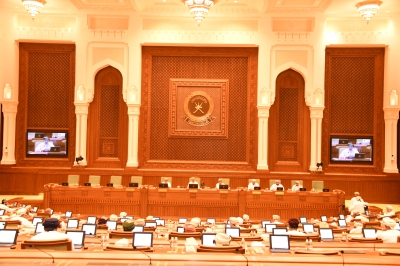
It approved an agreement to eliminate double taxation with Azerbaijan. Coverage – Suhail bin Nasser Al Nahdi “Photo by: Huda Al Bahri” The Shura Council approved a draft agreement between the government of the Sultanate of Oman and the government of the Republic of Azerbaijan to eliminate double taxation with respect to taxes on income and prevent tax evasion and avoidance. It also approved 9 expressed desires and proposals for draft laws and agreements referred to it. The twenty-second regular session of the third regular session of the tenth period witnessed (2023-2027 AD), which was held today under the chairmanship of His Excellency Khalid bin Hilal Al Maawali, Speaker of the Shura Council, and in the presence of Their Excellencies Council members, and His Excellency Sheikh Ahmed bin Muhammad Al Nadabi, Secretary General of the Council, expanded discussions on a number of legislative and development issues. The Council members also listened to an urgent statement delivered by His Excellency Sultan bin Humaid Al Hosani, member of the Shura Council representing the state of Al Khaboura, regarding enhancing the cost of living allowance in light of the current geopolitical and economic changes, pointing out The value of the allowance has not witnessed a review commensurate with the economic changes that have occurred over the past years, at a time when the cost of living has risen significantly, which requires reconsidering the value of the allowance and enhancing it in a way that achieves a balance between economic targets and social protection requirements, and enhances the ability of Omani families to face living pressures. The statement also included a call to continue adopting government policies and programs aimed at reducing the economic burdens on citizens, and working to strengthen social protection tools in line with regional and international economic developments. And on the approval of a draft agreement between the government of the Sultanate of Oman. and the Government of the Republic of Azerbaijan regarding the elimination of double taxation. His Excellency Ahmed bin Saeed Al Sharqi, Chairman of the Economic and Financial Committee of the Shura Council and rapporteur of the committee during the session, reviewed the committee’s report on the draft agreement, explaining that the agreement comes within the framework of efforts aimed at developing the investment environment and strengthening economic relations between the two countries, and providing a clear legal and regulatory framework that contributes to protecting investors and enhancing confidence in the investment environment. Explaining that the agreement will contribute to providing greater clarity and stability in tax transactions, which will reflect positively on the business environment. It encourages the establishment of joint projects, and is also in line with the directions of the Sultanate of Oman aimed at expanding the network of international economic agreements, strengthening its presence in global markets, and attracting qualitative investments that support the goals of economic diversification. Chronic diseases: The Council approved the expressed desire submitted by His Excellency Khalid bin Hilal Al-Maawali, Chairman of the Shura Council, regarding establishing a mechanism for sick leave for people with chronic diseases, in light of the report of the Health and Social Committee, where His Excellency reviewed the desire report and the views and recommendations it contained after studying it. It included an extensive review of the legislative, administrative and regulatory aspects related to granting sick leave in the public and private sectors. The Council referred the desire to the Council of Ministers to take the necessary action regarding it. Al-Muawali said: The desire came in response to the challenges faced by a number of people with chronic diseases related to the frequency of their periodic visits to health institutions, and their need for continuous treatment programs or treatment and rehabilitation sessions, which results in depleting the balance of regular leave or resorting to requesting repeated sick leave, which may affect their health. Their job stability and professional performance. The desire witnessed extensive discussions from Their Excellencies Council members, during which they stressed the importance of developing relevant administrative systems to take into account the health conditions of workers with chronic diseases, achieve job justice, and unify procedures regulating sick leave, which will reflect positively on the work environment, productivity and continuity of service provision. The Supreme Medical Committee The Council discussed the desire expressed regarding the independence of the Supreme Medical Committee responsible for looking into the issue of medical errors, in light of the report of the Legislative and Legal Committee, where His Excellency Dr. Ahmed bin Ali reviewed Al-Saadi, Chairman and Rapporteur of the Committee during the session, presented the Committee’s report, explaining that the desire came after a comprehensive legal and technical study that aimed to determine the reality of the mechanisms for examining medical errors and the extent of the need to strengthen the independence of the competent authority in order to ensure the achievement of justice, impartiality and transparency in adjudicating these cases. His Excellency indicated that the Committee based its study on a number of legal and practical considerations, foremost of which is the importance of establishing confidence in the health system and ensuring the independence of procedures related to the investigation of medical complaints, in order to achieve a balance between Protecting the rights of patients and preserving the professional rights of health practitioners. The reality of the knowledge economy. On the economic side, the Council discussed the report of the working group studying the reality of the knowledge economy emanating from the Economic and Financial Committee regarding the desire expressed to enhance the reality of the knowledge economy. His Excellency Dr. Abdulaziz bin Rashid Al Hashimi, the team’s rapporteur, reviewed the study report and the insights and recommendations it contained, after an extensive study that included holding five meetings and four hosting a number of relevant governmental and academic bodies. His Excellency explained that the desire came based on the importance of reviewing Legislative and regulatory frameworks, public policies and national programs concerned with scientific research and innovation related to the knowledge economy in the Sultanate of Oman, and developing supporting recommendations that achieve integration between scientific research and the production sector, and contribute to transforming innovations into value-added commercial projects, thus enhancing the contribution of the knowledge economy to sustainable economic development. His Excellency added: The study aimed to diagnose the reality of the knowledge economy in the Sultanate of Oman and determine its contribution to the gross domestic product, evaluate the efficiency of public policies and national programs related to scientific research and innovation, and measure the performance of the Sultanate of Oman in international indicators, Including the Global Innovation Index, Global Competitiveness, and Digital Competitiveness, monitoring the legislative and financing challenges facing innovators and research institutions, in addition to enhancing integration between scientific research and the production sector to transform innovations into value-added economic products and projects. The Council also reviewed the report of the Economic and Financial Committee regarding the expressed desire to establish a system to link corporate tax procedures with government dues, which was presented by His Excellency Ahmed bin Saeed Al Sharqi, Chairman of the Committee, and His Excellency Abdullah bin Al Waleed Al Hinai, a member of the Council’s office, and they explained that the desire aims to create a system An integrated electronic system that links corporate tax obligations with government financial dues, which contributes to accelerating procedures, enhancing tax compliance, improving the efficiency of financial collection, and raising the level of integration between government institutions. The Council then moved on to discuss the expressed desire to subject the Oman Chamber of Commerce and Industry and its branches to the state’s financial and administrative oversight apparatus, where His Excellency Ahmed bin Saeed Al Sharqi, Chairman of the Economic and Financial Committee, reviewed the committee’s report, explaining that the desire comes within the framework of strengthening the principles of governance, transparency, and integrity in managing the Chamber’s business, as it is one of the institutions with a pivotal role in representing The private sector and contribution to supporting the national economy. His Excellency indicated that the committee based its preparation on a set of justifications, the most prominent of which is that the Chamber exercises roles of public benefit and represents various business sectors, and that its financial resources consist of fees, subscriptions, and revenues directly related to its members, which requires that it be subject to independent financial and administrative oversight that enhances the efficiency of spending, ensures the sound management of financial resources, and establishes the principles of integrity and transparency in its various works. Economic diplomacy, as the session witnessed. Discussing the report of the Economic and Financial Committee on the desire expressed regarding economic diplomacy, its impact, results, and indicators for measuring performance. His Excellency Ahmed bin Saeed Al Sharqi explained that the committee paid great attention to this topic in view of the growing role of economic diplomacy in supporting the national economy and enhancing the competitiveness of the Sultanate of Oman in attracting foreign investments and expanding international trade partnerships. The report witnessed extensive discussions that addressed the importance of employing diplomatic missions in attracting investments, transferring knowledge and modern technologies, promoting national exports, and opening new markets for Omani products, before the Council approved the report. Desire. Social Housing. The session also witnessed discussion of the report of the Public Services and Facilities Committee regarding the desire expressed to develop the system of social housing programs and subsidized housing loans, where His Excellency Dr. Hamoud bin Ahmed Al Yahyaei, Chairman and Rapporteur of the Committee during the session, reviewed the committee’s report and the views and recommendations it included resulting from an extensive study of Desire that included examining the reality of current housing programs and the extent of their compatibility with economic and social variables and exploring ways to develop them to keep pace with increasing needs. For citizens. He added: The committee studied the challenges associated with obtaining housing, most notably the high construction costs, increased demand for housing, and the need to develop housing financing tools to ensure that support programs reach their beneficiaries in a more efficient and fair manner, in addition to reviewing eligibility criteria and mechanisms for providing subsidized housing loans to keep pace with economic and demographic changes. Within the framework of the Council’s interest in developing promising economic sectors, it discussed the report of the Media, Tourism and Culture Committee regarding the expressed desire to evaluate Saudization policies and programs in the tourism sector, where His Excellency Ali bin Khalfan reviewed Al-Hassani, Vice Chairman of the Committee and its Rapporteur during the session, presented the results of the Committee’s study of the desire, stressing that the tourism sector is one of the vital sectors that the Sultanate of Oman relies on to diversify the sources of national income and enhance the contribution of non-oil sectors to the national economy. His Excellency explained that the Committee aimed, through this desire, to evaluate the reality of current Emiratisation policies and measure the effectiveness of the implemented programs in raising the employment rates of national cadres in various tourism activities and to identify the challenges facing the institutions operating in the sector in attracting and qualifying Omani talents. In addition to studying the extent to which education and training outcomes are compatible with the needs of the tourism labor market. He pointed out that the committee hosted a number of specialists and stakeholders in the tourism sector and reviewed national initiatives related to employment and rehabilitation. It also studied comparative experiences and best practices in this field to arrive at recommendations that would enhance the contribution of national cadres in various tourism activities. Agricultural cities. The Council concluded its session by discussing the report of the Food and Water Security Committee regarding the expressed desire for future agricultural cities: opportunities and challenges, where His Excellency Hamid bin Juma Al Shamsi, Chairman and Rapporteur of the Committee, presented the Committee’s report, explaining that the desire comes in the context of the growing national interest in strengthening the food security system and developing the agricultural sector according to modern foundations that achieve economic and environmental sustainability. Their Excellencies stressed that the development of future agricultural cities represents a strategic step towards achieving self-sufficiency in a number of agricultural products, enhancing the flexibility of the food security system, supporting the national economy, and providing quality job opportunities for citizens, before the Council approves the desire report.