

اخبار سوريا اليوم – وطن نيوز
سوريا اليوم – اخبار سوريا عاجل
W6nnews.com ==== وطن === تاريخ النشر – 2024-01-22 22:46:25
With the passage of about three months since the attacks launched by the Hamas movement against Israel, on October 7 of last year, and the outbreak of war in the Gaza Strip, suspicious moves are being carried out by Iran, which has increased its degree of cooperation with the forces of political Islam, both Sunni and Shiite, in the region. With the aim of militarizing the region in favor of its agenda and interests.
However, the growing influence of Tehran through its network of agents, along with its public desire to obscure its direct involvement in the war, and to avoid a violent clash with the United States and Israel, caused the latter two to undermine this influence and reduce the areas of its security, political and military presence, especially in the areas adjacent to the conflict, from One side, as is the case in Syria and Lebanon. This is in addition to threatening the interests of the West and Europe against the backdrop of the hostile activities of the “Houthi” group in Yemen against international navigation and sea lanes in the Red Sea.
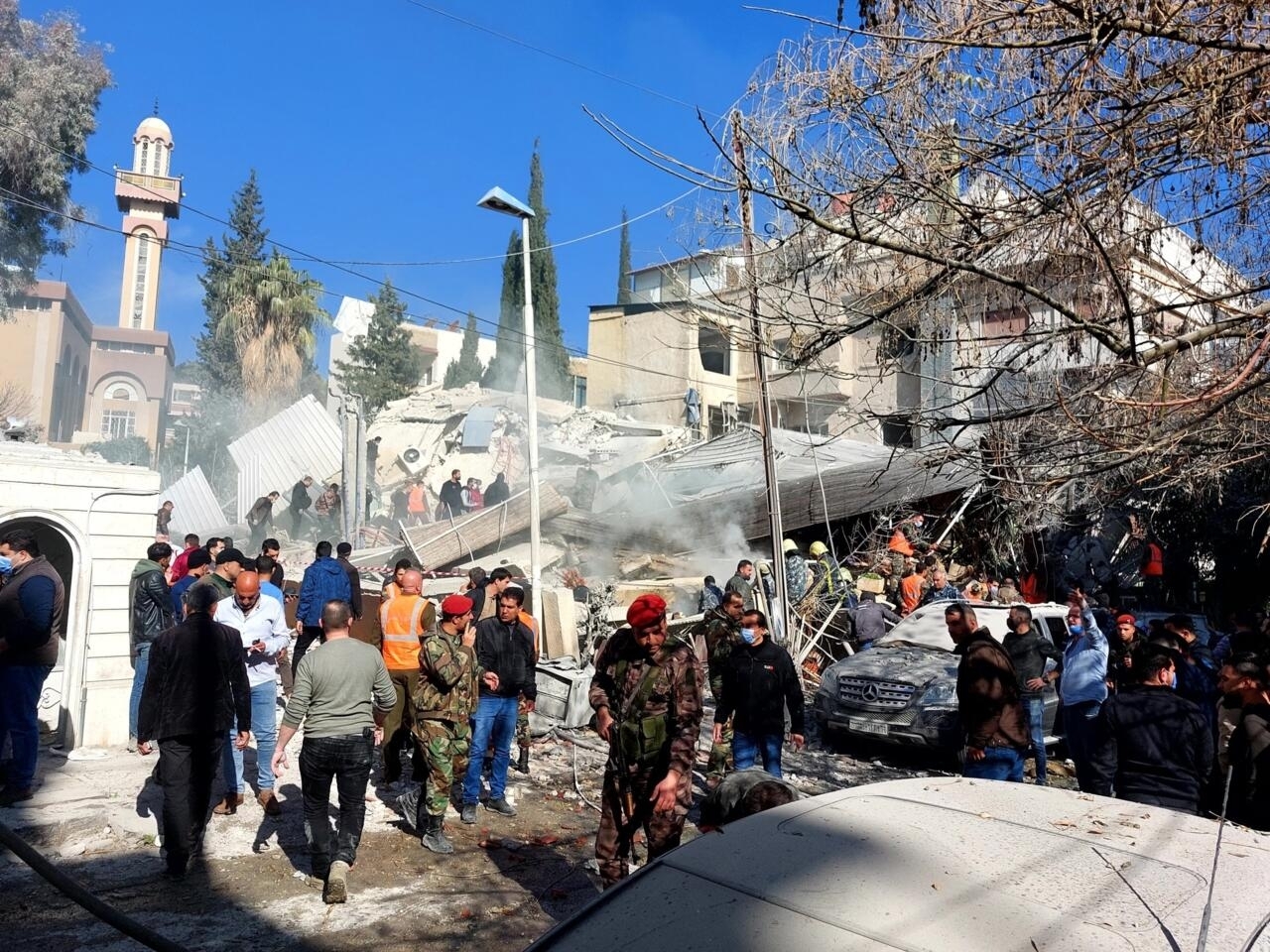
Therefore, the escalation that Iran faced due to its hostile activities against American, Western, and Israeli interests in the region, including targeting American bases in Syria and Iraq, resulted in the targeting of leaders of the “Iranian Revolutionary Guard.” In addition to others within the organizations allied with the “Quds Force” and aligned with the loyalists, as happened with the leaders of the “Al-Nujaba Movement” in Iraq, then the leaders of “Hezbollah” in Lebanon, including Wissam Al-Taweel, Radhi Mousavi in Syria, and finally four advisors from the “Revolutionary Guard” during a security meeting. In the Mezzeh area, west of Damascus.
All of this coincided with a previous targeting of Saleh Al-Arouri, deputy head of the Hamas movement, in the heart of the southern suburb of Beirut, the Iranian-backed party’s stronghold in Lebanon.
Iran and expanding conflict fronts outside Gaza
In the context of this complex scene with all its circumstances, it is possible to understand the cooperation of various forces in the region under the banner of Iran to achieve several goals and send a number of messages. As for the goals, they are to reduce pressure on Iran by highlighting the security and military “muscles”, and the messages are to put pressure on the American forces in the region, specifically in Syria and Iraq, in a way that makes Iran part of any settlement and in a way that does not reduce its interests and undermine its influence. This is why Tehran is accumulating its capabilities and mobilizing its capabilities by expanding its allies among the Sunni forces in Lebanon and Iraq.
The involvement of the “Iranian Revolutionary Guard” in carrying out several operations in three regional countries, starting from Erbil/Hawler in the Kurdistan region of northern Iraq, passing through Idlib in northwestern Syria, and even Pakistan, which borders Iran and shares a 900-kilometre border area with it, were nothing but intentional strikes. To try to display power, as is its custom, and export its crises abroad, and expand the conflict fronts in areas far from the depth of the crisis in Gaza, to distance it from friction with Washington and Israel. While its management of the issue remains through agents.
Consequently, its pragmatic stance also came to obfuscate the blows to which its leaders and their heavyweights were being exposed by the strategic survivor, thereby reducing its external influence in areas where it had accumulated influence. Tehran is trying to send a message to the United States that it is part of the regional equation and its presence at a close or distant distance is only to find a safe access point to the negotiating table and settle files on the next day after the war.
Away from Iran, which faced a bombing in Kerman that appeared to be “manufactured” in light of the scarcity of information and repeated incidents in previous incidents to obscure repressed internal crises and with no horizon for a solution or breakthrough, a mysterious building was targeted in northwest Syria in areas controlled by “Hay’at Tahrir al-Sham” (formerly the Al-Nusra Front). / Al-Qaeda branch in the Levant). Tehran claims that the targeting targeted extremist Sunni members of the ISIS organization involved in the incident.
According to a statement issued by the “Iranian Revolutionary Guard,” the targeting of the areas of influence of the “Syrian armed opposition” in Idlib, which is supported by Turkey, came in response to the attack carried out by the terrorist organization “ISIS” in the city of Kerman, southern Iran, coinciding with the anniversary of the assassination of a leader. The Quds Force of the Revolutionary Guard, Qassem Soleimani, with an American march at Baghdad airport with the head of the Popular Mobilization Forces, Abu Mahdi Al-Muhandis, at the end of the rule of former President Donald Trump.
Targeting “Khyber Shaikan”
While the “Revolutionary Guard” stated that it used the Khaybar Shikan missile (the destroyer of the citadel), which can reach a range of about 1,450 kilometers, and the strike was carried out from a military base that some reports indicate was south of Tehran, specifically in Khuzestan Governorate or in West Azerbaijan.
In a statement, the Revolutionary Guard said: “It targeted gatherings of terrorists in Syria, linked to the terrorist operations carried out in Iran recently,” and described them as gatherings for “training, logistical support headquarters, and a medical point for militants of the Turkestan Islamic Party classified as terrorist, in the Jabal al-Summaq area and the vicinity of the town of Harem.” .
The statement claimed that the missiles targeted the area where ISIS Khorasan militants are trained, and where they are transported by the United States to Afghanistan and the Iranian border, in order to carry out terrorist strikes inside Iran.
The commander of the “Aerospace Forces” of the “Revolutionary Guard,” Brigadier General Amir Ali Hajizadeh, explained that “the distance from the location of the launch of the Khaybar Sheikan missiles to Idlib can be estimated at about 1,200 kilometers, and the missile operation is considered the longest range of the Revolutionary Guard.”
He continued: “In this operation, the Khaybar Shikan ballistic missiles were used, which were unveiled in 2021. The long-range and accurate missile, the Khaybar Shikan, is one of the third generation of long-range missiles of the Revolutionary Guards. It runs on solid fuel, and during the landing stage it has the ability to maneuver to pass through… The missile shield, whose improved design has reduced its weight by a third compared to similar samples, and the time for its preparation and launch has also been reduced.” This missile has a range of 1,450 kilometers, and is equipped with a built-in guidance system equipped with a maneuverable warhead, according to the Iranian agency.
Regarding the information available about the targeted building in Idlib, it indicates the same assumption that Tehran’s launch of its strike was nothing more than a strike in a vacuum for show and confusion, and perhaps to test the reactions of the international community, the United States, and Israel, as the “Syrian Civil Defense” (White Helmets) explained. This building was a medical dispensary in a Druze village called Talita, and it has been out of operation for quite a while, and there are even several field reports from Arab media outlets confirming that the building, which was later transformed into a military building, has become empty and empty of any presence, whether human or otherwise. The local civil organization also says that the attack did not result in any casualties inside the one-story building, with massive destruction exceeding 60 percent.
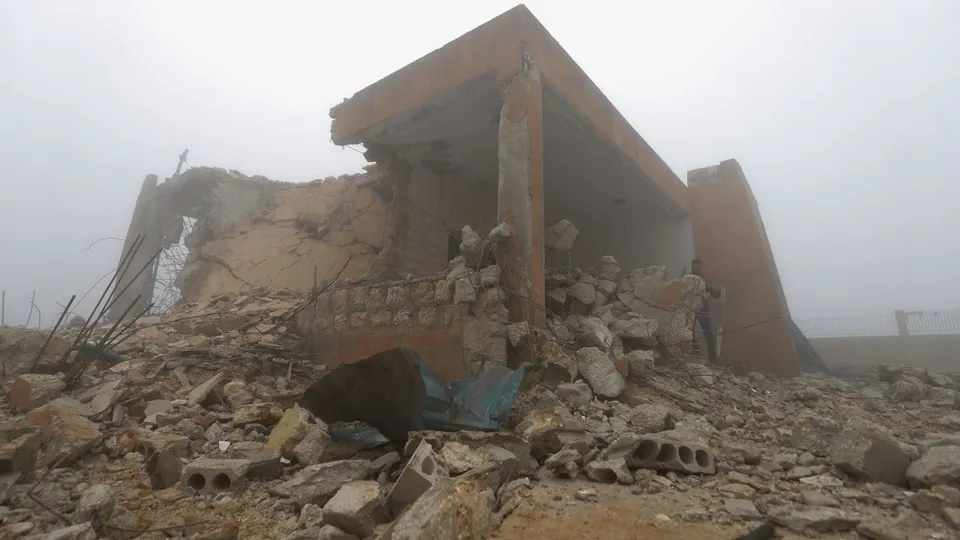
According to the organization, “its initial inspection team found three munitions that fell on the building and near it. Two of them hit the building, one from the roof and another from the eastern side of the building, while the third munition fell adjacent to the building from the southwestern side.”
Indeed, the “Syrian Observatory for Human Rights,” based in London, indicated that the explosions occurred in Aleppo and its countryside, and were caused by “at least four missiles that arrived from the direction of the White Sea” and fell in the Aleppo countryside.
However, the “Revolutionary Guard” took advantage of the incident, which seemed huge by its security and military standards, but it did not achieve any horizon in the political and strategic sense. It said that it carried out a strike in response to “the recent terrorist crimes committed by the enemies of Islamic Iran,” while claiming that the building, which appears abandoned, according to what the organization documented. Local civilian and Arab newspaper correspondents and media outlets described the “espionage and gathering headquarters of anti-Iranian terrorist groups in parts of the region at midnight tonight with ballistic missiles.”
Exporting internal crises
The fabricated Iranian position that seeks to mobilize and export its crises and unload them abroad, in addition to its fragmented messages here and there, is no different from a similar one in the Kurdistan region of Iraq, after it targeted a house that it claimed was the headquarters of the Israeli “Mossad spy.”
But in Erbil, Iran’s crime was major, as civilians were killed and a “villa” of a person who had no connection to any hostile and unlawful act was destroyed, according to official statements and information from the governments of Baghdad and the region. Although the Iranian aggression constitutes a “violation of sovereignty,” the field of view of previous incidents also reveals Iran’s invocation of justifications that do not stand up to reason and logic to contain the crises it faces and exposes the breach of its security structure in light of the continuous targeting of its leaders, and it fears that it will affect the course of its negotiations or the cohesion of its political bloc in What is known as the “Resistance Front.”
Inevitably, the targets indicated the extent of Israel’s influence and intelligence capabilities, which dominate the strongholds of the “Revolutionary Guard” in Syria and Lebanon, and were able to accurately monitor, plan, and implement their operations against influential leaders at sensitive times, most of which were high-level security meetings in “houses and areas with secure security squares.” “.
Iran’s foreign movements, which expose its strategy of obfuscation and concealment of its failures and the violations that fill its security structure, are becoming more and more apparent in Iranian newspapers, whether close to the reformist movement or the extremist and fundamentalist ones. In the newspaper “Siyast Roz,” it said: “Following Israel’s attack on Damascus and the assassination of five advisors.” Iranians, it seems that the time has come for a direct response to Israel. If there is no response, Tel Aviv will increase its attacks on Iran.”
There is an urgency to create an enemy in light of the war, specifically the Sunni enemy, which can be observed not only in the accusation of ISIS and extremist Sunni forces in Idlib in northwestern Syria, but also with the attack on Pakistan and the latter’s decisive reaction, which was soon followed by Iranian calm. Instant
But Setareh Sobh issued its warnings against any Iranian response to the assassinations in Syria, so that his country would not fall into the bottom of the war. It called for regional calm in order to save the Iranian economy, which is collapsing and reaching low rates.
It is noteworthy that the crisis that Iran was exposed to as a result of the assassination of its leaders in Syria came as an opportunity to talk or hint about Russia’s involvement and complicity in facilitating Israel’s missions in the areas of influence of the “Revolutionary Guards,” as Moscow, with its strategic capabilities and influence, did not constitute any protection for Iran or deterrence for Israel regarding… Her attacks.
Ali Qalhaki said in the newspaper “Joan”, affiliated with the “Revolutionary Guards”, that Russia controls the Syrian air defenses and asked (sarcastically) about the role of the “S-400” defense system at the time of targeting Mousavi and whether it was inactive.
Although the Iranian newspapers in their entirety talked about the security breach and Russian facilities, and the presence of Israeli agents who constitute an infrastructure digging beneath the fragile Iranian structure, Tehran seems to be looking to create a Sunni enemy, as is the case in Syria, and collide with a traditional enemy represented by Israel, and then, The media administration of the two enemies continues to preoccupy them and raise tensions over them in order to prolong the conflict on the verge of war, making it far from the center of the crisis in Gaza and leading to its exhaustion and sliding from the edge without the ability to return and dismantle its network of allies with the ideological and armed “resistance”, especially the Sunnis.
Fueling the Sunni-Shiite conflict
There is an urgency to create an enemy in light of the war, specifically the Sunni enemy, which can be observed not only in the accusation of ISIS and extremist Sunni forces in Idlib in northwestern Syria, but also with the attack on Pakistan and the latter’s decisive reaction, which was soon followed by Iranian calm. Immediately, the tide of aggression turned against the Baloch nationality and the opposition “Baloch Army of Justice,” which is a Sunni armed group on the Iranian-Pakistani border and within the national and sectarian minorities (Baloch/Sunnis) that suffer from marginalization, and even fall under the burden of forced persecution operations as well as the imposition of central Shiite sectarianism. In its Twelver Khomeini version. That is why a member of the National Security Committee of the Iranian Parliament, Ismail Kosari, accused the presence of “agents of Israel in Lebanon, Syria and neighboring countries.” He demanded that they be “arrested.”
Here, the “Washington Institute” refers to Iran’s action strategy, and says that “Iran’s proxy groups in Iraq and Yemen also expressed their solidarity with Hamas and tried to weaken international support for Israel.” Experts from the Washington Institute for Near East Policy have counted (as of the date of writing these lines, at the beginning of this month) 144 attacks using missiles, drones, and mortar shells on American bases in Iraq and Syria since October 18, claimed by Iranian-backed Iraqi militias.
On October 10, the leader of the “Badr Organization” militia, Hadi Al-Amiri, threatened to attack “all American targets” if “the United States intervenes in the battle with Hamas.”
On October 24, a group affiliated with the “Kata’ib Hezbollah” militia threatened to attack American forces in the United Arab Emirates and Kuwait.
He added: “Despite the pivotal role played by the Islamic Republic in arming, training, financing, and building these groups from the axis of resistance,” Iran has faced no significant consequences as a result of its destabilizing actions in the current war. In fact, Iran has continued to support these groups; In addition, according to the International Atomic Energy Agency, Iran has increased its production of nuclear materials that are almost suitable for making atomic weapons.
Israel responded to the strikes of “Hamas” and “Hezbollah,” while the United States responded to the militias in Iraq, and formed a coalition of ten countries to confront the “Houthis” in the Red Sea.
On the other hand, Iran has not yet faced any serious retaliation, except for one of them, which was an apparent Israeli air strike in Syria that led to the killing of a general in the Iranian Islamic Revolutionary Guard Corps.
While the American Institute stressed that Iran must “face the consequences of the behavior of the groups it sponsors.” The missiles and missiles owned by these groups come from Iran, or they learned how to manufacture them under Iranian sponsorship. Military training and arms smuggling by Iran, sponsored by the IRGC, has enabled Hamas, Hezbollah, the Houthis, major Iraqi militias, and others to intimidate Israel, the United States, and its allies. Weakening these organizations is an important task, but they will continue to regenerate and pose major threats unless the Iranian regime also suffers.”