

اخبار فلسطين – وطن نيوز
فلسطين اليوم – اخبار فلسطين اليوم
W6nnews.com ==== وطن === تاريخ النشر – 2026-01-24 23:46:00
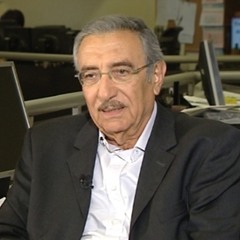
The Palestinian Information Center, Director General of the Arab Center for Research and Policy Studies, Dr. Azmi Bishara, provided a comprehensive critical reading of the crisis of the Palestinian national project, considering that its absence today constitutes the central obstacle to transforming the unprecedented global solidarity with Palestine into an effective political force, and that what the Palestinians face is no longer just an occupation, but an integrated apartheid system. He stressed that any horizon for liberation, whether in the form of an independent state or a democratic system based on citizenship, remains impossible without rebuilding a comprehensive national liberation project, led by organized social and political forces, free from the restrictions of Oslo and the management of the population under occupation. This came at the end of the first day of the annual Palestine Forum in its fourth session, where Bishara delivered a public lecture titled “The Palestinian National Project in the Current International/Arab Context,” and it was devoted to a comprehensive critical review of the path of the Palestinian national project, in light of the profound transformations witnessed by the Palestinian cause, especially after the ongoing war of extermination on the Gaza Strip, and the repercussions of Operation Al-Aqsa Flood. The National Project in the Midst of Major Transformations Bishara began his lecture by recalling that the Arab Center for Research has been addressing the question of the Palestinian national project for more than a decade in multiple academic contexts, and referred to the conferences in 2013 and 2015 that were devoted to discussing the future of this project. Azmi Bishara, in a lecture during the annual Palestine Forum: It is possible to formulate a struggle strategy against the apartheid system pic.twitter.com/jRhcBfpdTM — Ultra Palestine (@palestineultra) January 24, 2026 He pointed out that “it is difficult to imagine a more difficult circumstance than our current one to discuss this issue, and to say something that creates a space for hope on a horizon that seems “Clogged.” He considered that holding the forum after the war of extermination represents an occasion for a “cautious return” to the question of the national project in the midst of the major transformations that the Palestinian people and their political forces are experiencing, and in light of “the creeping annexation of the West Bank and attempts at political liquidation.” In the theoretical framing, Bishara stopped at what he described as “the common correspondence between the national project and the political program,” warning against reducing the national project to its programmatic dimension only. He emphasized that “the program is a major component of any political system that deserves to be called a national project, but the definition remains incomplete if it is limited to it and does not include the organizational structures and social supports of the program.” The Director General of the Arab Center for Research and Policy Studies, Azmi Bishara, gave a lecture at the annual Palestine Forum entitled “The Palestinian National Project in the Current International/Arab Context,” explaining how the Israeli response to the Al-Aqsa Flood operation turned the event into a new phase in #Palestine and the region.… pic.twitter.com/SjdpbtlS4w — Al-Araby Al-Jadeed (@alaraby_ar) January 24, 2026 He stressed that “political goals can be achieved in An article or a speech, but its occurrence does not make it a national project,” he explained, explaining that the national project “includes goals and the forces that carry them, and are qualified to claim to represent national legitimacy.” He moved on to analyze the specificity of the Palestinian situation, indicating that the regional and international contexts gained in the Palestinian experience “an importance greater than their importance in the cases of other national liberation movements,” given the intertwining of the Palestinian issue with European colonialism, the Jewish question in Europe, the Arab question, and the emergence of independent Arab states, in addition to “the special relationship between the United States and Israel, the Cold War, and then the growing American influence in the region.” He stressed that this context was not a secondary external factor, but rather constituted one of the decisive determinants of the path of the Palestinian national project, its political program, and its social factors. Azmi Bishara, in a lecture during the annual Palestine Forum: The Peace Council is trying to separate Gaza from Palestine pic.twitter.com/k8DMEHe2y9 — Ultra Palestine (@palestineultra) January 24, 2026 The Armed Struggle and the Political Program In his treatment of Palestinian political history, Bishara devoted an important part of his lecture to discussing the place of the armed struggle within the Palestinian national project, explaining that the establishment of the Palestine Liberation Organization It came as an affirmation of the “one Palestinian entity” after the Nakba of 1948, and in the context of an Arab-Israeli conflict in which Palestine was “the only occupied Arab land.” He explained that the defeat of 1967 and the resulting occupation of the remainder of Palestine “imposed new political supports for the national project that took control of the PLO, namely the armed struggle factions,” which considered, at the time, that “armed struggle is the only way to achieve the program.” However, Bishara stressed that this statement did not, in fact, produce an actual strategy for the liberation of Palestine, and noted that the armed struggle “was never evaluated on the basis of its connection to achieving the political program,” but rather it was celebrated as a bearer of identity and a liberation spirit. What caught my attention a while ago was Dr. Azmi Bishara in the annual Palestine Forum on the necessity of liberating the national umbrella from all occupation agreements, and managing civil life affairs through parties that do not represent the national project or the political leadership. There is no doubt that this proposal seems rational and logical in principle and in terms of the consequences of the experience… pic.twitter.com/47hX4T3IC4 — Ramy Abdu | Rami Abdu (@RamAbdu) January 24, 2026 He pointed out the difficulty of conducting a critical historical evaluation of this stage, due to “the sacred aura surrounding the subject, and its mixing with collective identity,” distinguishing between memory as “the selectivity of preservation and forgetting,” and history as a field of interpretation and understanding starting from the present. Bishara continued his analysis by examining the major transformations imposed by the “land for peace” process after the 1973 war and the Camp David Accords, which led to Egypt’s exit from the arena of conflict and the closure of the Arab fronts to the Palestinian armed struggle. He explained that the shift of the center of gravity in the confrontation from armed action outside Palestine to the mass struggle inside it culminated in the first popular uprising, and was accompanied by a fundamental shift in the political program of the PLO, leading to the declaration of the Palestinian state in 1988, then the Oslo process and the resulting “complete change in the national project.” The disintegration of the national project. In this context, Bishara pointed out that the emergence of the Palestinian Authority, then the division between two authorities in the West Bank and the Gaza Strip, led to the “disintegration of the Palestinian national project,” and the practical transformation of the PLO into a “department within the authority,” bound by the Oslo Accords and its security obligations. “The issue of Palestine was a factor of unity and not a factor of division,” says Dr. Azmi Bishara, Director of the Arab Center for Research and Policy Studies, during a public lecture organized by the Arab Center for Research and Policy Studies and the Institute for Palestinian Studies, as part of the activities of the first day of the activities of the Annual Forum for Palestine 2026,… pic.twitter.com/H6iGfT3xtz — Al Modon – Al-Modon (@almodononline) January 24, 2026 He considered that this The division was one of the most prominent reasons for the marginalization of the Palestinian issue internationally, and opened the way for Israel to continue settlement and wage repeated wars on the Gaza Strip. In the most prominent part of his lecture, he focused at length on the “Al-Aqsa Flood” operation and its repercussions, considering that “the Israeli response to the operation turned the event into an earthquake that opened a new phase,” in Palestine and the region, and in the international system. He explained that Israel, with American support and international complicity, launched a “comprehensive war of extermination” on the Gaza Strip, aiming to “displace the Palestinians and impose radical social, economic and political change,” or transform Gaza into a “population enclave devoid of national identity.” Paths of interest in the Palestinian issue. Bishara warned that international interest in the Palestinian issue after this war was divided into two paths: the first, an official containment path, which seeks to manage the crisis humanitarianly or administratively, without any real pressure tools to stop the war or end the occupation. The second is the path of global solidarity movements, which he described as “the broadest and deepest since 1948.” In his lecture during the annual Palestine Forum, Dr. Azmi Bishara stressed that the lack of clarity of the Palestinian national project constitutes a major obstacle to the development of the protest movement against Israeli practices. @ArabCenter_ar @AzmiBishara pic.twitter.com/vcfTVI16Qm — The New Arab (@alaraby_ar) January 24, 2026 But he stressed that these movements, despite their importance, “cannot replace a national project.” “Clearly Palestinian”; Because the absence of this project is “the main obstacle to transforming global solidarity into a sustainable political force.” In this context, Bishara stressed that what is being built today in Palestine is “a special kind of apartheid regime,” noting that the current Israeli government “clearly states that it will not accept any withdrawal from the territories occupied in 1967,” and that it is satisfied, at best, with “functional Palestinian authorities within the framework of Israeli sovereignty.” He saw that the repeated international talk about the two-state solution has become a “verbal tax,” in the absence of any willingness to take practical steps. leading to the establishment of a Palestinian state. “The case of Palestine is a special case,” says Dr. Azmi Bishara, Director of the Arab Center for Research and Policy Studies, during a public lecture organized by the Arab Center for Research and Policy Studies and the Institute for Palestinian Studies, within the activities of the first day of the activities of the Annual Forum for… Palestine 2026, entitled “The Project… pic.twitter.com/c1kO4g4Mfx — Al Modon – Al-Modon (@almodononline) January 24, 2026 Bishara concluded that Palestinian national liberation today means liberation from the apartheid regime, and that this liberation may lead to an independent Palestinian state, or to a democratic system based on citizenship in historic Palestine, but “there is currently no political program and strategy that leads to either of these two models without a national project whose title is the struggle against the regime.” “Apartheid.” He stressed that the national project “is not limited to the political goal, but rather includes the organized social and political forces that carry it,” considering that the current challenge lies in forming these forces and building a comprehensive political institution. At the conclusion of his lecture, Bishara called for the necessary distinction between managing population affairs under the occupation, as a necessity of life, and the liberal political leadership, which must remain far from any security or political obligations with the occupation. He stressed that the absence of a comprehensive national liberation project “transforms the dialectic between the national and the civil into power struggles before liberation,” a dynamic that “led to where we are since the Oslo Accords.” On Saturday, the work of the Annual Palestine Forum began in its fourth session, which is organized by the Arab Center for Research and Policy Studies in cooperation with the Institute for Palestine Studies, during the period January 24-26, 2026. The Annual Palestine Forum is considered one of the most prominent academic spaces globally specialized in the Palestinian issue, due to its scientific sobriety in the research papers presented, methodological diversity in theoretical and analytical approaches, and the participation of… An elite group of male and female researchers from various parts of the Arab world and the world. The papers in this session cover a wide range of central issues related to Palestine, from history and structural transformations in the Palestinian national project, to Palestine’s position in the Arab and international systems, through the analysis of settler colonialism and the apartheid system, the limits of international law, transformations in global solidarity, and the roles of the media, knowledge, and universities in times of genocide.