
اخبار قطر اليوم – وطن نيوز
اخر اخبار قطر – اخبار قطر العاجلة
W6nnews.com ==== وطن === تاريخ النشر – 2024-06-20 09:04:00
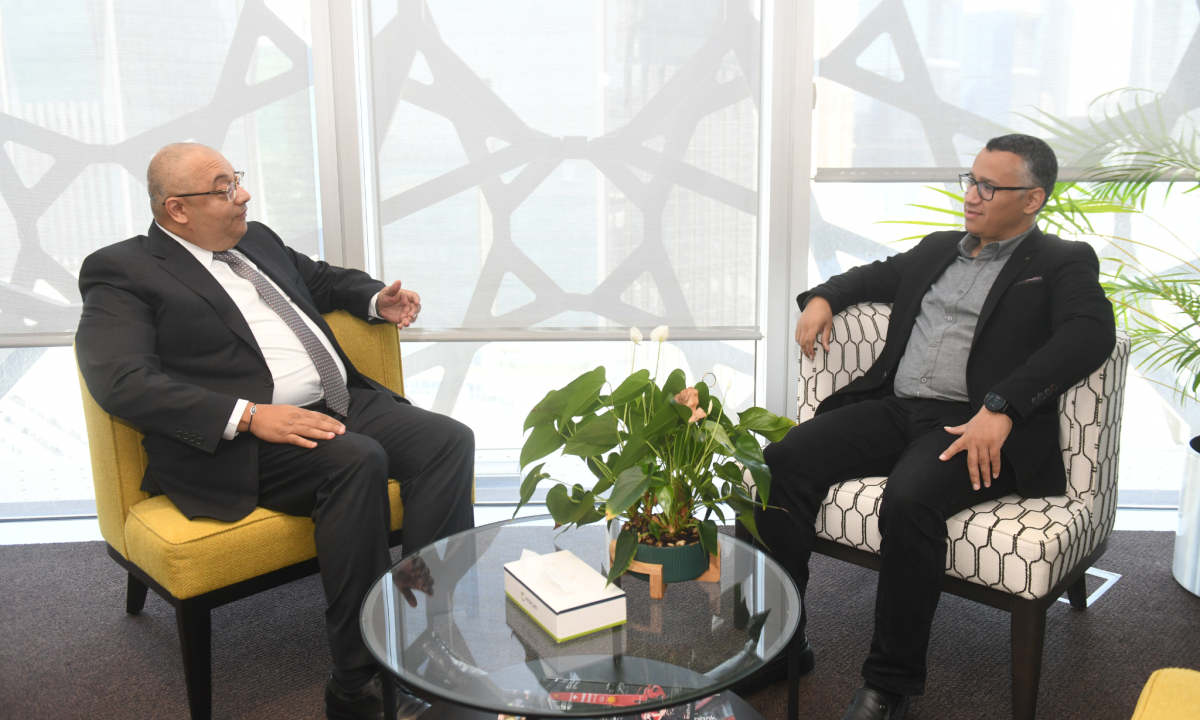
Muhannad Mukhal, CEO of Standard Chartered Bank Qatar, to “Lusail”: Transcript of interview: Haitham Al-Darawi Mr. Muhannad Mukhal, CEO of Standard Chartered Bank Qatar, said: The State of Qatar has established a solid political reputation worldwide, and has proven itself as a reliable and reliable partner by governments, institutions, and organizations alike. Therefore, Standard Chartered Bank Qatar plays a pivotal role in the Qatari financial sector, by facilitating trade and providing basic financing for infrastructure projects. Supporting local companies through innovative solutions. During an interview with the Lusail Electronic Economic Platform, which is published in full in this issue, Mr. Muhannad Mukhal went on to say: The bank issued the first green guarantee for a solar energy project under development in Qatar, and Standard Chartered Qatar is expected to play a major role in the national action plan to combat climate change in the country, and the bank signed a historic financing agreement worth 850 million US dollars with Qatar Airways. Muhannad Mukhal explained that Standard Chartered expects growth in Qatar to rise more than expected when the planned capacity expansion of the liquefied natural gas (LNG) project begins operation in 2025. Below are the details of the interview: The importance of the Qatari market – Why did you describe Qatar as one of the most important strategic markets in the Middle East and the world? My belief in the importance of the Qatari market is due to several factors that go beyond its strategic geographical location between East and West. Qatar has established a solid political reputation worldwide and has proven itself as a reliable and reliable partner for governments, institutions and organizations alike. Qatar also enjoys an attractive business environment characterized by its openness and multiculturalism, supported by strong economic foundations and modern infrastructure, ready to face the challenges of the future. This is reinforced by a regulatory and legislative framework characterized by transparency and effectiveness, which makes Qatar an important center for business. It is enough to look at the process of development and progress that this country is witnessing year after year to realize how important this market is to the global economy. The first green guarantee – How were the bank’s relationships with regional and global partners strengthened, and what distinctive solutions did the bank provide to them? Our announcement, in cooperation with Siemens Energy Company almost a year ago, of the issuance of the first green guarantee in the State of Qatar, is an example of our bank’s efforts in strengthening relationships with strategic partners and providing innovative solutions in the field of sustainable financing. This historic achievement represents a milestone in promoting sustainable and responsible banking practices in Qatar, and sets a new standard for the banking sector as a whole. A green guarantee has been issued for a solar energy project under development in Qatar. It is expected to play a key role in the country’s national action plan to combat climate change, achieve its goals to reduce its carbon footprint and enhance energy independence. This green guarantee is designed to support the project’s long-term success and sustainability. We are extremely proud of this achievement, which embodies our bank’s firm commitment to sustainability and sustainable financing, as we have integrated sustainability principles into the organizational decision-making process at all levels. As a leading global bank, we believe that we play a unique role in facilitating a just transition to net-zero carbon emissions, and we are committed to contributing to achieving this goal through sustainable financing initiatives that will enable this transition to be achieved. Supporting sustainable and responsible growth, including achieving the UN Sustainable Development Goals, is a huge opportunity for us, as we increasingly see that our clients expect Environmental, Social and Governance (ESG) issues to be at the forefront of business decision-making, so moving towards sustainability is not only an ethical imperative, but also a pressing business imperative that meets our clients’ needs and enhances our competitiveness in the market. Our roots are deep in Doha – How has the bank contributed to supporting the growth and development of the Qatari economy? As the oldest bank in Qatar, our bank takes great pride in witnessing the continued development and leadership achieved by financial institutions in Qatar since its founding as Western Bank in 1950. We are a global bank, but with a local heart and deep roots in Qatar, and we are committed to promoting economic and social development in the markets we serve in a sustainable and equitable manner. In Qatar, this means supporting this nation’s forward-looking ambitions to continue to be dynamic and resilient, promoting economic diversification, and ensuring the country’s sustainable development in line with the goals of the Qatar National Vision 2030. Given our long track record of achievement in Qatar, the Bank has played a pivotal role in Qatar’s financial sector, by facilitating trade, providing seed financing for infrastructure projects, and supporting local businesses with innovative solutions. We are proud to nurture generations of Qatari bankers and contribute to the development of Doha as a regional financial centre, in addition to supporting Qatar in achieving major milestones by issuing Qatar’s first green guarantee and signing a historic financing agreement worth US$850 million with Qatar Airways. The bank affirms its commitment to supporting the pillars of the Qatar National Vision 2030, especially with regard to economic and environmental development, and we also believe in the importance of continuing our support for the Qatari government’s vision over the coming years. Recognizing the importance of the pivotal role played by the banking sector and financial services institutions, we strive to contribute effectively to advancing Qatar’s ambitions towards achieving a strong and competitive economy. Product and service development – To what extent have you strengthened the bank’s customer base in Qatar and developed its products and services? Standard Chartered Bank’s operations in Qatar have contributed significantly to our success in the Middle East, and this reflects the strength of the Qatari economy and our strategic focus on key sectors aligned with the Qatar National Vision 2030, as we actively participate in supporting the pillars of the Qatar National Vision 2030, including economic and environmental development. As a leading international bank, we leverage our global network and extensive experience to connect foreign investors with investment opportunities in Qatar, and through our operations in Qatar, we support the country’s economic diversification efforts by identifying key infrastructure project financing opportunities across a range of sectors, with a focus on sustainable financing. – What is your bank’s role in the Gulf and its growth path? Our presence in the Arabian Gulf region represents an extension of a long history that extends for more than a century, which began with the opening of our first office in the Kingdom of Bahrain. Today, we continue the path of excellence through our presence in the Kingdom of Saudi Arabia, Bahrain, Qatar, Oman and the Emirates, and everywhere we work we seek to support the strategic visions of the governments concerned. Impact of global crises – How do you see the impact of the current global economic conditions on the banking sector in the Middle East, especially in Qatar? The Middle East is not immune to the repercussions of global economic challenges, but Saudi Arabia shows an exceptional capacity for resilience and growth. According to our latest report, the Kingdom’s GDP growth is expected to accelerate to 2.0% in 2024. This optimism is attributed to the strong structural expansion of its non-oil sector, which represents a major driver of economic growth. Despite recent developments related to reducing oil production, Saudi Arabia remains on a growth path, with expectations indicating that the non-oil sector will expand by 5% in 2024, which represents the highest growth rate in the GCC countries. The report also emphasizes the resilience of domestic demand in Saudi Arabia supported by Vision 2030 investment initiatives and the strong consumer sector, and expects the inflation rate to slow to 2.0% in 2024, driven by energy support and healthy tourism activity. Standard Chartered also expects moderate surpluses in both the balance sheet and current account in the short to medium term, with policymakers focusing on diversifying funding sources through efforts to increase foreign direct investment and foreign participation in local debt markets. The bank also expects to maintain an interest rate at 5.5% by the end of 2024. In the Sultanate of Oman, Standard Chartered expects continued improvement in the Omani credit rating, pointing to a series of successive positive developments in recent years, as the Sultanate, which Currently rated BB+, up from B+ in 2021, it is poised to regain its investment grade rating as a result of a sustained reduction in its debt-to-GDP ratio, improved financial performance, and commitment to reforms over the medium term. The Bank expects a further reduction in public debt to 34% of GDP by the end of 2024, supported by sustainable budget surpluses. External debt repayment is expected to reach 5% of GDP in 2024, and can be covered by proceeds from fiscal surplus or refinancing options. Inflation is expected to slow more than 1.0% in 2023, with non-oil sector growth (about 70% of real GDP) accelerating to 2.5% in 2024, driven by sectors such as tourism, manufacturing and trade. The commitment to reforms highlights the enhancement of growth and stability prospects in the Sultanate of Oman in the medium term, with structural changes aimed at improving the business environment, attracting foreign direct investment, and implementing initial public offerings. – What about the impact of the geopolitical situation on Qatar? A bank report expects Qatar’s growth to be higher than expected when a planned capacity expansion of its liquefied natural gas (LNG) project comes online in 2025. It notes a lull ahead of Qatar’s expanded gas boom and predicts that next year the slowdown in growth that followed the World Cup will reverse. Qatar also now aims to increase production in the North Field by 85% compared to 64% previously, which will lead to increasing natural gas production to 126 million tons annually by the end of 2027 and 142 million tons annually by the end of 2030, compared to 77 million tons annually currently. The state’s investment in the recently increased gas capacity expansion is likely to support private sector activity, as the report notes that credit growth in the private sector reached around 6% y/y in January, outpacing GDP growth, which fell to 1.0% y/y in the second quarter of 2023 compared to 8.0% in the fourth quarter of 2022. The planned expansion of LNG production and the subsequent boost to GDP are expected to reduce public debt in Qatar to reach about 30% by 2027. Before that, the report expects public debt to decline to 37.5% of GDP by the end of 2024 and 35% by the end of 2025, compared to its peak of 73% in 2020. This decline is based on the assumption that Qatar will continue to use its financial surpluses to repay external debt, knowing that these debts have maturities of US$4.8 billion in 2017. 2024 and 2 billion US dollars in 2025. – What is the composition of Qatari debt? The composition of the Qatari government’s debt has witnessed a noticeable shift. While external debt constituted 60% compared to 40% of domestic debt in 2020, external and domestic debt now have approximately equal shares. In contrast, the report shows an improvement in Qatar’s net foreign asset position. In addition, Qatar enjoys a strong financial position, as Qatar’s oil price breakeven price is the lowest among the region’s oil exporting counterparts, at only US$50 per barrel, and the country’s reserves reached US$67.6 billion in January 2024, an increase of US$10 billion since the beginning of 2022. Moreover, non-resident deposits have decreased significantly and now constitute less than 20% of total deposits. This decrease contributes to addressing an important historical loophole that posed a risk to the Qatari financial system, and we also expect that the interest rate (deposit rate) in Qatar at the end of 2024 will be at the level of 5.25%, in line with our latest federal expectations.