
اخبار لبنان – وطن نيوز
اخبار لبنان 24 – اخبار لبنان مباشر
W6nnews.com ==== وطن === تاريخ النشر – 2026-06-30 20:47:00
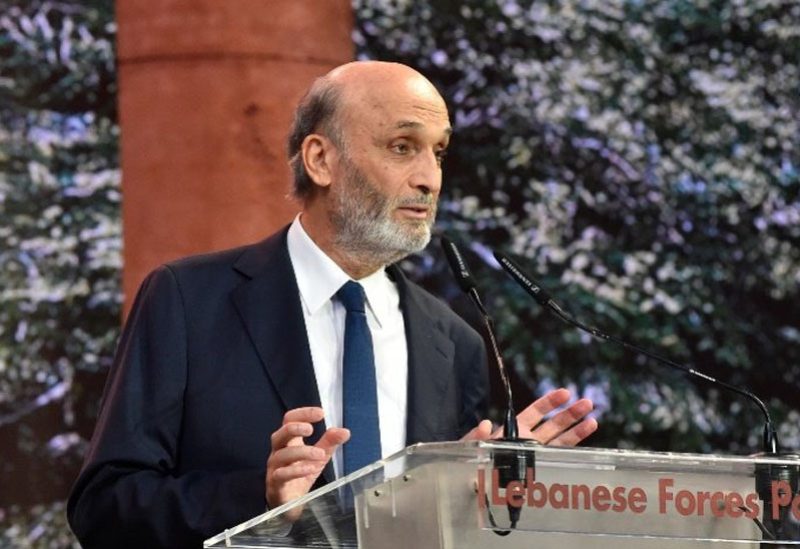
The head of the “Lebanese Forces” party, Samir Geagea, indicated in an interview with the Kuwaiti newspaper “Al-Rai” that “the framework agreement that was signed between Lebanon, the United States and Israel is not satanic, but rather what we reached was a satanic situation in every sense of the word, as Lebanon and its people were thrown into miserable and destructive situations that we have been experiencing for more than 40 years in one form or another and with varying ripples.” During its storm, it prevented our country from any real development or progress, and led to waves of migration of our young men and women who searched for a future outside their homeland. These are the devilish conditions, not the framework agreement. There is no doubt that the agreement is not ideal, but like any agreement, it reflects the balance of power under which it was achieved. Unfortunately, Hezbollah put Lebanon in a dilemma. There was no room for it To try to get out of it, except by going to such an agreement, which I consider to be an agreement of necessity in which we created the party.” He added: “As for why I consider this to be the most important action undertaken by the Lebanese government in the past fifty years, it is because the agreement means the final closure of the bleeding and explosive side in our south, which turned Lebanon into an arena for tampering with for the sake of foreign interests. We had the Armistice Agreement (1949), and those who approved it did well From our ancestors, but unfortunately, by the year 1964, this agreement began to be tampered with, and was even ignored, under which both Lebanon and Israel were responsible for any military attacks carried out through their lands against the other party.” He continued: “Since resistance began to occur on the southern border of Lebanon, the gates of hell have been opened upon us, from the Palestinian resistance starting in 1964 and 1965, all the way to the national resistance in the early eighties, and not ending with the Islamic resistance with the “Party”” from the mid-eighties and beyond. This explosive and inflamed side permanently caused Lebanon to become inflamed after it became in an explosive situation – albeit not military actions in all its parts – and to undermine the foundations of the state and confiscate the decision to war and peace from it, and to make national and political life a hostage to adventures and disruption and to expose the country to economic and financial collapses that affected every home and family.” He added: “And the importance of the agreement that It was signed in Washington that it would not only end the war, but would close this side once for all, allowing Lebanon to return to being a normal state, regardless of some of the details of the agreement that we hoped would be better, but this was not possible based on the existing balance of power. Question: But the problem facing the agreement is that Lebanon said its word and put its official “seal” on it, while Iran’s influence in Lebanon is based on that The “conclusion” of the “party’s” file, with its weapons in hand, is that the party has the keys to implementing the obligations of the agreement, and it declared openly that it was “born dead.” Therefore, what will make the executive path of this agreement different from the fate of all the decisions that the government has taken since August 2025? He answered: “Many things.” In this context, we must look at the big picture that surrounds Lebanon as well as the party. The party is in a different situation, such that it is no longer the same today, in terms of its number and numbers, as it was in 2023 and even in 2024. The Assad regime, which was one of the most important strategic factors that moved the “party,” fell and an alternative regime rose in its place that rejects all its practices, policies, and roles. The current Lebanese state is different from what we knew in previous stages, and the accumulation that has occurred over the past year and a half until now, that is, since the election of President Joseph Aoun and the formation of President Nawaf Salam’s government, is not little. Not to mention that the general balance of power in the region as a whole, especially after the Iran war, has changed. Hence, we are facing completely different factors, which make the “party” in a much weaker position than it was, and the Lebanese state in a much stronger position than it was. This is what makes me say that the framework agreement can only end with implementation. History of the Parties. Question: In light of the acknowledgment that the contents of the framework agreement may reflect that Lebanon’s negotiating position was not in the best condition… Why do you insist on “demonizing” Iran’s path, and what harm would Lebanon do if it allowed Tehran to achieve an Israeli withdrawal without costs, as it succeeded in imposing Israel’s commitment to a ceasefire and including this matter? In the first item of the memorandum of understanding with the United States? He answered: “First, it is not Iran that imposed a ceasefire in Lebanon, but rather President Donald Trump for considerations related to him and his desire to appear as the one who ends wars. Although Iran requested that Lebanon be included in a comprehensive ceasefire in the region, a very significant decline in military operations did not occur until after the Lebanese-Israeli framework agreement, and before that the war seemed to be continuing in the south, and therefore it is not true that Tehran came with a serious ceasefire in Lebanon. As for saying that Iran would have achieved an Israeli withdrawal for Lebanon, this is an assumption in the air, because it was not first able to bring about a ceasefire. Serious, even if it was able to include it verbally in the memorandum of understanding with the United States. Even the Americans, in light of what was issued by Israeli officials, cannot take Israel’s withdrawal as it should. Most importantly, we do not demonize Islamabad’s path, as Iran’s role in Lebanon is “demonized” by nature. When Tehran seeks to establish a ceasefire in Lebanon – and let us grant for the sake of argument that it will succeed in doing so, and of course this is the most it can achieve – it will not do so for the benefit of Lebanon, but rather for the benefit of its role in it, and the difference between the two matters is huge. In fact, we did not reach where we are today except because Iran used the Lebanese arena to strengthen its strategic position in the region as a whole, or to settle some scores. So the issue is not “cure me with what was the disease.” Let us assume theoretically and for the sake of research only, knowing that this is not possible, that Iran is able to bring about an Israeli withdrawal from southern Lebanon, as this would be in the interest of strengthening its influence in Lebanon, which would cause greater damage to it than the damage it caused in the past forty years. Note that there was never a dispute between Lebanon and Iran before the current regime, which played a destructive role in Our country. Hence, we are not concerned with the path of Islamabad or anyone else, because it is the matter of those concerned with it, and we consider that these are Iranian interests. As for the Lebanese interests, no one is responsible for them and their preservation except the government and the government in Lebanon. In the end, this is what happened, and from here we are with the path of Washington. Lebanon News. Question: “The features of a “battle” over the constitutionality of the framework agreement have begun to take shape, amid the features of an equation that suggests replacing the overthrow of the government in the street with an attempt to overthrow the agreement in the House of Representatives, and Speaker Nabih Berri said. “If they believe that the agreement will pass through constitutional institutions, they do not know that they will face Nabih Berri and a large parliamentary bloc. In the past, they faced Najah Wakim and Zaher Al-Khatib, but today they will confront me and a very large number of representatives.” How do you anticipate this battle and how will you confront it? He answered: “President Nabih Berri has a great ability to create something out of nothing. Let us begin by confirming that we are in favor of any constitutional matter. We support any movement within the framework of the actual constitution. But contrary to what Speaker Berri is saying now, all the atmosphere yesterday and today indicate that he requested that the framework agreement not be presented even to the Council of Ministers, because he knows that there is a majority in government, as well as in Parliament, that supports the agreement, and this is with our respect for him, his bloc, and the opinions of the other representatives. Hence, in absolute terms, we have no problem with any constitutional step taken by anyone, Speaker Berri or the “party.” Never, never, this is their full right. But in my opinion, they will not take any step on this level, because they know what the results will be, whether in the Council of Ministers or the House of Representatives. Question: Do you have no problem with the matter going to the House of Representatives? He answered: “Of course we have no objection.” Question: In your opinion, does this type of agreement require in principle to be presented to the Council of Ministers and the House of Representatives? He answered: “Frankly, there is a constitutional debate still ongoing between poles in constitutional law, about whether it should go like this.” A type of agreement, according to its description, to the Council of Ministers and, by extension, the House of Representatives. Or is it enough for the Presidents of the Republic and the government to sign it, as happened in the maritime demarcation agreement, or is it enough to present it to the government only and not Parliament? But while this discussion continues, I want to reiterate that we have no problem with any constitutional step, provided that it is constitutional. He was asked: Are you reassured that the majority is still a majority, especially in light of the features of an attempt to gather a political-parliamentary bloc that opposes the agreement, as if it were an “ambush” in Parliament? Do you have any concerns in this context? He answered: “I repeat that we do not have any problem with any constitutional step. As I see from the statements of some representatives, from Ibrahim Mneimneh to Ahmed Al-Khair and others, there is a parliamentary majority that is comfortable with the framework agreement. There was a very quick opinion poll that was conducted and showed that the majority of the Lebanese people support this agreement. This majority is among the Christians as well as the Sunnis, and a fair portion and more than before among the Shiites, and there is a large majority among the Druze.” He was asked: “Is there legitimacy to fears of a programmed dragging of Lebanon into chaos at a certain time?” And if the “party” succeeds on the ground and politically in disrupting the framework agreement or overthrowing it, what is your alternative project? He answered: “First, the party will not succeed in overthrowing the agreement, because in the constitutional institutions where it is overthrown, the party does not have the ability to do so, neither in the Council of Ministers nor in the House of Representatives. As for civil peace and dragging Lebanon into chaos, as I see things, in light of the presence of President Joseph Aoun and President Nawaf Salam and the current government and the majority in it, they will leave no room for For any harm or tampering with stability, I also believe that the security services, including the army and internal security forces, will not fail to protect stability, and I have no concerns in this context, regardless of my consideration that there was some kind of negligence in implementing the government’s decisions on August 5 and 7, 2025. Question: Today (yesterday) issue of “Al-Rai” was issued and on its front page was “Kuwait and Lebanon are one heart” in bold, and the UAE. It allowed its citizens to travel to Lebanon, and the Kingdom of Saudi Arabia had lifted the ban on Lebanese exports to it… How do you read this Gulf embrace of the Lebanese situation at this moment? He answered: “The Arab Gulf countries, from the Kingdom of Saudi Arabia, Kuwait, the Emirates, Qatar and others, have never been anything but a back and support for Lebanon. The problem is that in the last ten years in particular, there was no longer an actual state in Lebanon, so the Gulf states felt that they had no partner state in Lebanon and that the state had become under the control of an armed group that, in its ideology, political proposal, and course as a whole, was hostile to the Arab Gulf countries, so those countries moved somewhat away from our country. History of Parties As soon as the state in Lebanon began to awaken and consolidate With its presence, with President Joseph Aoun, President Salam, and the governmental and parliamentary majorities, the Gulf states began to reconsider their position, with the Kingdom of Saudi Arabia, which returned to receiving Lebanese exports, and now with the UAE, which returned to allowing its citizens to travel to Lebanon. As for Kuwait, it has always stood by our country through thick and thin, and this is the case with Lebanon’s relationship with the Gulf states, which only want what is best for us and for us to have a normal state, and I expect that the rope will be on the tractor in more steps. The more the Lebanese state proves its existence and seriousness, the more the Gulf states will open their doors and hearts to Lebanon, as is their custom.”