
اخبار فلسطين – وطن نيوز
فلسطين اليوم – اخبار فلسطين اليوم
W6nnews.com ==== وطن === تاريخ النشر – 2026-07-09 14:24:00
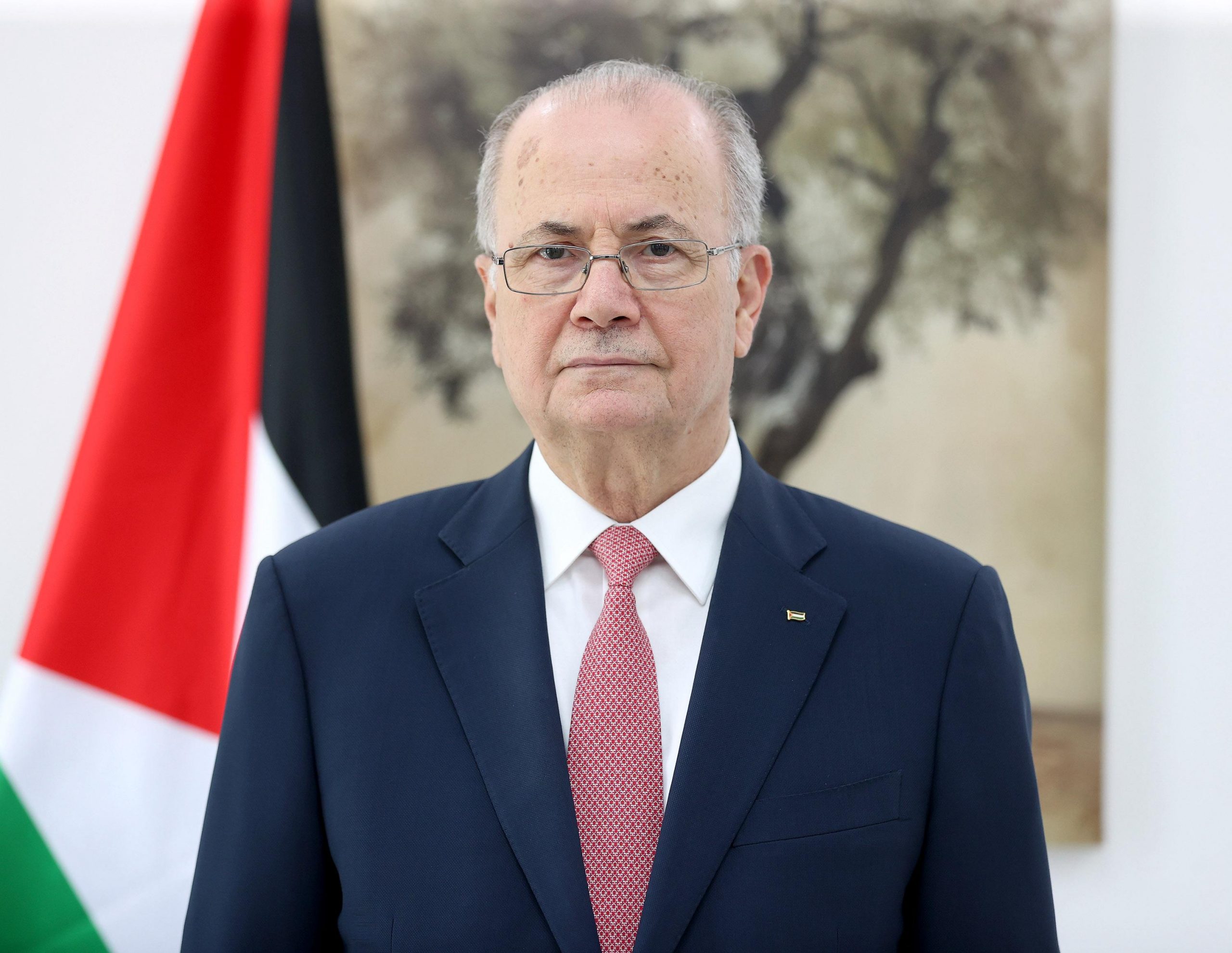
Prime Minister Muhammad Mustafa said that the Palestinian people are facing an integrated colonial project, not separate violations or separate measures, aimed at uprooting them from their land, seizing their national rights, imposing annexation and displacement, undermining their national institutions, and reshaping the political and legal reality, in a way that serves the logic of force and coercion and does not serve the principles of justice or the rules of international law. This came in his speech, which he delivered during the activities of the National Bar Association conference, which was held today, Thursday, under the title: “Replacement settlement in Palestine between the policies of annexation and displacement and the duties of international justice,” on the occasion of Palestinian Lawyer’s Day, which falls on the ninth of July every year. He added that the most dangerous thing about the occupation project is that it is not limited to confiscating land, but also seeks to confiscate time, identity and narrative, and to make the occupation permanent and settlement a fait accompli and annexation an imposed reality, and to make the absence of an independent Palestinian state a reality that the world can accept and coexist with. Mustafa continued: “It is no longer a secret to anyone that the current fascist Israeli government is proceeding with the implementation of what their leadership called the (resolution plan), which clearly aims to undermine the two-state solution and prevent the establishment of an independent, sovereign Palestinian state, despite the unprecedented international support and consensus that this solution enjoys.” He pointed out that this policy is embodied in two complementary paths. In the Gaza Strip, the war of destruction, starvation, displacement, and attempts to exclude the Palestinian National Authority and prevent it from fully assuming its national responsibility continues, and in the West Bank, settlement expansion, the imposition of the reality of annexation, and the escalation of settler attacks continue, in addition to policies of financial strangulation and withholding of the funds of the Palestinian people. The Prime Minister stated that despite the different tools, the goal is the same: to break the will of the people, weaken national institutions and their ability to perform their duties and serve the people, and undermine the components of the Palestinian state and prevent its embodiment on the ground. He stressed that the people of Palestine, throughout their long history, have proven that their will is stronger than the policies of exclusion and uprooting, and that their societal cohesion, national solidarity, and steadfastness on their land are the first line of defense against the replacement settlement project. He said: “Every village that stands firm, every farmer clings to his land, every family that refuses displacement, and every national institution that continues to fulfill its mission despite the exceptional circumstances, contributes to protecting the national project and thwarting plans of annexation and uprooting.” He stressed that the national response to this fascist project will not be just a temporary reaction, but rather a comprehensive national strategy based on strengthening the steadfastness of citizens, consolidating solidarity and community solidarity, strengthening the rule of law and independence of the judiciary, continuing reform and institutional building, reuniting the two parts of the nation, and maximizing the political, legal and diplomatic achievements that have been achieved, until the embodiment of the fully sovereign, independent state with Jerusalem as its capital. He pointed out that the Palestinian issue is no longer a test of the extent of respect for the rights of a people under occupation only, but rather of the credibility of international justice itself and its ability to enforce the principles on which it is based. International law is clear in rejecting settlement, rejecting forceful annexation, prohibiting forced displacement, and protecting the population under occupation, but the defect today does not lie in the absence of rules, but rather in the weakness of their enforcement, selectivity, and the continuation of impunity. He added, “talking about the duties of international justice is not limited to issuing positions and rulings, but rather includes the responsibility of the international community to ensure respect for international law, enforce its decisions, prevent the policy of impunity, protect civilians, and preserve the rights of peoples to self-determination. A law that does not find its way to implementation loses part of its function, and justice that is not implemented in a timely manner remains incomplete justice.” He stressed that this must push us to retreat from adhering to the law, but to adhere more to the law, and to build on everything that has been achieved, every legal opinion and every decision. Every judicial file, every documented file, and every new recognition of the State of Palestine constitutes an asset that must be transformed into accumulated political, diplomatic and legal power. The Prime Minister called for making Palestine a model of a state that builds its institutions on the basis of the rule of law despite the occupation. International justice does not begin in New York or The Hague only, but in every Palestinian court, in every institution that respects the law, and in every citizen who feels that his right is protected and his dignity is preserved, and that his state is governed by the law. Its relationship with him, and therefore, defending international justice and building national justice are not two parallel paths, but rather two paths that reinforce each other. He stressed that reform is not only an administrative program to improve performance, and is not a response to an external circumstance or condition. In the Palestinian case, reform is a national choice and a sovereign act that is inseparable from the struggle to achieve the national project, and that building strong institutions and the rule of law are part of the battle to embody the independent Palestinian state. He said: “Under the occupation, sovereignty is not exercised only over the borders and crossings, but through building national institutions Strong, developing legislation, strengthening the independence of the judiciary, raising the efficiency of public administration, providing better service to the citizen, and consolidating the citizen’s confidence in his state. In this context, he noted that the government has made great strides in implementing its reform program, and is working closely with all national institutions to modernize public administration, accelerate digital transformation, develop services, enhance transparency, and improve the legal environment that the citizen needs. He pointed out that the justice sector occupies a special place in all of this, based on the fact that citizen confidence is the real capital of any justice system. He stated that justice is not only measured by the validity of judgments, but also by the speed of access to them, the clarity of its procedures, the efficiency of its services, and its ability to protect rights, without delay emptying the right of its content. Therefore, developing the justice sector, including developing legislation, accelerating litigation procedures, promoting digital transformation, expanding mediation and arbitration, and other alternative means, is essential for building confidence, protecting rights, encouraging investment and development, and strengthening state institutions. Mustafa also touched on the importance of rebuilding the justice sector in the Gaza Strip within the Palestinian national system on the path to unifying all the nation’s institutions, including the justice system. The Prime Minister conveyed to the attendees the greetings of President Mahmoud Abbas, and his appreciation for the judiciary and lawyers in particular, for what they provide in the service of Palestine, expressing his appreciation to the Palestinian Bar Association and to all components of the judiciary and justice sector who carry out their duties in the most difficult circumstances. For his part, the head of the Palestinian Bar Association, Fadi Abbas, confirmed that holding the association’s conference in conjunction with Palestinian Lawyers’ Day carries a message of rootedness, steadfastness, and adherence to national rights, despite the difficult circumstances that the Palestinian people are going through. He stressed the pivotal role of the Bar Association as a fence for freedoms, a bulwark of the rule of law, and a safety valve that defends rights and freedoms in the face of the longest settler colonial occupation in the modern era, recalling in this context the role of the martyr President Yasser Arafat, who issued a presidential decree on July 9, 1997, requiring the formation of the first founding council for the Palestine Bar Association. He spoke about the union’s growing national role through expanding the circle of its union and human rights partnerships at the international level, within the framework of human rights advocacy campaigns with the issues of the Palestinian people and their legitimate rights, noting that it was present in the contexts of multiple legal accountability paths in confronting crimes committed against the people, in partnership with a number of international unions and a number of human rights institutions. The President of the Bar Syndicate touched on the disastrous repercussions of the ongoing Israeli war of genocide in the Gaza Strip, which led to the martyrdom of more than 200 male and female lawyers, in addition to the destruction of the Syndicate’s headquarters. The President of the Bar Syndicate praised the determination of the members of the Syndicate Council in Gaza who took the initiative to resume work through temporary branches, reschedule training courses, and organize oath-taking ceremonies for new lawyers, in addition to continuing to provide judicial services and authenticate documents almost free of charge to serve citizens, which embodies the Syndicate’s solid will to remain the first line of defense for humanity. The head of the Bar Association warned of the danger of racist Israeli legislation aimed at perpetuating settlement and creeping annexation and targeting UNRWA. The head of the Bar Syndicate stressed the need to strengthen the independence of the judiciary and strengthen the judge professionally and economically, highlighting the urgent need to address the infrastructure of some courts. In his speech, the President of the Supreme Judicial Council, Judge Muhammad Abdul-Ghani Al-Awiwi, stressed the nobility of the lofty message carried by the Bar Association, and the grave responsibilities that lawyers bear to protect people, preserve their national and personal rights and freedoms, and establish the rule of law. He said that the legal profession in Palestine was never just a profession, but rather it was and still is a national and humanitarian message carried by lawyers in the various stages that the Palestinian person lived through on his land. Defending his right to justice and dignity, and his just cause in the face of the occupation and the continuous daily violations it imposes. He stressed that the Supreme Judicial Council and the rest of the partners believe that achieving justice can only be completed through a true partnership and integration of roles between the judiciary and the legal profession, based on mutual respect, application of the law, and joint work to develop the justice system and enhance citizens’ confidence in it. He stressed the Council’s keenness to continue dialogue and cooperation with the Bar Association and the rest of the partners, in a way that serves the interests of justice and the public of citizens, and this is what was consolidated in word and deed in the previous period. Al-Awewi continued that the holding of the Bar Association conference under the title: “Steps for replacement settlement in Palestine between the policies of annexation and displacement and the duties of international justice” comes at a very important time. To shed light on one of the most dangerous issues facing the Palestinian people, represented by settlement policies, annexation and forced displacement, which constitute a flagrant violation of the rules of international law and international humanitarian law. He said: “Despite the failure of the international community to provide protection for the Palestinian people, this should not prevent us from working seriously to formulate a serious and effective Palestinian, Arab and international position to ensure protection, accountability and justice for the victims, who are the sons of the great Palestinian people regardless of their locations.” The President of the Supreme Judicial Council stressed that international justice should not remain merely principles and texts, but rather must be transformed into practical measures that guarantee the protection of peoples under occupation, put an end to impunity, and ensure respect for international law and its application to everyone without exception. He continued: “In light of what the West Bank and Gaza Strip are witnessing of an unprecedented escalation in daily attacks by settlers and the occupation army, which target the Palestinian person, their land, their property, and their sources of livelihood, the legal and moral responsibility requires redoubling efforts to monitor, document, and follow up on these crimes before various national and international judicial institutions, which requires the international community to carry out its responsibilities in ensuring accountability, enforcing the rules of international law, putting an end to impunity, and putting an end to impunity. for these practices.” In turn, Attorney General Akram Al-Khatib pointed out that the legal profession in Palestine carries a national message that is integrated with the messages of state institutions and the justice sector. It is a genuine partner in defending rights against the replacement settlement project and the policy of annexation, expansion, and forced displacement, based on international law and international legitimacy resolutions. He added that the Palestinian lawyer stood at the forefront of defending prisoners, the victims of the occupation’s crimes and violations, and the right to freedom and self-determination, and he carried the law as a means of defending the truth and proving that the occupation does not create a right, that force does not grant legitimacy, and that settlement will remain a crime whose legal description is not changed by any reality imposed by force. He stressed that the lawyer in Palestine performed his mission in exceptional circumstances, moving between courts, detention centers, and checkpoints, believing that justice does not know double standards, and that human dignity is not subject to the calculations of force. Al-Khatib stressed that the Public Prosecution views the legal profession as an integral partner in achieving justice, believing that building a strong judiciary and solid justice can only be achieved by integrating the roles between the judiciary, the Public Prosecution, and the legal profession, within a framework of mutual respect, independence, and the rule of law.