
اخبار تونس- وطن نيوز
اخر اخبار تونس اليوم – اخبار تونس العاجلة
W6nnews.com ==== وطن === تاريخ النشر – 2020-02-13 18:36:00
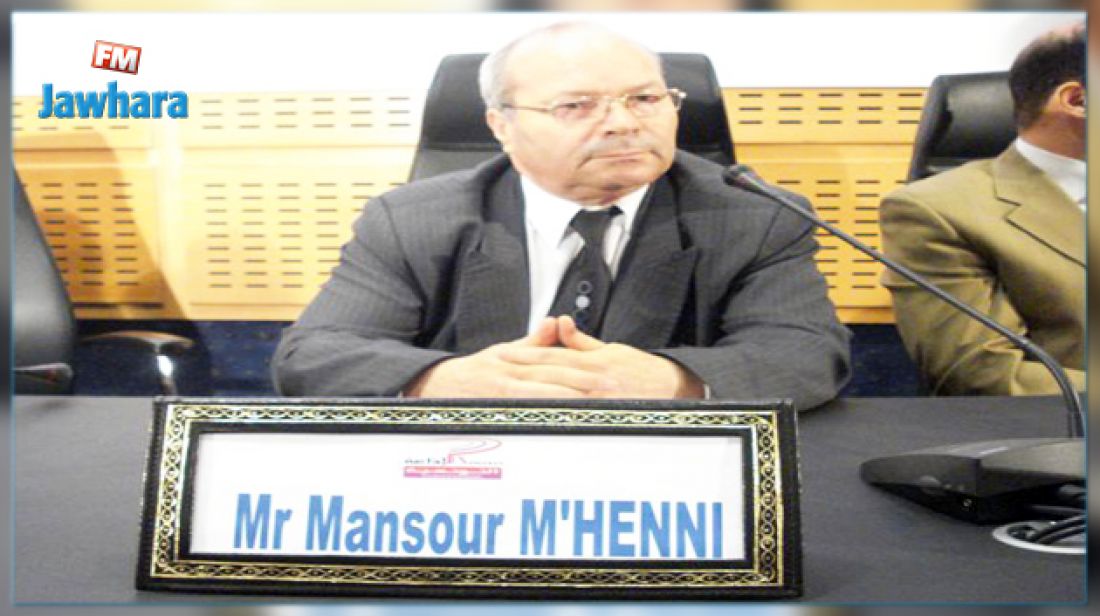
Today, Thursday, February 13, 2020, is a day in which Radio Day is celebrated every year. It is a good year that enables those interested and lovers of radio media to look at the bright signs from the past, its virtues and shortcomings, to deepen the question of the current reality and its requirements, and to think about the paths of the future in a way that allows finding the most effective ways to achieve ambitions and overcome challenges. In 2012, I was asked for a certificate related to the period in which I assumed the plan of the first general director of the Tunisian Radio after its separation from television was approved. The requested article was programmed for a book to be published on the eightieth anniversary of the Tunisian Radio’s events, similar to the book that we issued in 2008 on the Tunisian Radio’s seventieth year. However, the book on the eighties was not published, so I decided, as a matter of fairness to a stage in the work of the radio and a generation of its extended family, to publish this certificate that was written for the book of the radio on its eightieth anniversary, and it was not It publishes and maintains the same title, but today the radio celebrates the 82nd year of its birth. At the end of August 2007, I had the honor of being appointed as the first president and director general of Tunisian Radio after it was decided to separate Tunisian Radio and Television. The decision remains correct in my humble opinion because it provides both institutions with independence in work without overlooking the benefits of cooperation and integration that are governed, as a result of separation, by the rules of parity and equal chances. Each institution depends on the determination of its employees. And its supervisors. It was not difficult to notice the great care and great interest, in the general policy of the former Radio and Television Corporation, in the television sector, especially at the expense of the radio, and in the same sector on the first national channel, formerly channel 7, at the expense of the second channel, formerly channel 21. Therefore, it can be acknowledged that the radio benefited from the dismissal decision, especially in terms of the new challenges that it had to raise in order to succeed in the tasks entrusted to it and to achieve the goals set for it. Among the priorities that we saw in the new launch was to pool the efforts of enthusiastic energies. Committed around the logic of a single multilateral team, the nine radio stations and other sub-departments attached to the presidency of the institution, the Tunisian Radio Foundation, such as communication, archive digitization, the music department, and the various administrative and financial departments and departments (such as external relations and commercial management) grouped in the general office of the institution. Therefore, it was necessary to quickly establish an administrative organization to govern this certain structure, which was actually done within a few months, and the distinctive logos (logos) for the Tunisian radio and its nine radio stations were also conceived and accomplished. With distinguished technical diligence from a specialized youth team within the institution. Based on the logic of equal chances between the various radio stations, a minimum budget was approved for each regional radio station that would enable it to operate comfortably on its own, with each station stimulating a significant percentage of the advertising revenues generated through it, which witnessed a remarkable development that saw it go from a value that was estimated at about one million two hundred thousand dinars, to more than 4 million dinars in less than two years, thanks to a new commercial administration dedicated to working hard, diligently, and with remarkable professionalism. So thank you. The various sub-departments and departments were working in the same spirit, in harmony and integration, which did not hide some circumstantial problems, but they always reminded us that Tunisian radio is capable, yesterday and today, of achieving the most beautiful and greatest ambitions if it is determined to do so. The new organization of the institution coincided with the approach of the seventieth anniversary of the founding of the Tunisian Radio (1938 – 2008), so it was decided to devise a distinctive radio event for this celebration in a way that would contribute to restoring radio’s radiance and highlighting the continuity of its importance and the seriousness of its role, no matter how modern technologies develop that can only be benefited from on the radio, and no matter how other media of communication emerge and grow. The event was actually the establishment of the “First Tunisian Radio Festival” on the occasion of the radio’s celebration of the seventieth anniversary of its founding, under the slogan “The Seventieth Year,” and the adoption of the beginning of the month of June of each year as a fixed date for the successive sessions of this festival, an event that was not destined to live more than two sessions (June 4-5, 2008 and June 4-5, 2009). In its two sessions, the festival achieved many gains, including direct and indirect, and gathered around Tunisian radio the public and private media in the country and other means that came from friendly and sister countries to keep pace with the event in all its aspects and to participate, in particular, in the two symposiums that were held at the headquarters of the Arab Broadcasting Union, the first on the topic of “Reinventing Radio” and the second on “Radio and the Challenges of Modern Means of Communication.” At least fifty participants from 18 countries in Europe and the southern Mediterranean basin participated in this second symposium, open to questions of media and communication modernity in general, and the topic of digital radio in particular. In each session, a reference book was also printed, the first dating the radio on its seventieth anniversary and bearing the title “Tunisian Radio, the Seventy Years” and the second dating the radio theatre, on the basis of continuing the series and through it supporting documentation for the radio and thinking about its future and ways of adapting it to the movement of development in various fields. And in the same vision that does not forget the past, but rather is inspired by it to value stable values and to anticipate goals and effective methods on the path to the future and growth, in the first and founding session of the festival, it was held, The first radio exhibition is a witness to its history, in all its stages and manifestations. The performance hall on Habib Bourguiba Street was decorated with old radio equipment and pictures, in an elegant and interesting production that made the pioneers, from among the prominent figures and from all segments of society, visit it regularly for the duration of the show (12 days), taking souvenir photos, reading the accompanying comments, and reading the radio’s golden book. As for the second session, it was devoted to the radio theater exhibition, in the same hall and with the same success. The first exhibition gave rise to the idea of the Radio Museum, with the meanings and objectives of the word “museum”, and all the components of the exhibition were kept in a special space in the Tunisian Television building, for a time. Then a committee created for this purpose focused on studying the project in all its aspects, and ended up allocating an unused space in the Radio House to contain the museum after it was reconfigured and equipped. The necessary budget was allocated for this founding process, taken from advertising revenues, which witnessed remarkable growth between the years 2008 and 2009. An initial guideline was prepared for the project in view of starting completion before the end of 2009. And since one of the goals of the festival was to motivate workers in the sector by appreciating their efforts. And to encourage them to continue their efforts to innovate, renew and anticipate, the festival administration organized competitions for radio programs in several specializations and competitions for radio activists, open to the public and private sectors, and judged by committees specialized in interaction and integration with the public, which contributed to the selection via short electronic messages (SMS). It was decided to hand out the awards in a Tunisian musical and singing ceremony, attended by prominent figures from the artistic scene, from different age groups, accompanied by the Radio Music Band, which was restructured and the management of its affairs was rationalized after its supervision was transferred to the Tunisian Radio upon the separation between radio and television. On the other hand, it was decided that the central event with international radiance would not obscure the need of regional radio stations for distinction, activity and radiance. Therefore, the periodic radio seminars were distributed among various public radio stations and moved from Kef to Tataouine, passing through Monastir, Gafsa and Sfax, in addition to the seminars that met in the capital. The programming of all seminars included a sectoral seminar to deepen thinking on the various issues of the sector and a meeting of the expanded institution council in which various issues were discussed. The problems presented to it and proposing solutions and visions to achieve and ensure good governance of the institution and an effective communication policy. Since the radio archive has the value that everyone realizes, which contradicts the miserable state it was in and the destruction of a portion of it, a sub-department for archives and digitization was structured to work regularly to achieve the preservation of everything that may be available from the radio archive according to an organization that takes into account urgent priorities. In the same context, various public radio stations were called upon to re-exploit the archive in their programs in modern ways that are interesting and arousing the interest of the listener, thus making the programs an important support for the digitization process. In addition, each session of the Radio Festival and each national celebration marking the centenary of a deceased person from the artistic and radio scene was an occasion for the issuance of luxurious boxes of CDs of the deceased’s works, and it is also an occasion in which his works are preserved using modern digital methods (we recall the box “Selections of Tunisian Songs”, then “Hadi Al-Jouini” and “Saliha”). The Tunisian Radio Festival contributed to the international spread of Tunisian radio, in its broadcasting capacity, as the Radio and Television Corporation had previously also enjoyed, in Its dual structure, with respectable radiance and considerable credibility, however, the distinguished and effective presence of Tunisian Radio in international festivals and sectoral forums led it to be elected, in April 2008, to the position of Vice-President of the Permanent Conference of Audiovisuals (COPEAM), and then to be elected to the position of Vice-President of the International Radio and Television Union (URTI), at the beginning of May 2009, two months before the change of the President of the Director-General of the Tunisian Radio (June 29, 2009). On the basis of the first election, the radio election was reconfirmed in the same plan (at the request of its general administration) at its session held on October 20 and 21, 2009. It should be noted that, despite the fragility of the social situation in the sector and despite the tense relationship between the authority and the union structures, the internal relationship between the administration and the unions was characterized by the possible understanding and mutual respect, and the best evidence of this is the joint meeting between the union and the radio and television administrations, at the headquarters Radio, in the presence of the Assistant Secretary General of the Tunisian General Labor Union, on June 28, 2008 (one day before the change in the head of the Radio General Director). The negotiation extended throughout the entire day from nine in the morning until nine in the evening, when an agreement was reached between all parties and the agreement was concluded, which includes, in particular, the settlement of the fragile conditions of the employees of the two institutions according to a schedule spread over three years. Today, as Tunisian Radio celebrates the twentieth anniversary of its birth, with an initiative from its sons and its supervisors, the hope remains for uniting ranks and joining efforts in order to benefit from the positives of the past to build a new future that is vibrant with the aspirations of youth and enlightened by what Tunisia has achieved today in the field of freedom of expression, innovation and thinking. The most beautiful and sincere congratulations to the sons of Tunisian Radio in all its time and geographical stations, and may God have mercy on those who have left us. Happy New Year to Tunisian Radio. Happy New Year to Tunisia. Mansour Mhanni, Chairman and Director General of Tunisian Radio, August 30, 2007 – June 29, 2009