
اخبار سلطنة عُمان – وطن نيوز
اخر اخبار سلطنة عُمان اليوم – اخبار سلطنة عُمان العاجلة
W6nnews.com ==== وطن === تاريخ النشر – 2026-05-28 13:38:00
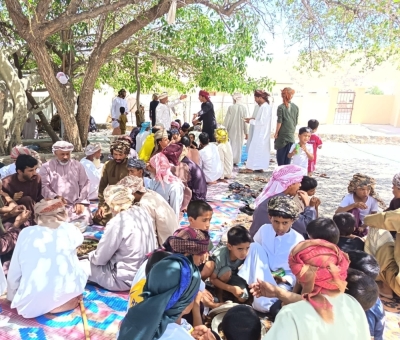
Books – Youssef bin Salem Al Habsi When the blessed Eid Al Adha arrives in the mountainous villages, it does not come as a mere passing occasion in the calendar of time, but rather as a solemn guest to whom hearts are opened before doors, and souls prepare for him just as the thirsty earth prepares for the first rain. There, between the solid curvatures of the mountains, the tranquility of the flowing valleys, and the serenity of the mud and modern houses hugging the slopes, the Eid appears purer and more closely connected. With the first human nature, away from the noise of cities and the rush of contemporary life; Where Sidr, palm and mango trees stand as guardians of joy, shading the roads with feelings of tranquility and sweetness. From the corridors of the villages of Wadi Bani Jaber in the Wilayat of Sur: (Qaab, Helm, Hawal, Qasaa, and Safan), up to the village of “Balad Set” located in the embrace of the Wilayat of Rustaq, and all the way to the village of “Hayl Al Kafuf” in the White Mountain in the Wilayat of Dimah and Al Tayyin, the Eid manifests itself as a visual and social painting. Embroidered with threads of love and compassion, and illuminated with the lamps of authentic customs that the Omanis inherit as precious treasures that do not change over time, in these mountain villages, the faith and spiritual aspects are mixed with manifestations of social solidarity. From the takbirs waving in space with the first threads of dawn, to the majestic gatherings in the Eid prayer halls, the people, old and young, line up in a cohesion that embodies the highest meanings of solidarity and harmony. The manifestations are not limited to worship and the slaughter of sacrifices, but rather the public councils (sabils) turn into vibrant beehives of cooperation. The young help the old, and the children imbibe from their parents the values of self-reliance and the preservation of heritage, so that popular arts such as “Al-Razha” and “Al-Azi” return, igniting enthusiasm with echoes that preserve the memory of the place. “Amman” looks at the details of the Eid scene in the mountainous villages, and how homes and gatherings are transformed into hearths filled with the smells of generosity, from the golden “prayer” and “burning” over the embers, to the details of “barbecue” buried in skirts, and visits. The mutual exchange that makes the villages extended bridges of affection and interconnectedness that are not made by appearances, but by sincere simplicity. Villages of Wadi Bani Jaber Muhammad bin Nasser Al-Darushi, from the village of “Hawul” in Wadi Bani Jaber in the state of Sur, said: Praise be to God for the perfection of grace and the fullness of grace as we witness these blessed ten days; Among them is the celebrated Day of Arafah, in which the Creator – glory be to Him – boasts to the people of the earth about His angels in heaven, and the happy Day of Sacrifice, which represents a great joy for every Muslim who approaches his Lord with his carefully chosen sacrifice, hoping for acceptance and answered prayers. In this joyful scene of faith, the people of the village of “Hawul” in Wadi Bani Jaber in the ancient state of Tyre, gather, embodying the highest meanings of solidarity and harmony. The people used to prepare early for Eid by buying sacrifices, new clothes, and luxuries, as an expression of joy and happiness. Among the authentic and established customs of the people of the village of Hawwal in the early morning of Eid day is gathering and heading with reassured souls to the Eid prayer hall known as “The Exit,” to perform the Eid prayer in a group filled with reverence. Once the prayer and sermon are over, the people line up in a solemn harmony to exchange peace, congratulations, and blessings. Happy Eid, and then they return to the village center, where the ancient art of “Azi” is performed. After that, everyone prepares to slaughter the sacrifices in an organized group scene, where the people are distributed in designated places that have been prepared in advance for slaughter, in an image that reads the meanings of true cooperation. Young and old help each other, and everyone contributes, with smiles and joy on their faces, while children provide assistance to learn from their parents the values of self-reliance and preservation of heritage, in a social painting entitled love and authentic Omani values. Reviving traditional arts. He added: The village people inherited the precise organization of Eid activities; The entire first day is devoted to slaughtering the sacrifices and preparing the meat to prepare the “madhabi” and “shwaa” meals. On the second day, the madhabi is prepared and the barbecue that was buried in the “tandoor” on the night of the first day is extracted. After the afternoon prayer of the second day, the villagers gather in the “general council” for peace and to eat the “collective fawala” that everyone participates in preparing. During these gatherings, popular songs such as “al-raza” and “alazi” are chanted, in addition to enthusiastic songs. Especially to spread enthusiasm when preparing barbecue, and other sheelas accompany their movement through the corridors and alleys of the village to exchange greetings according to the residential divisions, before returning again to the main center in the village. These splendid manifestations continue until the third day, including mutual internal visits, and others with neighboring villages in the valley, in scenes that enhance affection and preserve authentic Omani customs, generation after generation. Youssef bin Yaqoub bin Hamad Al-Qalhati joins him in the hadith, saying: When Eid Al-Adha approaches the villages of Wadi Bani Jaber in the state of Tire, it does not come as a passing time that passes among the people and then passes, but rather it arrives as a solemn guest for whom hearts open before doors and souls prepare for it just as the earth prepares for the first rain. There, between the curves of the mountains and the stillness of the valleys and the serenity of the mud and cement houses hugging each other on the slopes of the villages, the Eid appears purer and more intense. Adhering to the first nature of man, so that the visitor imagines that time in those lands still retains its ancient garment, untampered by the noise of cities nor the haste of modern life. Sidr, palm, and mango trees stand on the outskirts of the villages as if they were guardians of green joy, shading the roads and giving the place a spirit of tranquility and sweetness. In the villages of: (Qaab, Helm, Hawal, Qasa, and Safn), the Eid appears as a painting of familiarity and tranquility embroidered with threads of love and compassion and illuminated by lamps. Authentic customs that children inherit from fathers, just as precious treasures are inherited. As soon as the dawn of Eid arrives, the voices of the takbir are emitted from among the mountains, undulating in space as if they were the hymns of the entire valley. The crowds go out to the Eid prayer in bright clothes and faces full of happiness and contentment. The elders lead them with their reverence, and the children follow them with their innate joy that resembles flocks of birds when they emerge from their nests. Then the early hours of the morning pass carrying the scent of Gunpowder and the echo of traditional archery that ignite an inherited enthusiasm in the souls. Shots ring out in the valleys, as if the mountains respond to them with ancient echoes that preserve the memory of the place. After that, the ritual of slaughter begins, and the squares become places of solidarity and cooperation, where hands interlock and people race to help and give, and hardly a house is without a neighbor, relative, or passer-by. He explained that during the three days of Eid, homes turn into hearths filled with the smells of generosity. Authentic Omani, here it is prepared with its golden color and rich flavour, and there the madhabi is cooked on embers until it absorbs the fragrant scent of firewood and smoke, and on the other hand, barbecued meat hides in the skirts and comes out after hours as if they were pieces of melted perfume, while the Arsi and the Qabuli sit on the tables in a scene that overflows with warm simplicity and the memory of fathers and grandfathers, and from these foods smells that mix with the smell of gum and coffee, filling the villages with magic unlike any other. The Eid in Wadi Bani Jaber is not complete except with mutual visits between the villages. The roads become bridges of affection and the public gatherings are crowded, in which the people gather to receive guests and exchange congratulations on this happy occasion. Expressions of welcome rise and faces overflow with joy and familiarity. In every house there is a majlis open to those arriving, in which coffee, dates and Omani sweets sparkling like amber are served, juxtaposed with various fruits that exude the fragrance of the seasons and the generosity of the land. The taste of sweetness combines with the fragrant coffee and the moisture of the fruits, as if hospitality. There is a poem of generosity recited to the visitors before the folk arts are presented to them. It is emanated as if it were the pulse of the earth itself. The songs rise, the rows are organized in the razas and the mourners, and the voices sway between the mountains as if the whole valley is chanting a song of joy. Thus, the Eid in the villages remains different from the cities. In the cities, lamps may illuminate the streets, but here what lights the Eid are the hearts themselves. There the Eid passes quickly between the tall buildings. And crowding, but in the villages of Wadi Bani Jaber, it settles in the souls and leaves a deep impact on the memory because it is an Eid that still preserves the smell of the land, the warmth of the people, the prestige of customs, and the sincerity of joy that is not made by appearances, but rather by simplicity when mixed with faith, love and belonging. Eid in the village of “Balad Sit” In the Eid prayer hall to perform the prayer, in a scene where familiarity, love, and the spirit of brotherhood prevail, then everyone exchanges congratulations and peace among themselves. After that, the funeral procession is held for a short period, and then the people go to visit the elderly who were unable to come to the prayer hall, out of appreciation for them and out of their desire to share in the joy of Eid. After that, the people begin slaughtering the sacrifices, then each family or group of neighbors gathers to have coffee and fried meat in a beautiful social atmosphere, and in the evening the burial is prepared and buried. On the second day, it is time to grill the Mashakeek, while some people prefer to hold the barbecue on the third day. On the third day, the people gather to have coffee and hold social meetings dominated by friendly conversations. Then the day ends by going out to the “Eid Exit” and performing the art of Razha in an atmosphere that expresses the authenticity of the Omani heritage and the spirit of interconnectedness between the people. “Tricks of the Paws” in the White Mountain in the Wilayat of Dimma and Al-Taiyin: The villages of the Wilayat of Dimma and Al-Taiyin are distinguished by their exceptional atmosphere during the days of Eid Al-Adha, as the Eid carries special features that combine joy and close social cohesion, as the Eid atmosphere begins with the faces of children. As adults are keen to present “Eidiya” to them as soon as they wake up, whether in cash or in-kind gifts, which adds an atmosphere of joy and happiness to young souls. After that, the village people, old and young, head to the Eid prayer hall to perform the prayer in a group and with one heart. As the Eid takbeers are said and the prayer ends, everyone exchanges congratulations and blessings in a scene that embodies the values of tolerance and love. The social events do not end at the prayer hall, but rather the people go directly to the Eid prayer hall. The general council of the village, where they meet to have coffee and chat, then go to their homes or to the places designated for slaughtering sacrifices and distributing their meat, in order to facilitate the rituals of these blessed days. Khamis Al-Hanthali explained that the second day of the Eid is devoted to preparing “Mashakik” in addition to preparing “Madhabi” and preparing the meat and placing it in “Khaf” in preparation for burying it in the oven to prepare “barbecue.” The third day represents the peak of enthusiasm and anticipation; Where the people gather to extract the “barbecue” from the oven, so that they come together again around one dining table that reflects the depth of family ties in the village of “Hayl Al Kafuf”… stressing that these customs and traditions inherited in the village of “Hayl Al Kafuf” and in the White Mountain in general, are not just passing customs, but rather a cultural heritage that parents are keen to teach to their children to ensure its continuity as a symbol of the authentic Omani identity and social solidarity. Eid is in “the depths of Al Rabakh,” said Rashid bin Hamid bin Saeed Al-Rabkhi, from the village of “Amq Al-Rabakh” in the Wilayat of Quriyat: The blessed Eid Al-Adha comes in “Amq Al-Rabakh” bringing with it distinctive customs that express the spirit of the authentic community, where worship is intertwined with social customs, folk arts, and group gatherings in a beautiful image that reflects the interconnectedness and solidarity among the people of the village. The atmosphere of Eid Al-Adha begins in the village in the afternoon of the ninth day of Dhul-Hijjah, when loudspeakers play the talbiyah in various parts of the village, and continues until the call to prayer. Morocco, in a scene of faith that fills souls with tranquility and reverence, and everyone feels that the Eid is approaching, and with the sunrise of the morning of the tenth of Dhul-Hijjah, Eid takbirs are raised over the loudspeakers, spreading joy in the hearts, and announcing the start of the blessed Eid day, as the people flock to the two Eid prayer halls located in the wedding square, which is the large square in the middle of the village with a beautiful view of the surrounding crops and nature, and the people perform Eid prayers in a peaceful atmosphere. Serenity and love, then they exchange congratulations and blessings after the prayer, take memorial photos, and drink Omani tea and coffee in the square, in a warm family and social atmosphere. He added: After the congratulations are completed, the folk art ceremony “Al-Razha” begins, where the people gather in opposite rows, chanting songs and traditional words that express pride and joy in the holiday, in a scene that reflects the authenticity of the Omani heritage and the connection of society. With its cultural heritage, and when the participants arrive at “Hillat al-Dar,” everyone goes to greet the elderly, in recognition of their social status, then they go to the general council to have Eid coffee, in a way that expresses the meanings of brotherhood, respect, and communication among the people of the village. After the end of this ceremony, the people devote themselves to slaughtering the sacrifices, where the spirit of cooperation is clearly evident, as families help each other in slaughtering, cutting and preparing the meat, which reflects the spirit of solidarity and social cooperation that characterizes the village… adding: One of the most prominent beautiful social customs in “Amq Al-Rabakh” is the gathering of the people to eat lunch in the general council in each neighborhood for three consecutive days, which are the tenth, eleventh, and twelfth days of Dhul-Hijjah. These gatherings represent an opportunity to strengthen social ties and strengthen the bonds of love between the people. During the days of Eid, people are also keen to meet for coffee after the afternoon prayer and after the sunset prayer, where men and women gather for social gatherings in which familiarity and friendliness prevail, and one of the foods that the village is famous for during Eid is “Eid Mashakeek.” And barbecue, as barbecue is prepared on the tenth day in many families, while other families prepare it on the eleventh day, according to the inherited customs of each family. One of the beautiful customs that the people cherish is that every Eid, the craftsman Ahmed bin Khamis distributes the “barbecue recipe” for free to everyone, which is a social gesture that expresses the spirit of generosity, cooperation and love among the people of the village. He stressed that the village of “Amq Al-Rabakh” maintains some rare social customs that still continue to this day, the most prominent of which is what happens on the second day of the Eid after Evening prayer, where the people of Hillat Mazra’, Al-Burj, and Khub Araf come to extend their congratulations to the people of Hillat Al-Dar. Then everyone drinks coffee in an atmosphere of friendliness and appreciation. On the morning of the twelfth day, the people of Hillat Al-Dar go to those houses to return the visit and exchange congratulations, in a beautiful social image that reflects the depth of the fraternal relations between the people of the village. The celebrations of the holiday are not limited to men only, but women also participate in this social atmosphere, where they gather to have coffee. Exchanging visits and congratulations in group scenes that express joy and social cohesion.