

اخبار سوريا اليوم – وطن نيوز
سوريا اليوم – اخبار سوريا عاجل
W6nnews.com ==== وطن === تاريخ النشر – 2024-01-31 16:15:47
“Exporting the revolution” is the Iranian political system that crosses borders outside Iran. Since the leadership of the country’s Supreme Leader, Ali Khamenei, who had many extremist sectarian beliefs, he formulated his foreign policy on a sectarian basis, which is the superiority of Shiites over Sunnis, and the superiority of Iranian nationalism and harnessing it to serve an ideology. Exporting the revolution that gave Shiite Islam a radical, revolutionary form, and fueled cycles of violence, brutality, and excessive criminality from Iran all the way to Lebanon.
What those involved in the militias formed by Tehran do not realize is that the “Iranian shadow” armies – especially in Syria – have become a living example of extremism and criminality against the Syrians. They have produced a “spoils” sectarian methodology that continues to have profound effects on the popular incubator, in addition to containing a color mixed with It includes nationalism and the guardianship of the jurist, through which Khomeini divided the Shiite doctrine and the Khomeini ideology, the “end-times” ideology that considers the world to be a place full of injustice that will end with the coming of the promised Mahdi. It is a sectarian discourse – as is known – whose goal is to appeal to religious nationalism among Iranians, beginning with the Shiites of the world.
The “Revolutionary Guard” is a sectarian player!
The Iranian “Revolutionary Guard” is considered the godfather of the militias whose spring flourished in practices of sectarian mobilization, violating the rights of peoples, and targeting the Arab demographic to transform the Sunni majority into a minority. It is not surprising that during the course of the Syrian war we witness repeated scenes of random executions, artistic punitive practices, forcing residents to leave their homes, kidnapping them, and field executions. Burning others, mutilating the bodies, and executing children by shooting them, amid sectarian chants.
According to the Malcolm Kerr-Carnegie Middle East Center, Iran’s operations in Syria are the clearest examples of its sectarian behavior, “as it facilitated the involvement of thousands of non-Syrian Shiite extremists in defending the government of Bashar al-Assad.” Although Iranian leaders focused on the legitimacy of their intervention in Syria, and denied the existence of any sectarian agenda, the Iranian forces and their followers structured their role along very clear sectarian lines.
The crimes of the “Revolutionary Guard” were not the countries in which the Iranian arms were concentrated, but rather it affected the Iranians themselves who opposed the policy of the “Revolutionary Guard” and its arms. Amnesty International published horrifying testimonies of some victims of rape, women, men and children, by the “Iranian Revolutionary Guard” and “Basij”, the Ministry of Intelligence, and various police departments during the Iranian people’s uprising, in September 2022, after the death of Mahsa Amini (22 years old) while she was in police custody.
According to the 120-page Amnesty International report, Iranian security forces subjected women, men and children who participated in the “Women, Life, Freedom” uprising to sexual assault, gang rape and other forms of sexual violence, including rape of women and men with “wooden and metal clubs.” “, glass bottles, and water hoses.”
According to the report, rape and all types of sexual violence were accompanied by other forms of torture and ill-treatment, and security personnel beat and flogged the demonstrators, gave them electric shocks, gave them unknown drugs or injected them, and held them in a detention center and in inhumane conditions, keeping them hungry and thirsty.
The “Quds Force” and the spawning of extremist militias
The “Quds Force” is one of Al-Thawri’s most famous arms. It carries out sensitive tasks abroad, such as providing weapons and training to groups close to Iran, such as the Lebanese “Hezbollah” and Shiite factions in Iraq and Syria, such as: “Fatemiyoun Brigade,” “Zainabiyoun,” and “Al-Nujaba Militia,” “Abu Al-Fadl Al-Abbas,” and others.
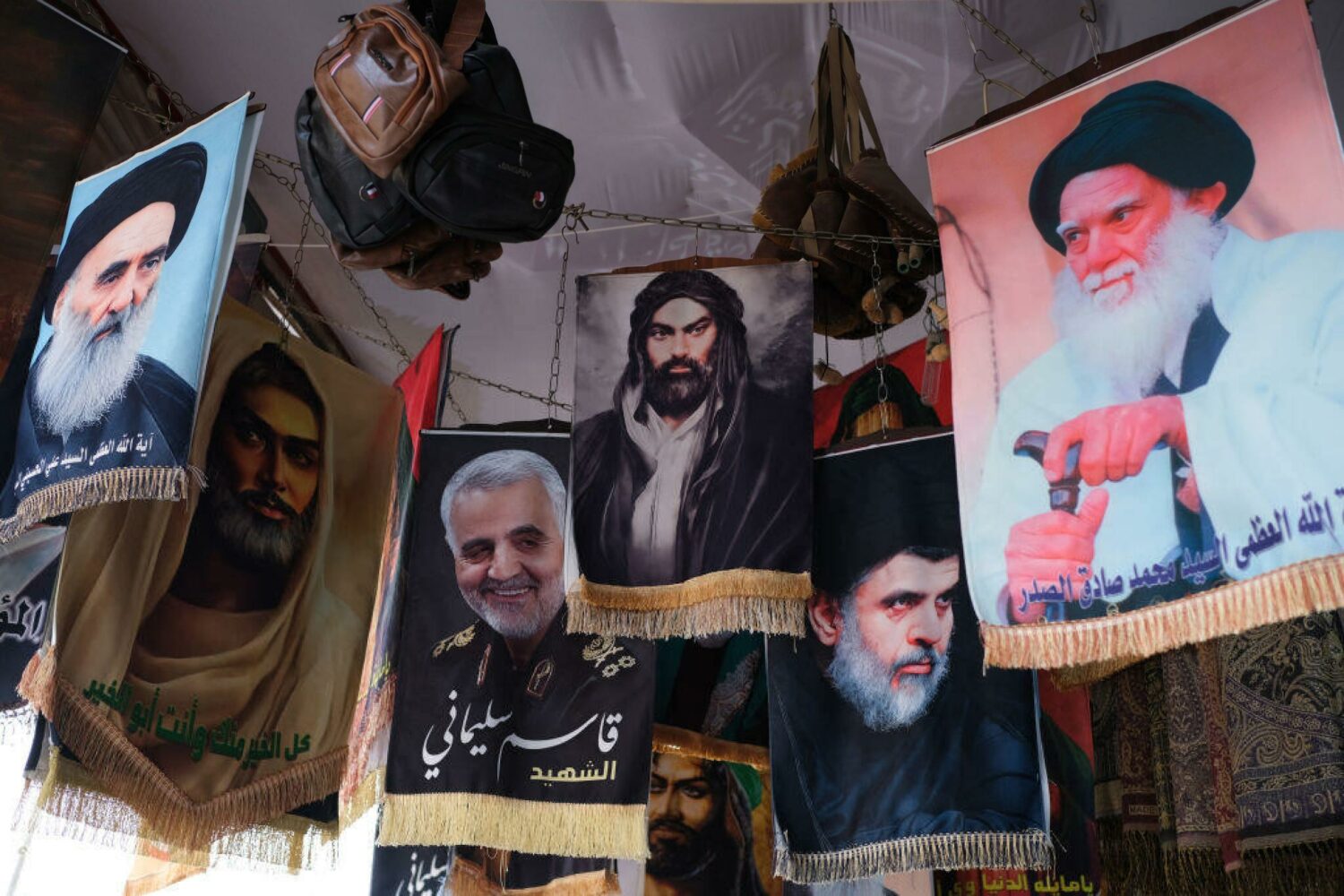
The commander of the “Quds Force,” Qassem Soleimani, who was killed in an American raid in late 2020 in Iraq, built a simulation of the success of the “Basij” forces by mobilizing Iranian, Afghan, Pakistani, Iraqi, and Lebanese Shiites to fight.
Soleimani is considered the mastermind behind most of the Iranian violations in Syria. Every brutal act and massacre must be accompanied by Soleimani’s approval, as he is in control of the theater of operations and the breeding of extremist Shiite militias, in addition to being the engineer of demographic change, under the pretext of protecting Shiite shrines and shrines, as he contributed to the settlement of the town. Al-Qusayr in the Homs countryside after his militia killed hundreds of civilians. He also contributed to controlling the city of Aleppo in late 2016 and wandered among its destroyed neighborhoods after its people were displaced and besieged.
As for the violations that are not forgotten by the Syrians, they are the “Al-Abar” massacre in 2013, which took place in Rasm Al-Nafal, south of Aleppo, and which was known to have occurred a month after it happened, as Iranian militias committed a massacre and holocaust against 208 civilians living in the middle of the southern desert of Aleppo in Syria.
Where the militia gathered dozens of women, children, the elderly and men in homes and blew them up, then bulldozed them. They also burned women alive, pulled infants from their mothers’ arms and slaughtered them with knives. They also executed dozens of women, children, men and the elderly by firing squad in front of their families, then a section was thrown away. Many of them were in the village wells, and some of them were buried in a mass grave.
Qassem Soleimani has been compared to Mukhtar al-Thaqafi (first century AH), who led a rebellion to avenge the killing of Hussein bin Ali a few years after the Ashura incident, as his mourners raised the red flag that evokes the banners of the Tawabin movement that Mukhtar al-Thaqafi and his followers raised to demand revenge for Hussein.
This reflects the state of practicing the doctrine of piety at its highest levels to kill thousands of innocent people, especially in Syria, which, according to the Iranian regime’s fatwa, views its popular incubator as only the descendants of Muawiyah and Yazid, and victory for Damascus is revenge on this incubator, in addition to reviving fatwas, sectarian speeches, and injustices, and giving A dominant place for religious myths.
Expanding the circle of killing through sectarian rules
The adoption of the rule of ideological doctrinal logic, which includes justifications for rooting violence steeped in the jurisprudence of organized murder, can be seen by raising the “red flag of revenge” above the dome of the famous Jamkaran Mosque in the city of Qom, south of the capital, Tehran, in order to seek revenge for the victims of an explosion that targeted the march commemorating the fourth anniversary of the assassination of Soleimani near his shrine. In the city of Kerman in the south of the country.
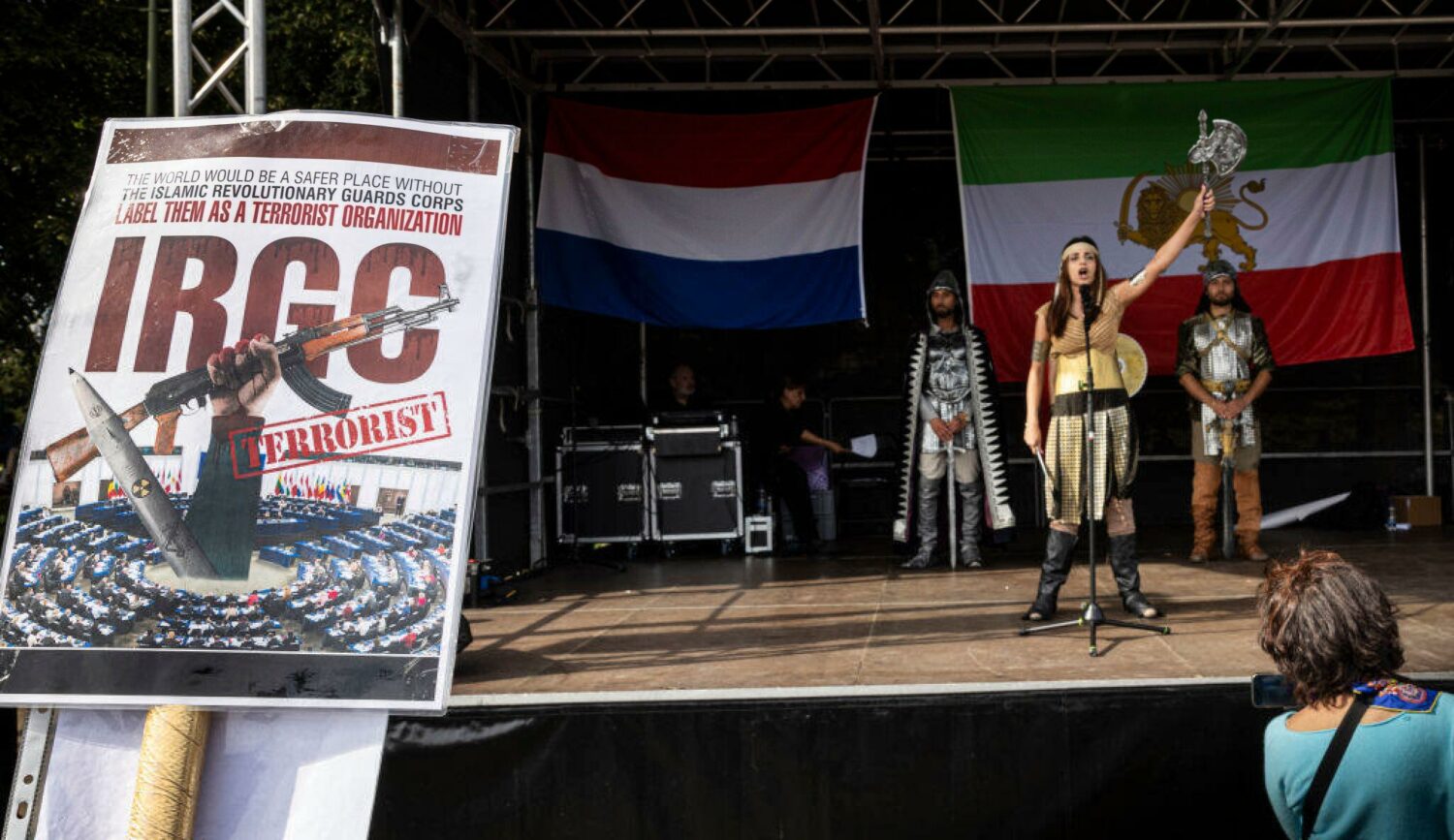
During the past years, red flags reading “Oh, the revenge of Hussein” were raised in the funeral processions of Iranian officers killed in Syria and above the domes of mosques and shrines, to indicate the authorities’ determination to take revenge and assume an excessive military face for their indiscriminate violence.
The ironic irony is that the “Revolutionary Guard” quickly demonstrated its crimes and took revenge in Idlib, northwestern Syria, by responding with strikes that targeted a medical building in the village of Taltita in the northwestern countryside of Idlib, claiming that it had targeted terrorist gatherings.
This narrative, “the narrative of targeting terrorists,” is the broken record that Iranian militias have long used in killing Syrians. Last February, the Iranian militia “Fatemiyoun” in the Palmyra desert in the southern countryside of Sukhna, east of Homs governorate, committed one of the most horrific massacres through hideous field executions. More than 65 people were collecting truffles.
They were killed with only one bullet, either in the forehead or in one of the eyes, even though among the dead were soldiers belonging to the Syrian army, which reflects the adoption of a policy of destruction, bombing, displacement, killing, slaughter, burning, and degrading based on “permissible for all” to spread terror, which finds an encouraging environment for it.
The bloody violence, cruelty, and scenes of slaughter were not a passing decision for these militias, as much as they are an expression of a strategy and an ideological vision, which is what Ayman Haroush, a researcher in Islamic movements, sees, saying: “The Shiite religion is a religion that was based on emotions that were ideologicalized and became a doctrine based on hatred of the Sunnis.” And depicting the oppression of the Al-Bayt, in addition to fabricating lies about the injustices of the Sunnis and that they killed Al-Hussein, may God be pleased with him, and captured Zainab, and the Caliph (Omar) broke the rib of Lady Fatima, the wife of Ali, the Prophet’s daughter.”
He added in his interview with Al-Hal Net that they raised their members and followers with hatred and hate, and this upbringing and sectarian rooting brought out a generation that loves killing and revenge, so it is not surprising that the Iranian militias or those loyal to them in Syria have reached a high level of love for murder, crime, and brutality.
In addition, the religion of these Shiite militias itself is based on the idea of revenge through the days of the Sunnah in councils and events that incite feelings of hatred, revenge, and healing, and depicting their historical oppression. All of this will produce criminal sectarian militias that are no less criminal and extremist than ISIS.
Between “ISIS” and “Iran’s militias”
Perhaps the question that comes to mind is what is the difference between the radical jihadist organizations and the Iranian militias that are beyond extremism and extremism, and why were ISIS and others like them considered extremism and extremism, while the actions of the Iranian militias, especially in Syria, were considered nothing more than just distortion, and that they wanted to save Shiism through… Attracting the Shiite public with statements of defense and oppression?
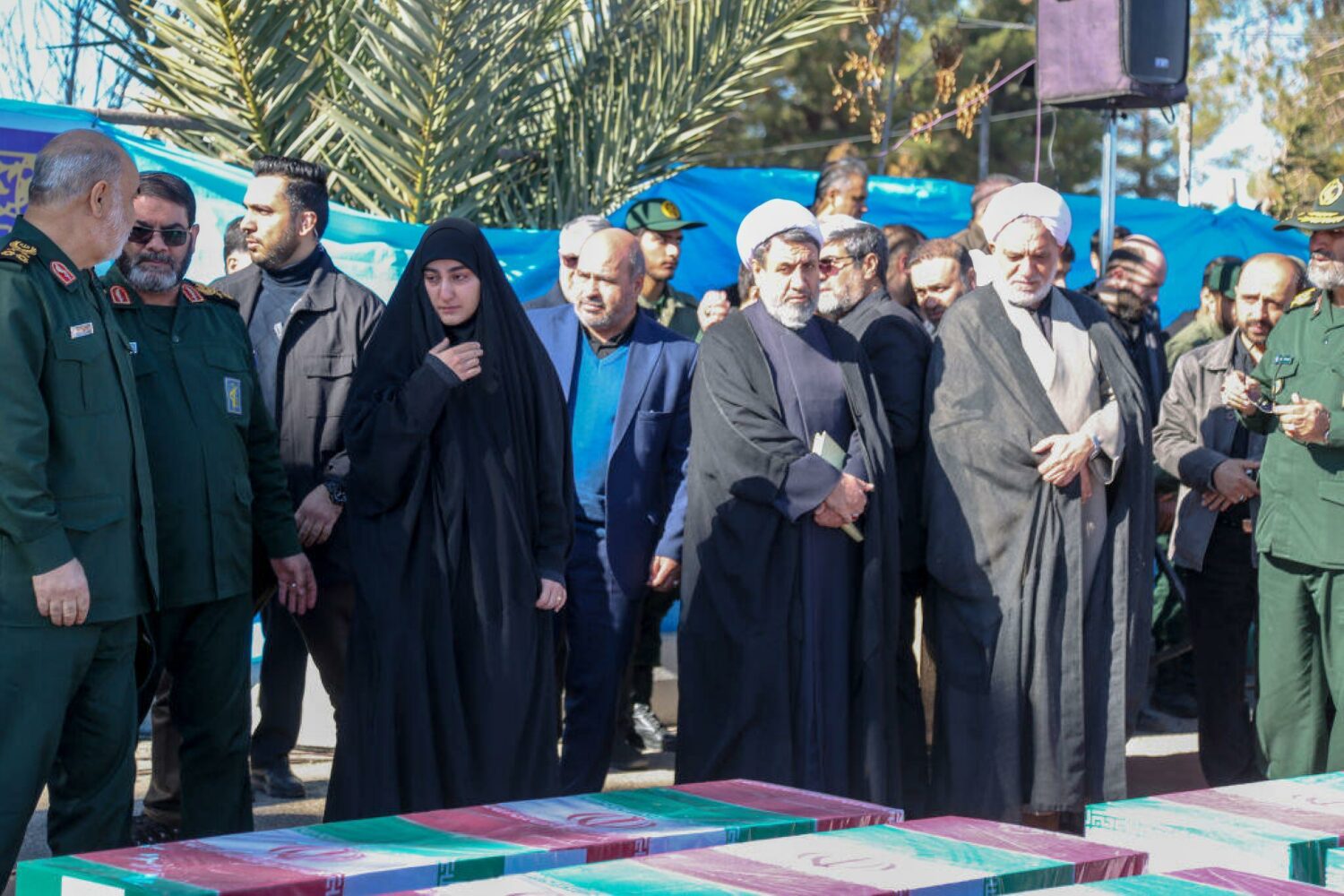
According to a study by the “Al-Mesbar” Center for Studies and Research (a center specializing in the study of Islamic movements), the use of radicalism in many different contexts does not come out of the fact that it represents two basic forms: The first is the call for radical, violent change, and here it can be limited to revolution, which is characterized by actions and practices that include acts of violence and coercion in different forms and levels.
The second is change through peaceful means by calling for radical change, rejecting what exists while meeting the condition of peacefulness in the face of resistance to change, and using mechanisms that do not involve violence in implementing the change.
Although radical trends are given to organizations with an intellectual orientation that aim to bring about political change based on a certain political point of view or thinking, sectarian and religious discourse, conflict, and fighting for the purpose of making a living in order to bring about radical changes in societies did not bring the Shiite militias into the circle of radical organizations, which means Necessarily, the method of brutality adopted requires re-reading the behavior of these militias and their similarities with the branches of “Al-Qaeda” and the “ISIS” organization, as they are the sons of a single bloody climate based on ideological change through violence.


