

وطن نيوز
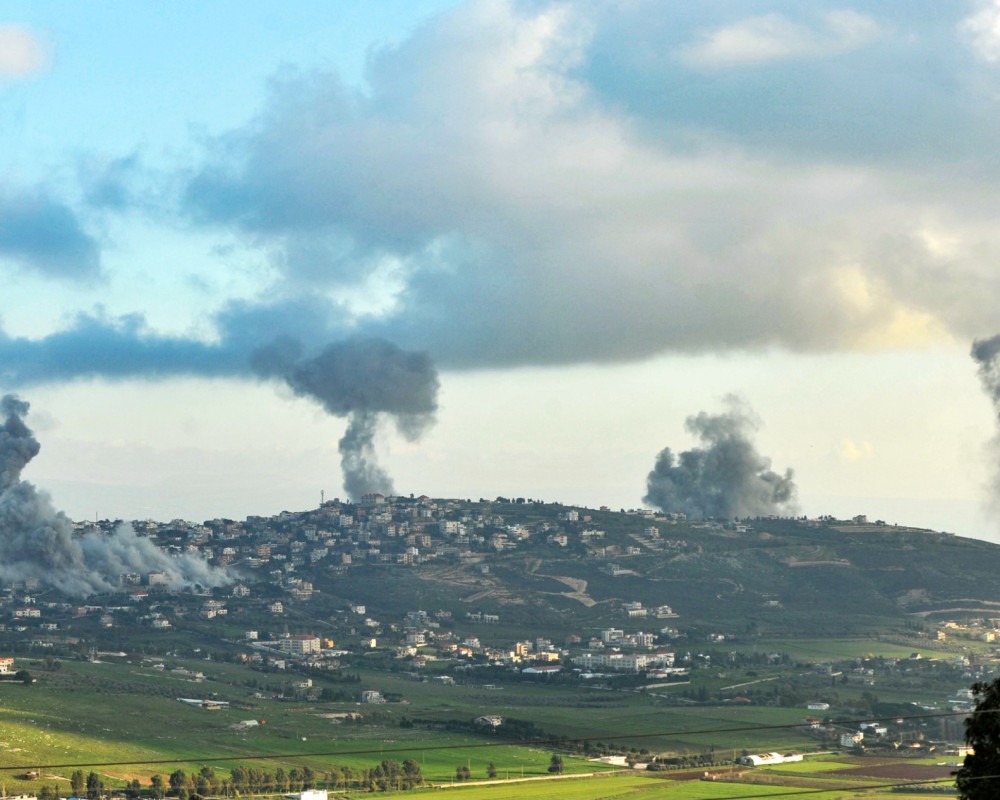
After a week or more, one thing has become abundantly clear: the agreement that the United States and Iran crafted with the help of mediators is still in place. There are also twists and turns related to the personality and statements of the main character in this complex saga, Donald Trump, but his clear desire to end the war dictates all other developments. The regime in Iran, which knows this well, continues to try to extract gains, but it does not violate the rules in a way that leads to renewed war. The calm in Iran has also brought calm in Lebanon. After turbulent weeks during which the Israeli army suffered heavy losses as a result of bomb march attacks and claimed the lives of hundreds of Hezbollah members and Lebanese civilians in counterattacks, a cautious calm prevailed this week on the northern front. In complete contrast to what Prime Minister Netanyahu is trying to sell to public opinion, the army’s hand there is almost tied. The Israeli army has significantly reduced its offensive activities, and is currently focusing on consolidating its positions on the contact line. Defense Minister Israel Katz announced that the army would not withdraw from southern Lebanon even if the United States requested it. We will wait and see. There is a common denominator in all arenas, which reflects Israel’s situation after more than 32 months of war that began with the October 7 massacre. Netanyahu’s moves have plunged Israel into a strategic impasse that threatens to worsen in the coming years. It inflicted heavy losses on Israel’s enemies in the region, but did not lead to stable long-term arrangements, nor did it consolidate any political progress. Meanwhile, a severe crisis broke out with the United States, specifically in the term of the president who was described as the friendliest American president ever. Next week, the annual Herzliya conference of the Strategic Policy Institute will be held at Reichmann University. This conference was postponed for a month due to what appeared at the end of May as a new escalation in the Gulf. But Trump’s threats ultimately did not materialize, and the war stopped, allowing guests from abroad to arrive, despite a significant decline in the number of foreign airline flights to Israel (Ben Gurion Airport, despite the ceasefire in the Gulf, remains the main refueling base for the US Air Force in the Middle East, and any other air activities at the airport are still subject to high priority considerations). There were years when the conference made headlines. There, in December 2003, Prime Minister Ariel Sharon chose to begin promoting the withdrawal plan from the Gaza Strip, which was implemented approximately a year and a half later. Retired Colonel Amos Gilad, head of the institute, held a series of key positions in the security establishment in those years: head of the research department in the Military Intelligence Division, coordinator of government activities in the occupied territories, and head of the political department in the Ministry of Defense. Gilad told Haaretz that the recent developments in Iran are “a classic example of what was warned about – there is no absolute victory in war without eventual diplomatic action.” He added: “The nuclear agreement drafted by Barack Obama in 2025 had many shortcomings, but I think so far it has been better than the situation that emerged after Trump withdrew from it in 2018. Since then, Iran has made a breakthrough and progressed in accumulating highly enriched uranium.” Gilad continued: “We have already caused great damage to other enemies, Hezbollah, Hamas and the Houthis in Yemen, but we have not defeated them anywhere. Perhaps what is worse is that Khamenei Jr. now leads an extremist faction of veterans in the Revolutionary Guards, who do not trust the West and, in return, have a great desire and strong determination to destroy us. These are not just passing statements.” According to him, the Iranian plan to destroy Israel was implemented when Ali Khamenei was the Supreme Leader, but his son Mojtaba believed in it more than his father. The current crisis in the relationship between Trump and Netanyahu in light of the surrender agreement that the United States signed with Iran is not surprising. Netanyahu postponed the hostage deal until 2024, pending Trump’s victory in the presidential election in November, and has already received his support and achieved some achievements since then. The president initially sided with the prime minister’s position on Gaza, gave the green light for the first Israeli attack on Iran in June of last year, and was drawn in by Netanyahu’s enthusiasm about the possibility of regime change in Tehran in preparation for the second attack there last February. This week, during a meeting with a reserve officer course in Gush Etzion, he stated: “I very much appreciate the support we have received from American friends, but we need to break free from dependency and build our own independent weapons system.” These statements are in addition to many previous statements in the same direction, in addition to Netanyahu’s attempt to portray Israel as a “Great Sparta” in the future, as he described it, after Trump’s previous dictates in the recent hostage deal. The Prime Minister is secretly conducting intense discussions in an attempt, the first of its kind, to determine the defense budget for the next decade. This task was assigned to the newly appointed head of the National Security Agency, Shmuel Ben Ezra. As is the case with the senior appointments that Netanyahu seeks to establish and the anti-democratic legislation that he promotes to serve his narrow interests and the interests of his coalition partners, there is a long-term perspective that does not indicate an intention to withdraw from the political arena any time soon. In discussions, Netanyahu talks about an imaginary budget, amounting to 130 billion shekels, that is, double the defense budget before the current war. This relatively large budget is intended to compensate for the expected decline in US aid, but it also aims to finance a large number of reserve days and increased production of missiles and other weapons. It is also assumed that this increase will fund what Netanyahu is determined to do in light of the failure that he does not acknowledge in the current campaign in Iran, which is to maintain the strike capacity there in the future. How does this fit with a state that cares about the well-being of its citizens? With the exception of slogans resembling “Super Sparta,” we have not received any response yet. Amos Gilad describes the ongoing deterioration in the West Bank, particularly regarding settler violence against Palestinians, as a development that is causing significant damage to relations with the United States. He said: “The Palestinian issue undermines our position as much as a shark does. Avoiding dealing with Jewish terrorism will ultimately harm us, even though the events there interest almost no one in Israel. Our relations with America are being damaged, and we are the ones who need Trump’s support, not the other way around.” They will not decide. This week, the Defense Minister made clear the main points of Israel’s policy in southern Lebanon: the Israeli army will remain in a security zone to keep the threat away from the settlements in the north, and Lebanese villages in the area will be destroyed and their residents will not be able to return to them. In practice, it is doubtful that Katz had any say in the matter; The decision to withdraw Israel from there does not depend on him, nor on Netanyahu either. The decision is in the hands of Trump alone, who has given Iran and Pakistan a foothold in the new mechanism to prevent friction that is being established according to the agreement in Lebanon. Israel is not a member of this forum. Also, direct talks were held between the Israeli delegation and the Lebanese delegation this week in Washington. The Israeli ambassador to the United States, Yechiel Leiter, rightly pointed out that the negotiations to which he was sent are taking place again at a time when the situation is on the verge of collapse. The ambassador alluded to the political reality: Israel does not have the real ability to impose the terms of the agreement, because they will be determined to a large extent in the negotiations between the United States and Iran. Therefore, it is not surprising that there are reports that there has been no progress in the talks in Washington. The government is misleading public opinion in Israel about the situation on the ground in Lebanon. After the ceasefire came into effect in Iran and Lebanon, the IDF’s operational powers in Lebanon were significantly reduced. The forces were left with no choice but to remove any direct threat to them or to the settlements in the north. Former Prime Minister Naftali Bennett, who usually speaks directly with commanders and fighters on the front, described the situation accurately, while government ministers tried to ignore it in their statements, and some even went so far as to claim that the Israeli army enjoyed effective freedom of action. As the election date approaches, the Prime Minister is tightening his grip on the situation: controlling the memory and narrative surrounding the failure and those responsible for it, and achieving maximum control over the security establishment. In the absence of actual fighting currently, the media is preoccupied with the drama that has arisen around Hezbollah’s underground compound in the village of Ibnit, north of Shaqif Castle. The site includes the headquarters of Hezbollah’s southern front and its Badr force. According to the Israeli army, dozens of Hezbollah members are still holed up there. By advancing north, Israeli forces have created an isolated enclave or “finger” relatively far from the area they previously controlled, putting them at a tactical disadvantage. Some officers giving media briefings talk of a military victory there, but in reality there is only one week left until the end of the war. In addition, it is questionable whether Tabnit can be used as a pressure tool in light of the ongoing negotiations between the United States and Iran. Israel needs to quickly determine its direction in Lebanon. It may be better for it to withdraw from part of the regions on its own initiative, rather than waiting for this to be imposed on it and interpreted as another achievement for the Iranian regime, thanks to the American President. But who cares, next week will mark a thousand days since the war, which began with the massacre in the enclave. The government that prefers to call this war the “Renaissance War” will ignore this stage. But hundreds of bereaved families united in the “October Council” will commemorate the massacre in protest events across the country, and on the agenda will be one demand, which Netanyahu will do his best to thwart, which is the formation of an official independent investigation committee to investigate the massacre and the war. This week, as part of the coalition’s efforts to maintain the alliance between Likud and the Haredi parties, there was news that an agreement has crystallized: passing the service exemption law in exchange for the formation of a political investigation committee to serve Netanyahu. It appears that the only security apparatus over which Netanyahu has not established full control over its senior leadership is the Israeli army. The Chief of Staff, Eyal Zamir, is the most isolated person in the country’s leadership. The generals below him see how two of their friends at the forum, David Zinni and Roman Goffman, easily jumped off the accepted hierarchy and obtained very senior positions thanks to Netanyahu. There is no agency in Israel that is more preoccupied than the Israeli army with the issue of personal advancement and finding a short path to advancement. Amos Harel Haaretz 6/26/2026