
وطن نيوز
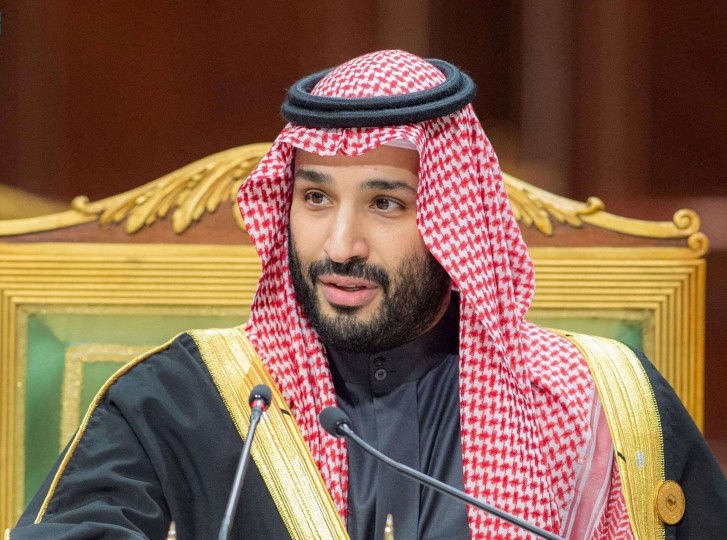
A decade after its launch, Vision 2030 remains a pivotal framework for Saudi Arabia’s political and economic transformation led by Crown Prince Mohammed bin Salman. Although this initiative brought about important social changes, its economic achievements were uneven, as the Kingdom still relies heavily on oil revenues. The recent war with Iran has increased the project’s complexity, forcing Riyadh to direct its resources toward security and risk management, which could weaken investor confidence. As a result, Vision 2030 is likely to enter a new phase centered less on ambitious mega projects, and more on strategic adaptation to regional instability. Thus, the initiative is unlikely to collapse, but it will not fully achieve its original ambitions, reflecting the structural limitations of the Saudi model of centralization. Since its unveiling in April 2016, Vision 2030 has represented an umbrella term for the transformation processes in the Kingdom of Saudi Arabia. It is a national legacy initiative launched by Crown Prince Mohammed bin Salman, which aims to restructure an oil-dependent economy, while ensuring the stability of the absolute monarchy in the future. A decade after its implementation, and with its official completion date approaching, Vision 2030 has achieved controversial economic achievements as well as political and social gains. In recent years, the project itself has undergone restructuring. Now, with the repercussions of the regional war reverberating across the region, Vision 2030 appears to be entering its third phase. Vision 2030, signed by bin Salman, aims to revolutionize an economy facing an unprecedented threat. Although the Kingdom has been talking about reform since the 1970s, Saudi Arabia entered the second decade of the twenty-first century relying heavily on oil revenues. In light of the increasing pressures resulting from population growth, the acceleration of the transition to clean energy, and the volatility of energy prices, economic diversification has become a top political, and even existential, priority. To prepare for a future of lower oil revenues, Vision 2030 focuses on fiscal reforms and developing new sectors, from tourism to advanced manufacturing, while changing the model of excessive government employment and generous subsidies. However, from its inception, Vision 2030 was a political project par excellence, as the economic diversification agenda was linked to the concentration of power. In the second half of the last decade, bin Salman dismantled competing power centers within the royal family, subjugated the religious establishment, and purged key state institutions. Having amassed unprecedented political influence by the end of the decade, the Crown Prince set about reshaping the kingdom’s ultra-conservative social order. The gradualist approach to social reform that characterized his predecessors was abandoned in favor of comprehensive and rapid change. Saudi citizens woke up to a different reality: restaurants and stores began operating even during the call to prayer; Young men and women flocked to new entertainment places; Women took to the streets for the first time, and later entered the labor market. Now, reports indicate that the government is considering legalizing alcohol. For Bin Salman, expanding these freedoms was necessary to renew his legitimacy with young Saudis, and to reshape the kingdom’s image on the international stage, a crucial element in mobilizing the international support necessary for the success of Vision 2030. However, despite the political and social progress achieved by the plan, oil remains the mainstay of the Saudi economy. By 2025, oil revenues accounted for about half of GDP. Growth in non-oil sectors appears to be driven primarily by oil market dynamics, rather than the vision’s diversification efforts. The decline in productivity has necessitated increased government spending to boost non-oil revenues, resulting in a persistent budget deficit since 2022. To understand the achievements and failures of Vision 2030, its development stages can be divided into three phases, each characterized by different priorities. An updated vision In its first version, between 2016 and 2023, the vision centered around a group of huge infrastructure projects, which were known as “megaprojects.” The goal of these massive development plans was to bring about a historic qualitative shift for the Kingdom, and to demonstrate the shift from a model dependent on fossil fuels and social conservatism to a modern and advanced development agenda, while creating new opportunities for tourism and investment. But despite being designed to be a clear expression of Riyadh’s grand ambitions, the Vision 2030 projects quickly ran into difficulties. The Al Khat future city project clearly embodies some of these challenges. The city, located in the NEOM region on the northern end of the Red Sea, was planned in the form of two parallel wall-like towers, 170 kilometers long. Between 2021 and 2025, the city’s estimated costs rose by billions of dollars, hopes for foreign financing faded, and investments of at least $50 billion in drilling, transportation, and construction fell short of desired development goals. The decline in oil prices exacerbated financial pressures, prompting a reconsideration of the Kingdom’s approach to the “line” project in particular, and mega projects in general. In 2023, the size of the project was significantly reduced, with its first phase, scheduled for implementation in 2030, now expected to include only two kilometers instead of 16 kilometers as originally planned. Other mega projects have witnessed similar development. In the NEOM region, the expected costs have doubled for three out of five major projects. Key development milestones have not been achieved, as evidenced by the Kingdom’s decision to abandon hosting the 2029 Asian Winter Games due to slow progress on the $38 billion Troyana Ski Resort. Outside of NEOM, at least one project is still seen as promising, the $63 billion restoration of the old city of Diriyah, but it is also suffering from delays. By 2023, in light of increasing challenges, the volume of contracts signed for project development began to decline sharply, representing a profound transformation and leading Vision 2030 to its second edition. While mega projects declined, sectors with faster returns saw rapid growth. In 2024, bin Salman announced the establishment of Hardware, an advanced manufacturing company that committed to investing $100 billion by 2030. Later that year, Riyadh launched a $100 billion artificial intelligence investment fund, followed by a similar investment plan in base metals. At the same time, with investments in mega projects declining, Bin Salman unveiled a new, large-scale development plan to serve pilgrims in Mecca. Two weeks before the Israeli-US military campaign against Iran, the Saudi Finance Minister confirmed that the priorities of Vision 2030 had indeed changed, and that resources had been redirected from mega projects to tourism, industry, logistics and technology. But after the Kingdom was subjected to at least 916 Iranian missile and drone attacks, it appears to be entering the third phase of the vision. As Riyadh finds itself drawn into the heart of an escalating regional conflict, it can no longer remain aloof from the conflict. Since 2019, when Iranian drones attacked Saudi oil facilities and temporarily reduced the kingdom’s energy production, bin Salman has worked to avoid regional escalation – starting to de-escalate with Iran in order to focus on the domestic arena: to attract foreign investment and ensure a steady flow of oil to finance his resource-intensive vision. But the Kingdom now has little choice but to strengthen its defenses, rebuild the destroyed infrastructure, invest in emergency plans, and work to restore investor confidence. Allocating more resources for this purpose will require postponing other Vision 2030 initiatives. Even before the war, Riyadh was running its largest budget deficit in five years, before additional financial pressures came on board. At the same time, foreign investment and private finance – which were supposed to drive new sectors – look less likely. However, these challenges are unlikely to end efforts to diversify the economy. The incentives to reduce dependence on oil still exist, and are even increasing, given the fragility of the Kingdom’s situation, as the rise in oil prices due to the war may reduce demand. But as Riyadh diverts resources to immediate needs, investment in economic reforms will decline, extending the time frame for achieving Vision 2030 goals. Some economic initiatives may benefit from the current regional turmoil. As markets search for alternative supply routes, Saudi Arabia seeks to achieve its goal of becoming a global logistics center, in direct competition with the United Arab Emirates. In 2025, the first test shipment transited a new port under construction in NEOM, cutting the transit time between Egypt and Iraq in half, bypassing the Bab al-Mandeb Strait threatened by the Houthis. In the Gulf region, the pace of establishing logistics projects accelerated following the Iranian blockade of the Strait of Hormuz. If this momentum continues and is directed wisely, these investments may prove worthwhile. Another potential advantage of Saudi Vision 2030 amid regional turmoil is strategic competition with the UAE. The UAE, in turn, seeks to reduce its dependence on oil through economic reforms. Abu Dhabi’s economic diversification plans focus on areas that Saudi Arabia also wants to develop, including artificial intelligence and advanced manufacturing. But although Abu Dhabi has many competitive advantages over Riyadh, including a skilled workforce and a long history of integration into the global economy, its security environment appears more fragile. Since February 28, the UAE has been subjected to Iranian attacks at a rate three times higher than the rate of attacks in Saudi Arabia. While Abu Dhabi is expected to work to reduce its exposure to Iranian attacks by expanding its security investments, its unfavorable geographic location compared to Saudi Arabia may shift global investments towards Riyadh. Vision 2030 and the consequences of war Saudi Arabia’s commitment to Vision 2030 helps explain its behavior during the recent war between the United States, Israel, and Iran. Despite its vast economic resources and significant regional influence, Saudi Arabia refrained from taking an active role or formulating a clear position during the conflict, as its military movements against Iran remained deliberately limited and quiet. Its policy was based mainly on public statements emphasizing the need for stability, in addition to its repeated denials of supporting the war in the first place, although reports indicated that Bin Salman encouraged Washington to take a tougher stance towards Tehran. The result has been a cautious, even hesitant, stance aimed at avoiding direct confrontation with Iran, while at the same time being careful not to stray too far from the strategic partnership with the United States. But this apparent weakness is not merely the result of political hesitation, but is also the result of careful strategic calculations. The Saudi leadership has invested most of its resources in Vision 2030, so a large-scale regional war is seen as a direct threat to the kingdom’s future. Given these limitations, Riyadh has chosen a delicate balancing act: avoiding direct involvement in the conflict, maintaining channels of communication with Tehran, and continuing to rely on the deterrence provided by the alliance with Washington. Although this policy may appear weak from the outside, from a Saudi perspective it reflects an attempt to overcome an unpredictable regional environment while preserving core economic and political interests. The combination of these dynamics suggests that Vision 2030 should not be judged on its ambitious rhetoric or individual successes. It is primarily a partial change project. Politically and symbolically, it was highly effective, consolidating power and reshaping the kingdom’s image globally. Economically, progress has been achieved in some areas, but no decisive freedom from dependence on oil has been achieved. Socially, personal freedoms have expanded in a restricted manner, while the space for collective participation and responsibility has shrunk. So the most likely outcome is not collapse, but substandard performance relative to ambition. Vision 2030 demonstrated what central governance can achieve in a short period, but it also revealed the inadequacy of top-down development in the absence of institutional feedback mechanisms and adequate human capital. Saudi Arabia’s ability to overcome these obstacles does not depend largely on huge projects or marketing campaigns, but rather on its willingness to invest in individuals, institutions, and good governance beyond the future horizon of 2030. Yoel Guzansky N12–1/6/2026