
اخبار قطر اليوم – وطن نيوز
اخر اخبار قطر – اخبار قطر العاجلة
W6nnews.com ==== وطن === تاريخ النشر – 2026-02-18 00:00:00
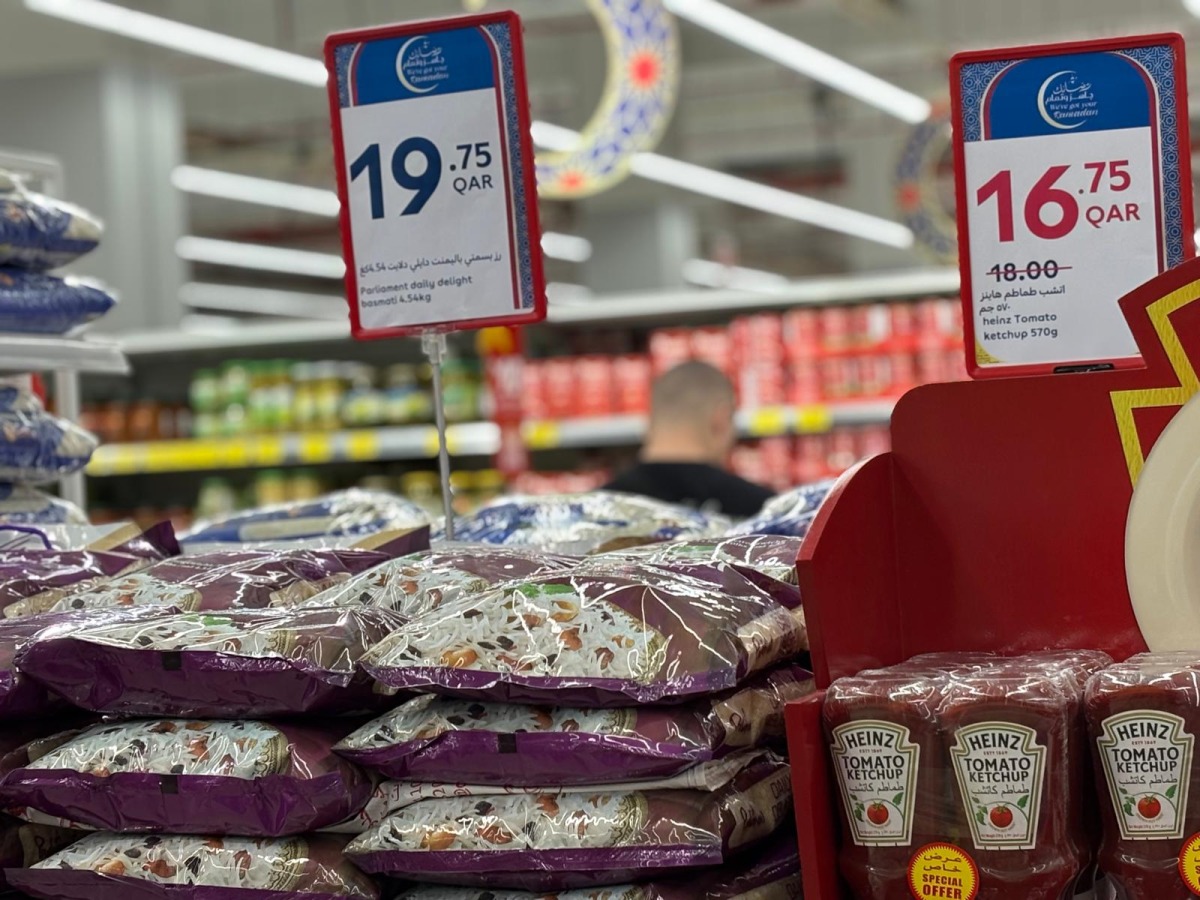
15 – 20% reductions in the prices of offers on food commodities Special Copy – Lusail Traders, consumers and marketing experts revealed to Lusail newspaper that, with the approach of the holy month of Ramadan, the Qatari market is witnessing a noticeable economic movement, represented by the gradual increase in demand for basic and Ramadan food commodities, such as rice, oils, sugar, flour, meat, dairy, and canned goods, in addition to drinks and nuts, the consumption of which rises significantly during the holy month, and with this increase in demand comes There is pressure on prices in many markets, but despite these pressures, it is characterized by remarkable relative stability in the prices of basic and Ramadan food commodities compared to other countries, thanks to the proactive efforts of the Ministry of Trade and Industry in monitoring the markets and controlling violations, and launching Ramadan initiatives to reduce the prices of hundreds of basic consumer goods in coordination with major commercial complexes and producers, and providing a strategic stock of them, in addition to pre-Ramadan offers and Ramadan boxes at thoughtful prices, such as the Al Meera box for 89 riyals containing… A varied basic assortment. Al Meera’s preparations for Ramadan Regarding Al Meera’s most prominent preparations to welcome the holy month of Ramadan, Mr. Jassim Al Surour, Director of Government Relations at Al Meera Foodstuff Company, said to Lusail: Al Meera has taken many measures in preparation for welcoming the blessed month of Ramadan, as it is one of the most important seasons of the year, and at Al Meera we confirm our commitment to providing a comfortable and reliable shopping experience to our customers in the State of Qatar. Al Sorour continued, saying: Our preparations this year include providing basic and Ramadan products in sufficient quantities, in addition to special offers that meet the needs of families. We worked early with our suppliers to ensure the constant availability of goods. We were also keen to prepare our stores and facilitate delivery services, so that Ramadan shopping remains easier and more comfortable at Al Meera, since we are always keen to be your reliable choice during the holy month. In response to a question regarding the number of products that will be included in the discounts during the holy month of Ramadan, he explained: At Al Meera, we are keen to provide various offers that include various product categories, in the non-food products section, and offers are available on more than 500 items. As for the fresh food section, it includes between 55 and 60 items among the offers in each publication. The consumer goods section includes about 500 items in offers for 14 days. In addition, the Ministry of Commerce and Industry’s fixed price program includes approximately 1,000 items, ensuring stable and appropriate prices for our customers throughout the month of Ramadan. Regarding the discount rates on various products during the month of Ramadan, the Director of Government Relations revealed: Al Meera is keen to ensure that the discounts are real and beneficial to customers. In the non-food products section, discounts reach 30% on household appliances, 35% on household appliances, and 15% on televisions. As for the fresh food section, it offers discounts ranging from 15% to 20% on meat, fruits, vegetables, and fish, in addition to discounts of 25% to 30% on baked goods and prepared foods. Basic goods also include discounts on selected items ranging from 20% to 50%, so that families can shop comfortably and get better value during the month of Ramadan. Jassim Al Suroor went on to say: At Al Meera, we ensure that products are constantly available, especially at times when families need them most. We relied on an analysis of previous Ramadan sales to identify about 1,800 of the most in-demand products, and we focused on making them permanently available in stores. We have also secured sufficient stocks of non-food products in advance, in coordination with suppliers and in our warehouses, especially for the highest demand categories. He added: We continuously monitor customer satisfaction through sales and their feedback inside the stores. The feedback was positive, as customers praised the availability of products, reasonable prices, and special offers for the month of Ramadan. Many of them also expressed their satisfaction with the ease of the delivery service, which confirms our commitment to being a reliable store throughout the holy month. Al Surour stated that Al Meera is proud this year of its exclusive partnership, which makes Vimto rose-flavored drink available exclusively in all Al Meera stores in Qatar. This exclusivity comes within the company’s commitment to providing distinguished offers to customers. It provides special offers within the stores, in addition to a marketing campaign to publicize this exclusivity, with the Ramadan box clearly displayed in all branches to facilitate customers’ access to these seasonal drinks. He concluded by saying: Our commitment to manufacturing and packaging within Al Meera remains the basis of the value we provide to our customers. This enables us to control the supply chain, offering competitive prices and real savings, not just promotions. In this way, we guarantee customers reliable quality and reasonable prices when preparing Ramadan tables, throughout the month and even throughout the year. Competitiveness and strong offers: During its tour of the markets ahead of the holy month of Ramadan, Lusail observed the emergence of strong offers in many commercial chains, including discounts of up to 15-25% in some cases on selected products, with a special focus on fresh and basic products. The Ministry of Trade and Industry focuses on monitoring prices, preventing monopoly, and ensuring that announced prices match the availability of large quantities of Ramadan goods such as meat, dairy, and juices. Some items may see higher demand, but promotions usually cover this. During her tour of commercial malls and a number of popular markets, Lusail noticed strong competition between major commercial malls and popular markets, which generates noticeable price differences in Ramadan food commodities. These differences are based on seasonal offers such as Welcome Ramadan at Lulu, Ramadan Kareem at Al Meera, and Ramadan Kitchen at the Family Catering Center, in addition to the official list of discounted goods from the Ministry of Commerce and Industry. Mohammed bin Abdullah Al-Badr, a market expert, told Lusail: Rice is one of the most in-demand basic commodities during the holy month, and its prices are often stable or reduced thanks to the annual initiative of the Ministry of Commerce and Industry to reduce the prices of Ramadan goods, which continues until the end of the month, in addition to promotional offers before and the beginning of Ramadan, and large packages weighing 5 kg or more that are more economical, in addition to the large imports from India, Pakistan and others, which prevents a significant rise in prices. Hence, Lusail noted that the difference in rice prices between major supermarkets and popular markets is relatively limited, ranging between 2-10 riyals per large bag, but the supermarkets are often the best due to official discounts, guaranteed quality, and great availability. Lucille observed that the price of a 5-kilogram package of basmati rice ranges between 20 and 35 riyals in supermarkets, with a difference of up to 20-30% between the cheapest (in Lulu or Family and Municipal Catering) and the most expensive in Carrefour. In popular markets, the price drops to 18-30 riyals, which saves an additional 10-20%. The most prominent examples of current prices based on aggregator offers are: High-quality basmati rice (such as Daawat, Abu Kass, Silver Lotus, India Gate): The price of a 5 kg package ranges between 35-50 riyals, or 36-42 riyals in offers such as Daawat Divaya 36 riyals after the discount for the cheapest for large quantities: a 10 kg package is priced at 70-100 riyals. Long-grain fragrant rice, medium types: 5 kg package, between 20-35 riyals, Silver Lotus, 20-25 riyals in some offers. Regular Egyptian white rice: 5 kg package between 18-30 riyals. Organic brown rice: 5 kg package between 25-40 riyals. The cheapest popular markets: As for vegetable oil, Lusail found that the prices of a 1.5-2 liter package vary between 18 and 30 riyals in the malls, a difference of 25-35%, with Lulu and Ramez emerging as the cheapest. Popular markets offer additional savings of 15-25%. As for olive oil, its price varies according to quality, and the average difference ranges between 15-30 riyals, cheaper in popular markets compared to supermarkets, meaning a saving of approximately 20-40%. Example: If a liter in Carrefour costs 70 riyals, it may be sold in a popular market or wholesale store for 45-55 riyals, a difference of 15-25 riyals. Regarding red and white meat, the newspaper observed that the price of a kilogram of fresh or frozen chicken ranges between 11 and 19 riyals in supermarkets, with a difference of 30-40% in Lulu and the cheaper popular markets. In the poultry and wholesale markets, it reaches 9-14 riyals, and here the savings reach between 20-30%. The average difference ranges between 5-20 riyals. As for red meat, the price of a kilogram is cheaper in butcher shops and popular markets compared to supermarkets, and you can save 10-30% by purchasing from stores, depending on the type. Sugar, yams and nuts. Lucille noticed that the prices of yams and mixed nuts in Ramadan range between 35 and 65 riyals per kilogram in the malls, with a large difference of up to 30-50%, and Lulu and the wholesale markets stand out as the cheapest. In popular markets, prices drop to 25-45 riyals, representing a saving ranging between 25-45%. Finally, white sugar, a partially subsidized commodity closely monitored by the Ministry of Trade and Industry, enjoys relatively stable prices. It is widely available in major malls such as Al Meera, Lulu, Carrefour, Family Catering, and Municipal Catering at competitive prices, as the price of a 2-kg package ranges between 8 and 13 riyals, a difference of 15-30%, and Lulu and Ramez are the cheapest, with an additional saving of 10-20% in popular markets. Based on Lusail’s monitoring of prices, LuLu Hypermarket often comes out on top as the cheapest option for most items thanks to Ahlan Ramadan offers, while Carrefour is relatively more expensive with greater variety. As for Al Meera, it balances quality and commitment to the official menu, and the Family Catering Center competes strongly in family offers. Popular markets such as Ramez and Al Sailiya remain the ideal choice for large quantities and greater savings, although quality sometimes varies. Advice for the consumer public: For his part, Mr. Mohammed bin Abdullah Al-Badr, marketing expert, recommends to consumers: In order to save money and ensure better value, plan in advance and buy early the basic commodities, namely rice, oils, sugar, dates, and frozen dairy, during the offers in major malls. This saves 20-50% compared to the first days of the month when demand is high. Establish a clear monthly budget that sets a spending ceiling for food and hospitality, for example 30-40% of the family’s monthly income, and focus on basic needs. Al-Badr continues to Lusail, saying: It is necessary to follow smart shopping by comparing prices through mall applications or websites, purchasing from Welcome Ramadan showrooms or Ramadan discount departments, and focusing on local or seasonal products because they are cheaper and of better quality. It calls for avoiding excessive storage and not purchasing large quantities that exceed the family’s needs to avoid waste and imaginary price increases, especially since goods are available throughout the month thanks to supplies. In order to increase sales and sustainable profits, merchants must adhere to the announced offers and prices and participate in Ramadan discount initiatives. Food security is stable. In a special statement to Lusail, the prominent expert in the field of food security, Mr. Hassan bin Ibrahim Al-Asmakh, confirmed that the blessed month of Ramadan this year is considered one of the most moderate months in terms of the duration of fasting in the State of Qatar, as the daily fasting hours range between approximately 12 and 13 hours. This moderation reduces the physical pressure on those who are fasting compared to previous summer years, which witnessed longer fasting hours. However, the holy month represents a peak period in food consumption. Al-Asmakh continued, saying: Qatar enjoys an exceptional and very strong position compared to many other countries, thanks to huge investments in enhancing local production, diversifying import sources, and abundant strategic stocks, in addition to effective coordination between relevant government agencies. He expressed his optimism that Ramadan this year, God willing, will be food safe and price stable, with a special focus on supporting the community through group iftar projects and charitable initiatives. Hassan Al-Asmakh expected that Qatari markets would witness relative relative stability during the Holy Month, based on several main factors, most notably the availability of basic commodities (rice, oils, sugar, flour, milk, legumes, onions, tomatoes, and cucumbers) in abundant quantities, thanks to the continuous increase in local production, early imports, and strategic stocks prepared in advance. The possibility of price stability or a slight decline in some commodities, as a result of increased imports and careful government coordination. He continued, saying: Seasonal promotions started early in mid-January 2026, and continued strongly in most retail chains until the beginning of the holy month, achieving notable reductions in many categories. For example, the prices of meat and poultry are witnessing good stability with limited reductions, thanks to effective official control. Hassan Al-Asmakh explained that what is striking is that the strong and competitive offers focused on yamish and traditional Ramadan drinks such as juices, qamar al-din, and tamarind, which are Ramadan commodities that are in demand, along with nuts and raisins, as they are sold at attractive prices supported by distinctive seasonal discounts. The expert concluded his statement by emphasizing that the Qatari market is being managed this year with high efficiency and professionalism, with a clear government commitment to protecting the consumer and ensuring price balance. Ramadan spending will remain high as usual due to family gatherings and preparations, but actual prices will be more controlled and stable thanks to official interventions and attractive offers, which will make the shopping experience easier and more comfortable for Qatari families.